Coffee pot with lid decorated with children playing
Manifattura Ginori
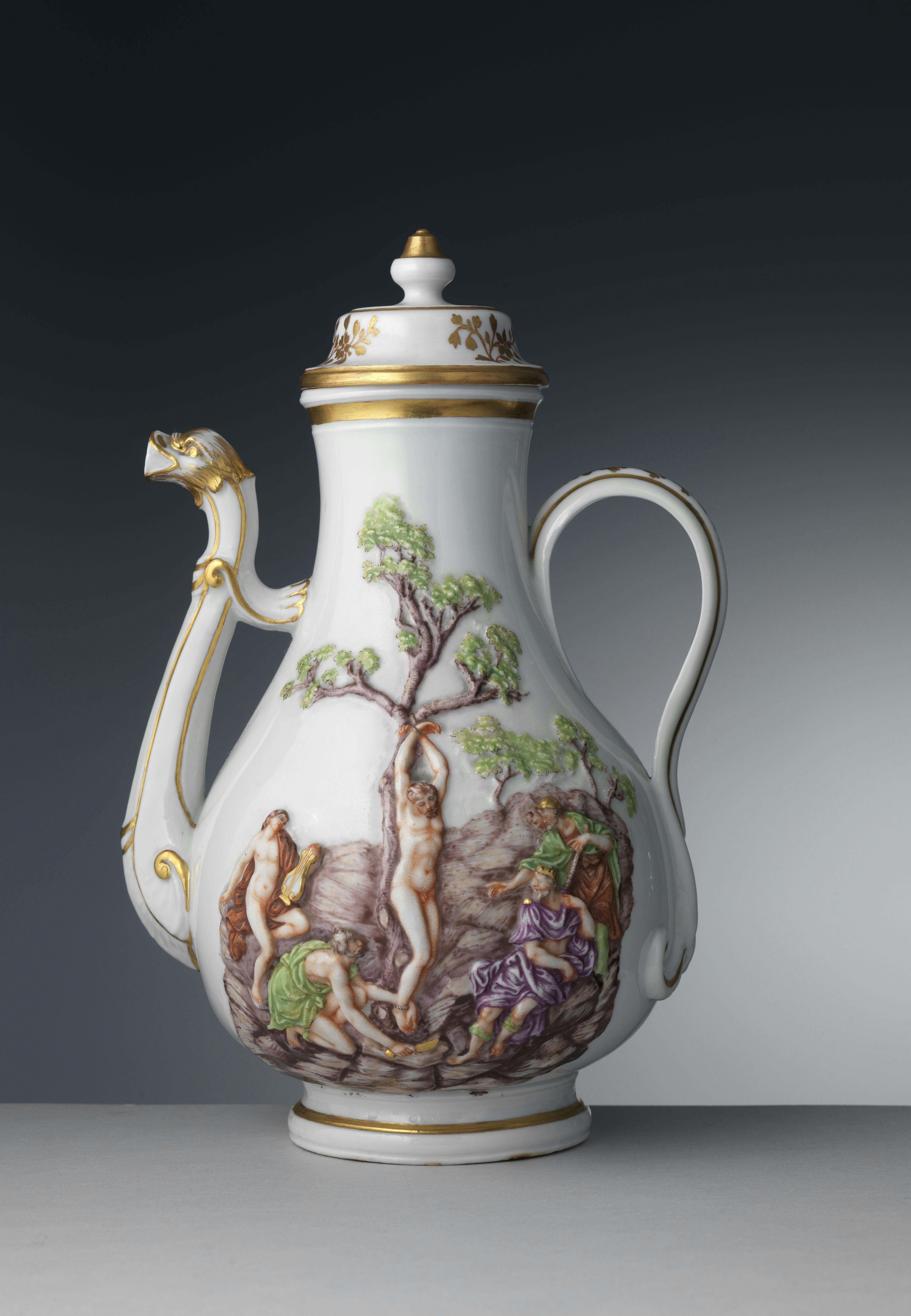
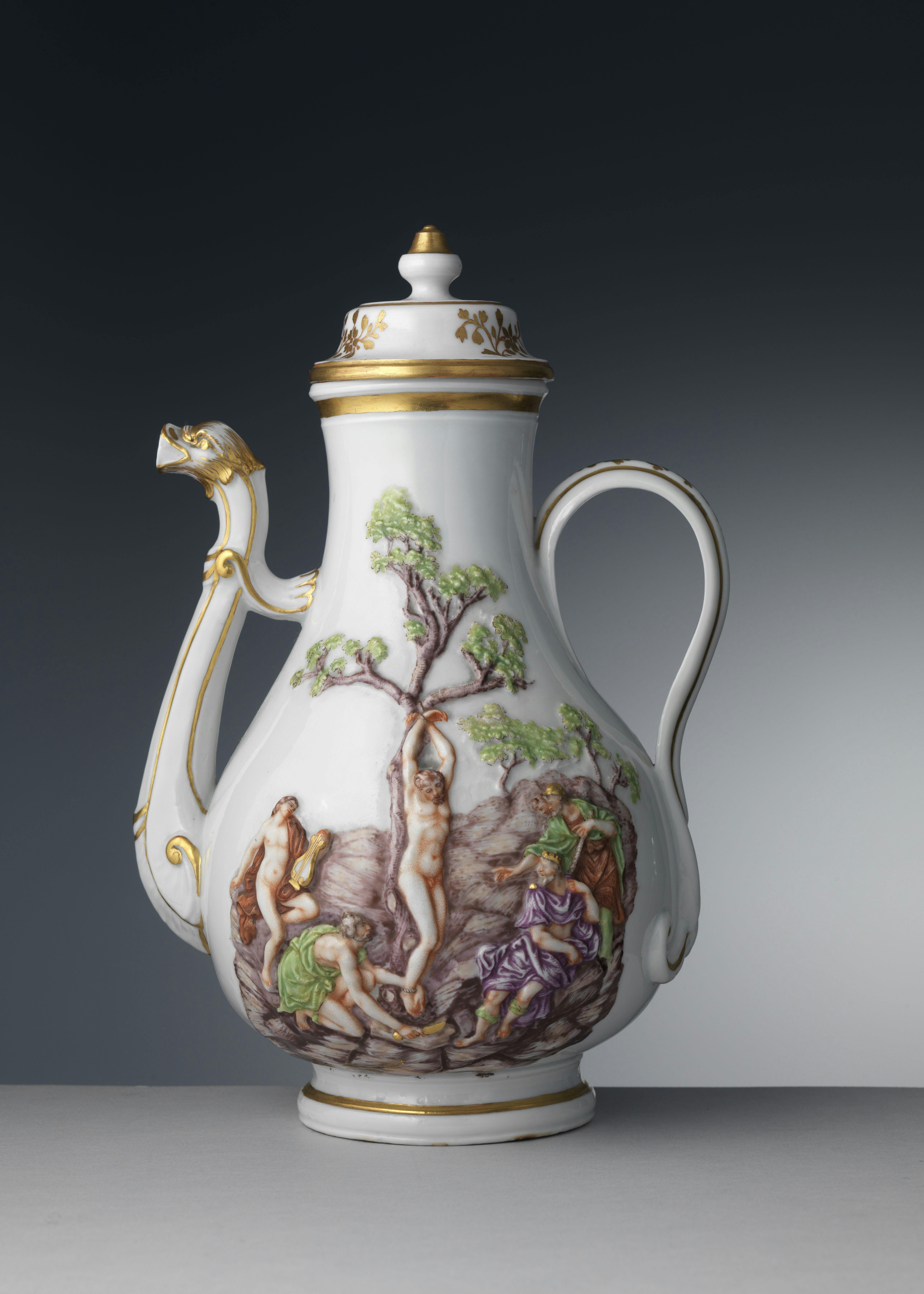
The large coffee pot with a duck-shaped spout and lid attached to the rest of the body by a golden metal mount features blue decorations with scenes of putti playing and small flowers.
The putti are created using the “transfer printing” technique. This allowed the transfer onto porcelain of an image engraved on a copper plate. The engraved grooves were filled with a viscous mixture of cobalt blue; the color adhered to a paper support which was then pressed onto the object. The decorated piece was subsequently glazed and fired. According to recent studies, “transfer printing” was experimented with at Doccia starting in the second half of the 1740s.


The flowers decorating the lid, on the other hand, are made with the technique known as “a stampino,” carried out using stencils applied to the porcelain and filled with colour using a pad or brush.
The decoration, also known as “sponged printing,” made it possible to quickly achieve attractive results while providing a solution to the shortage of skilled painters.
The coexistence of two different decoration techniques was common in the early period of the Manifattura Ginori, as attested also by the rinfrescatoio with Marana Isola heraldic emblems now at the Museo Ginori (inv. 3753).
The designs on this coffee pot are derived from engravings based on drawings by Jacques Stella, entitled Les Jeux et Plaisirs de l'Enfance and published in Paris in 1657 by the painter’s niece Claudine Stella Bouzonnet. Other objects made at Doccia are decorated with motifs taken from prints in Jacques Stella’s series, including two teapots now respectively at the Victoria and Albert Museum in London (inv. 407-1928) and in a private collection.
- 01
- 02
Coffee pot with lid decorated with children playing
- 03
Coffee pot with lid decorated with playing children, detail
- 04
Coffee pot with lid decorated with children playing, detail
- 05
Coffee pot with lid decorated with children playing, detail
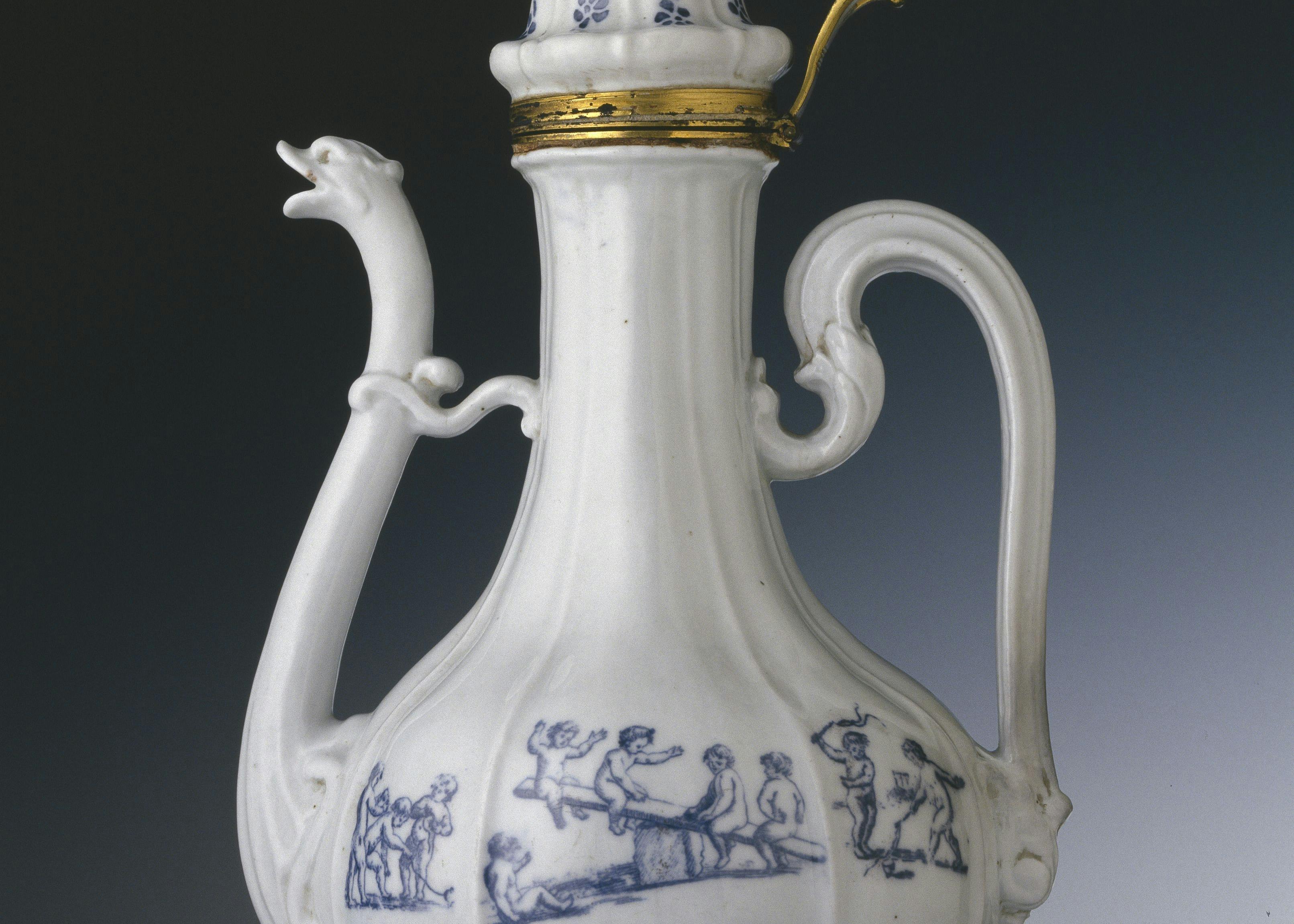
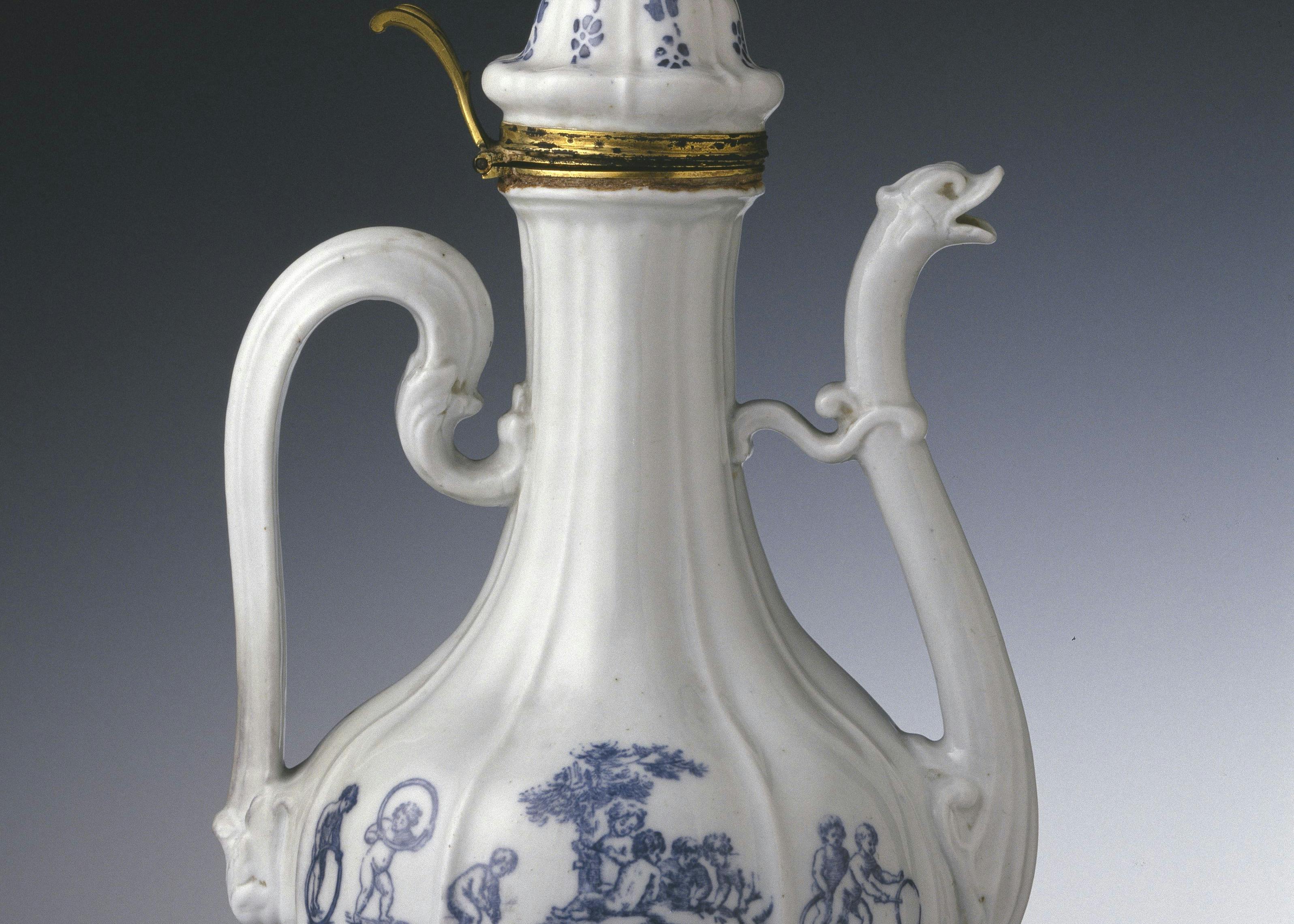
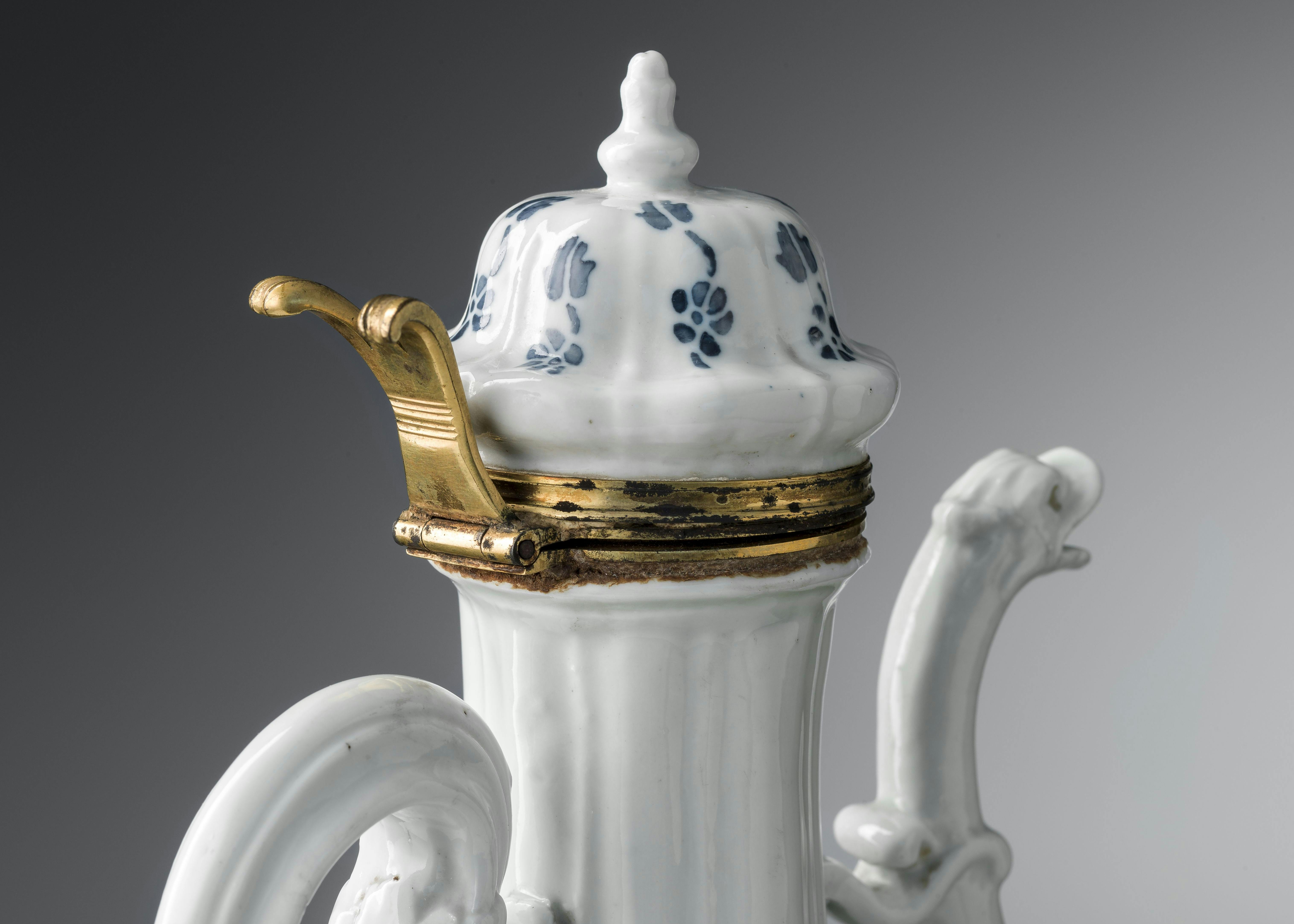
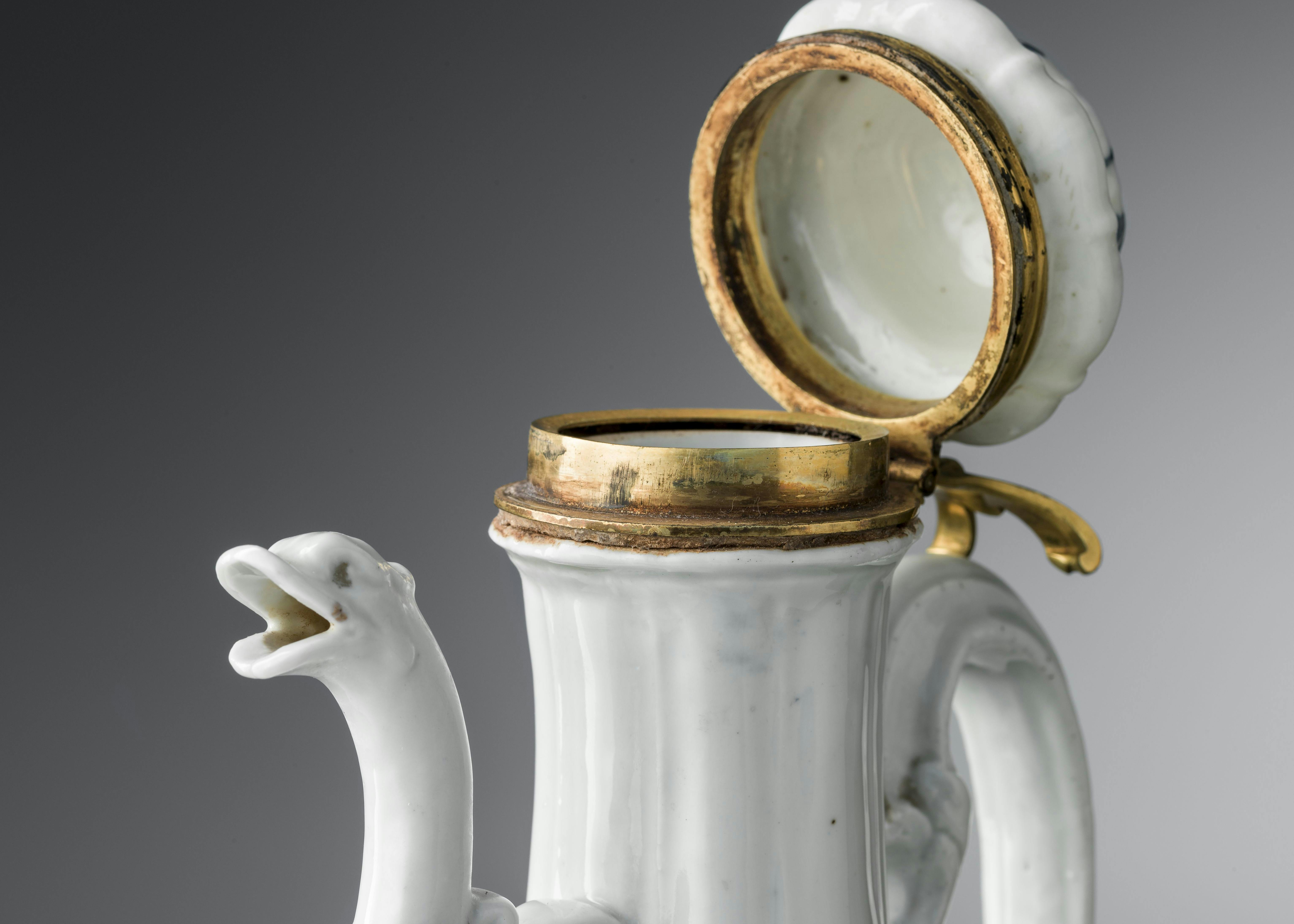
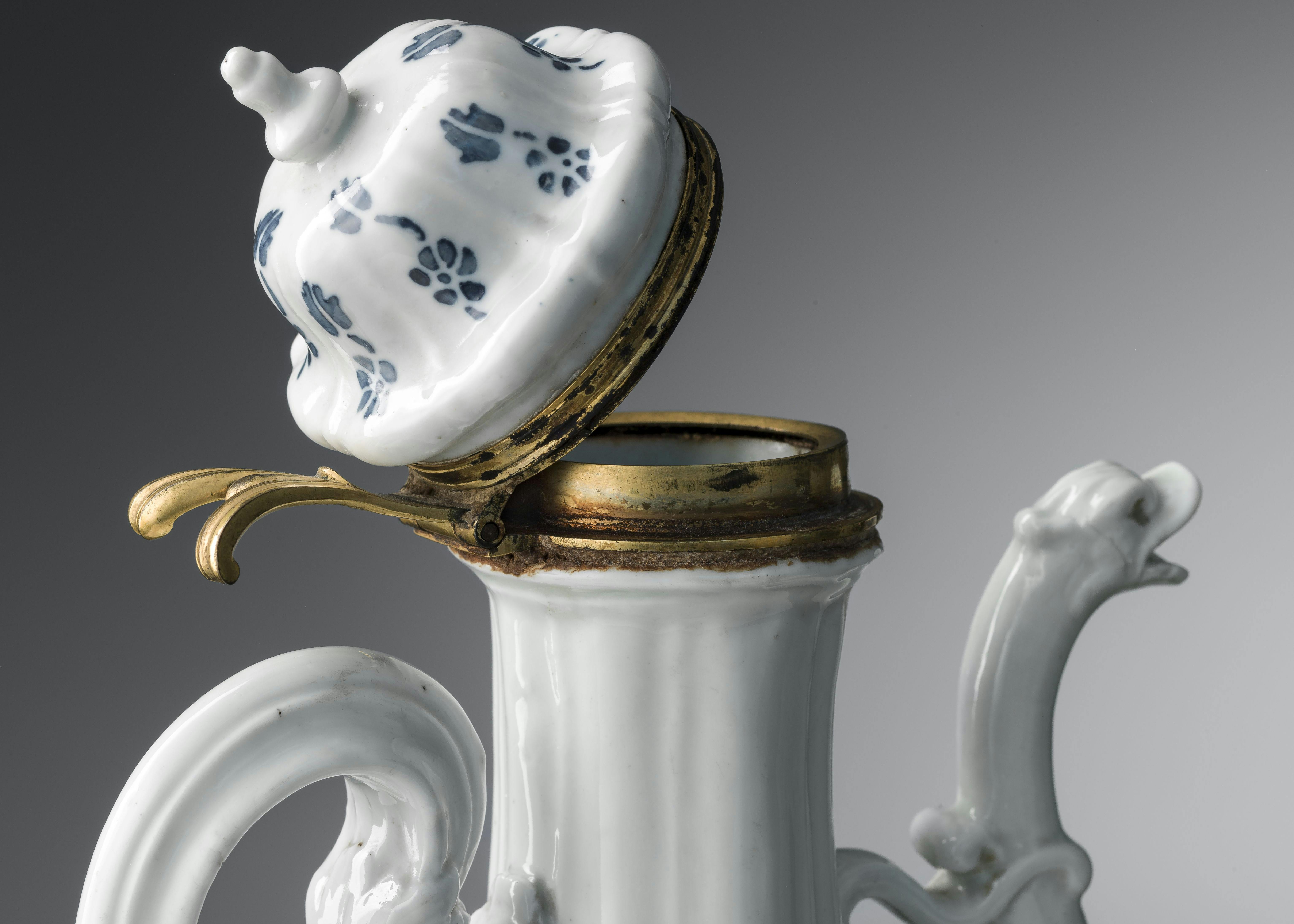
The large coffee pot with a duck-shaped spout and lid attached to the rest of the body by a golden metal mount features blue decorations with scenes of putti playing and small flowers.
The putti are created using the “transfer printing” technique. This allowed the transfer onto porcelain of an image engraved on a copper plate. The engraved grooves were filled with a viscous mixture of cobalt blue; the color adhered to a paper support which was then pressed onto the object. The decorated piece was subsequently glazed and fired. According to recent studies, “transfer printing” was experimented with at Doccia starting in the second half of the 1740s.
The flowers decorating the lid, on the other hand, are made with the technique known as “a stampino,” carried out using stencils applied to the porcelain and filled with colour using a pad or brush.
The decoration, also known as “sponged printing,” made it possible to quickly achieve attractive results while providing a solution to the shortage of skilled painters.
The coexistence of two different decoration techniques was common in the early period of the Manifattura Ginori, as attested also by the rinfrescatoio with Marana Isola heraldic emblems now at the Museo Ginori (inv. 3753).
The designs on this coffee pot are derived from engravings based on drawings by Jacques Stella, entitled Les Jeux et Plaisirs de l'Enfance and published in Paris in 1657 by the painter’s niece Claudine Stella Bouzonnet. Other objects made at Doccia are decorated with motifs taken from prints in Jacques Stella’s series, including two teapots now respectively at the Victoria and Albert Museum in London (inv. 407-1928) and in a private collection.