Since the second half of the eighteenth century, the Manifattura Ginori in Doccia had produced pharmacy jars in maiolica to contain ointments, syrups, juices, balms, extracts, and oils. One of the most popular types during the nineteenth century is the so-called “Etruscan” jar, shaped like a pyxis more or less varied in some details.
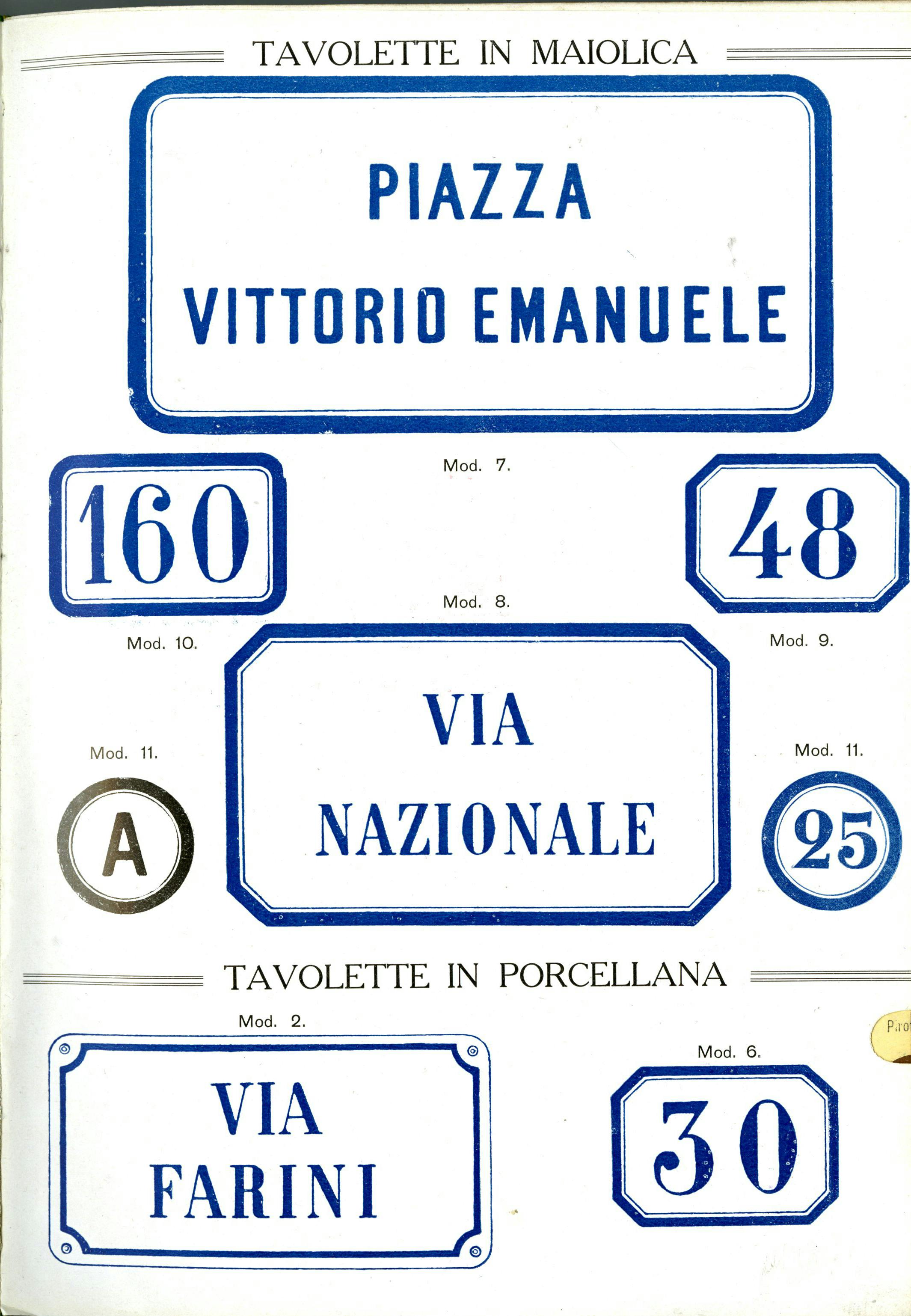
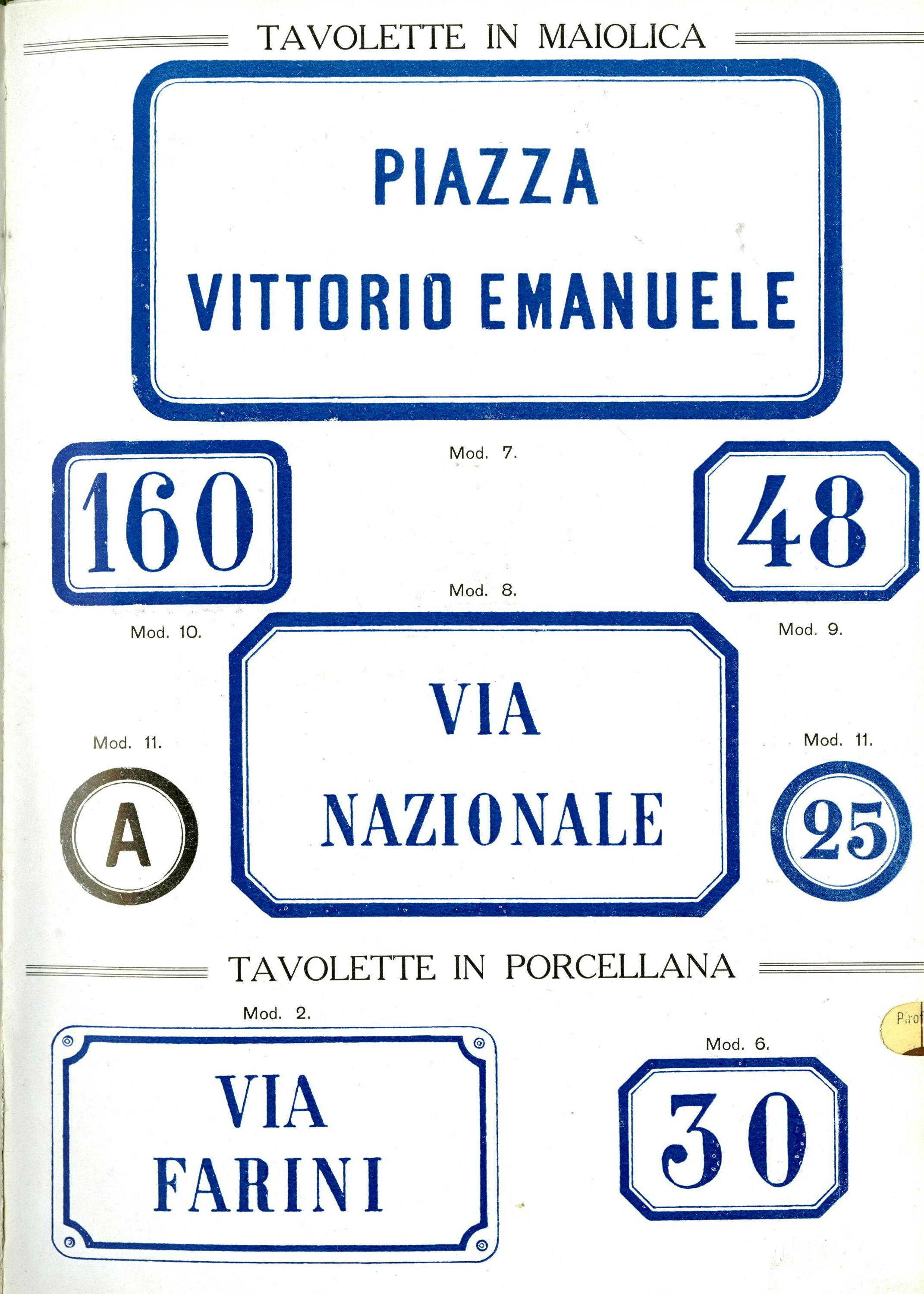
Abandoning maiolica for porcelain, in the second half of the 19th century the Manifattura Ginori began printing patterns for this type of objects, indicating models and decorations. Up to five different shapes for pharmacy containers with lids are codified, classified by the letters of the alphabet from A to E. The table extracted from the Tariff of porcelain objects for use in chemical laboratories, pharmacies etc (1907) includes type A (with a cylindrical body and flat lid, available in six different sizes), type B (almost an evolution of the previous shape, defined as cylindrical with a more bulging bag lid, produced in seven sizes), type C (cylindrical and with a pointed lid) and type D (a fluted jar of Etruscan shape), both in five sizes. The last model, type E, with its cylindrical structure and flat lid, does not appear. The tariff was also completed by some plates showing the range of inscriptions and decorations that the factory could produce.
These jars enjoyed enormous popularity and are still shown in some pharmacies, especially in the Florence area.