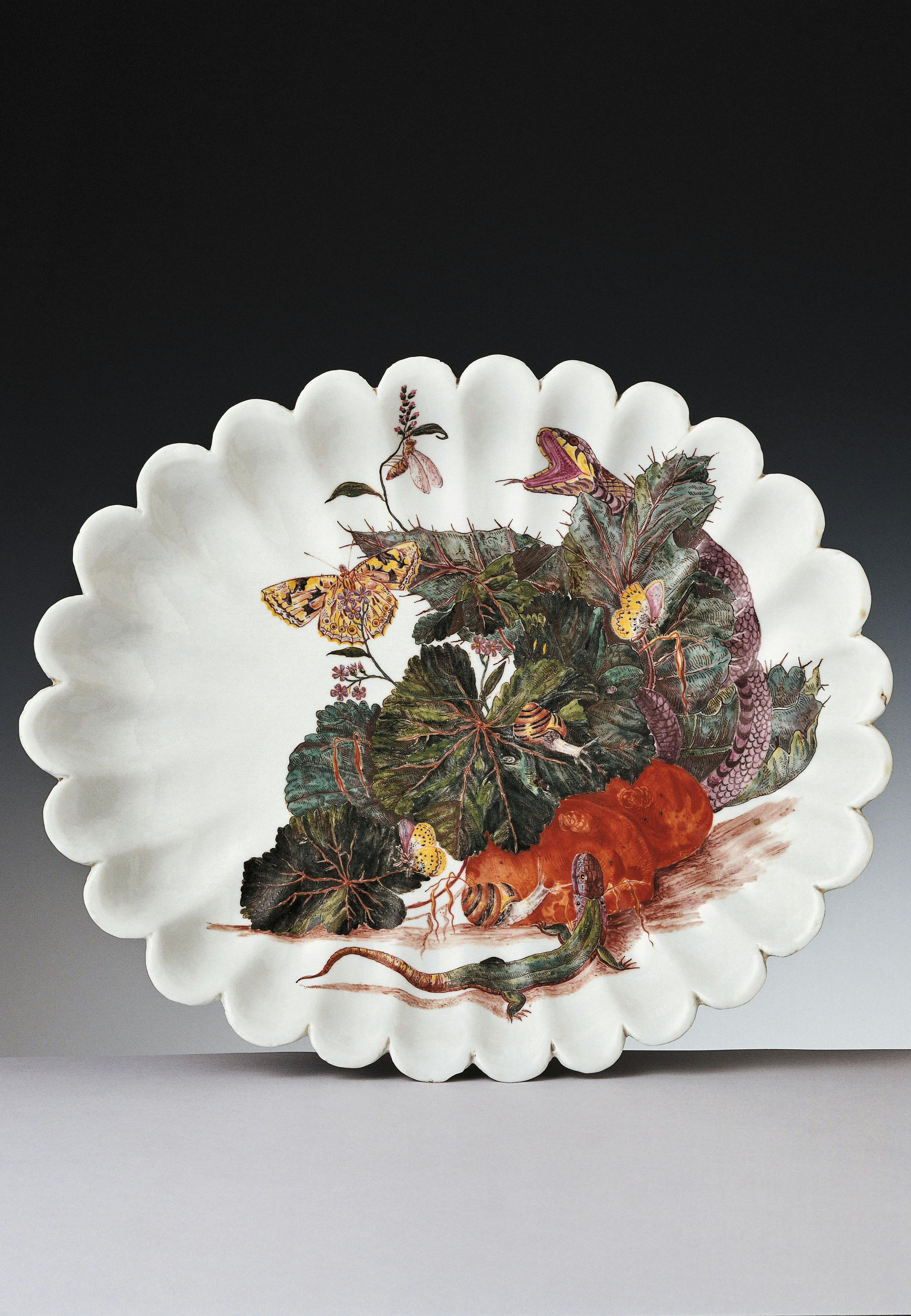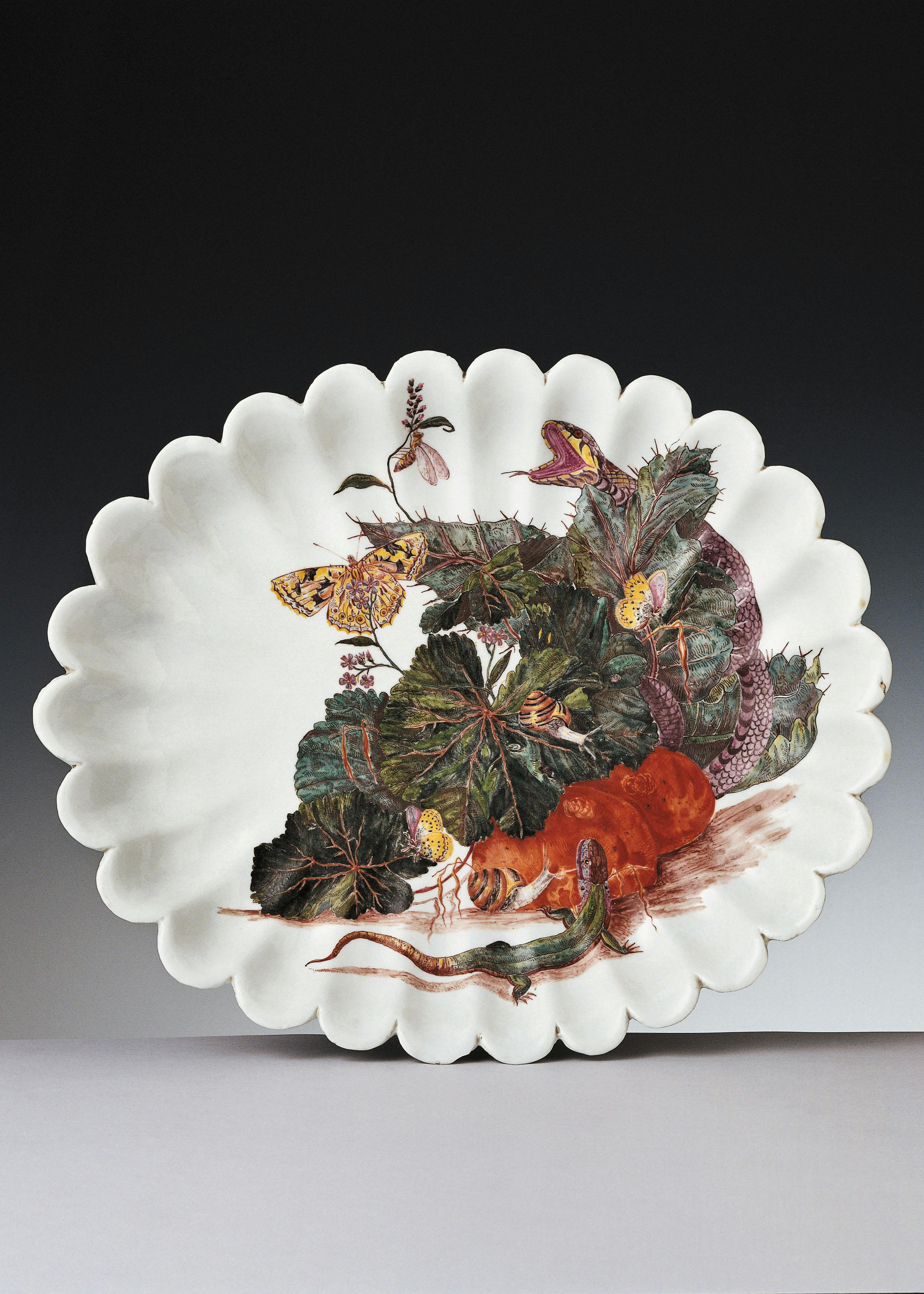
Plate with leaves, fruits and small animals in gold “pâte-sur-pâte”
Manifattura Ginori
Between 1880 and 1884, the Ginori factory produced a large fruit and dessert service for the Royal House of Savoy, which was enlarged in the early 20th century by Queen Margherita with coffee cups, sugar bowls, and creamers in the Jolanda shape. The set is now preserved at the Quirinale Palace, under the jurisdiction of the Presidency of the Italian Republic. It is comprised of nearly five hundred pieces made of white porcelain with a sumptuous decoration of hand-painted polychrome fruits, accompanied by leaves and animals in pâte-sur-pâte (in slight relief) in gold and silver. Each single element of the service was decorated with a different motif. The Museo Ginori possesses a series of plates with decoration very similar to those of the Quirinale, except that the fruits are also executed in gold in relief. The specimen presented here features a sprig of holly with berries, a little bird, a dragonfly, a butterfly, and other foliage, with a denticulated edging around the rim.
These raised gold ornaments reveal the influence of Japanese art, mediated by examples from Sèvres and Limoges, which were well known at Doccia thanks to the presence of artists coming from these factories, such as the painter Jean Baptiste Duclair, Head of Painting from 1870 to 1886. The attention to natural detail, here more closely linked to a conception of decoration as mimesis of reality, foreshadows the shift that a few years later would impact the decorative arts with the advent of Art Nouveau.
- 01
Between 1880 and 1884, the Ginori factory produced a large fruit and dessert service for the Royal House of Savoy, which was enlarged in the early 20th century by Queen Margherita with coffee cups, sugar bowls, and creamers in the Jolanda shape. The set is now preserved at the Quirinale Palace, under the jurisdiction of the Presidency of the Italian Republic. It is comprised of nearly five hundred pieces made of white porcelain with a sumptuous decoration of hand-painted polychrome fruits, accompanied by leaves and animals in pâte-sur-pâte (in slight relief) in gold and silver. Each single element of the service was decorated with a different motif. The Museo Ginori possesses a series of plates with decoration very similar to those of the Quirinale, except that the fruits are also executed in gold in relief. The specimen presented here features a sprig of holly with berries, a little bird, a dragonfly, a butterfly, and other foliage, with a denticulated edging around the rim.
These raised gold ornaments reveal the influence of Japanese art, mediated by examples from Sèvres and Limoges, which were well known at Doccia thanks to the presence of artists coming from these factories, such as the painter Jean Baptiste Duclair, Head of Painting from 1870 to 1886. The attention to natural detail, here more closely linked to a conception of decoration as mimesis of reality, foreshadows the shift that a few years later would impact the decorative arts with the advent of Art Nouveau.