
Urn The Archaeological Walk
Gio Ponti
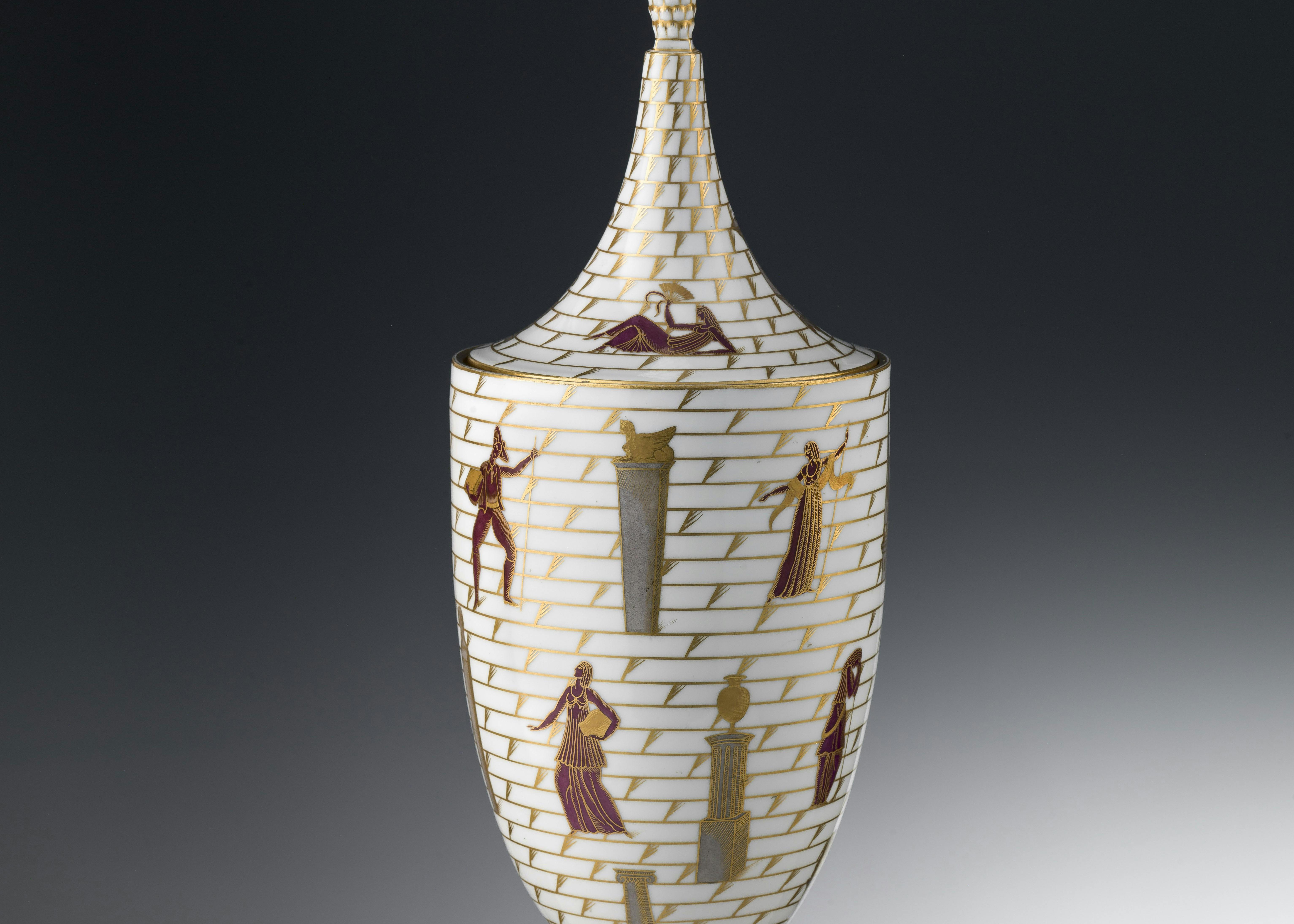
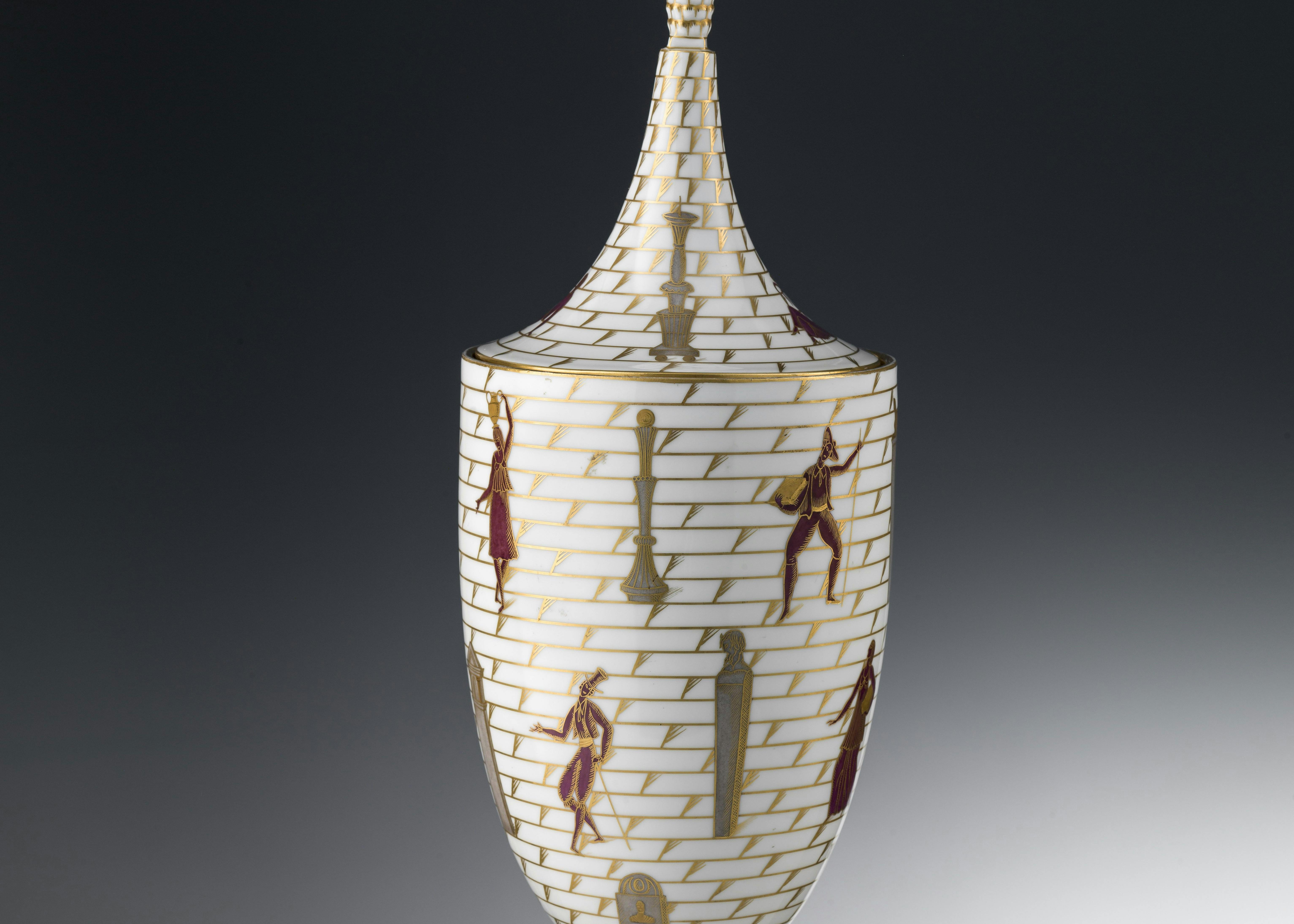
The urn-shaped vase is here paired with the decoration La Passeggiata Archeologica, one of the most original decorative families designed by Gio Ponti for Richard-Ginori. With the typical lightness of his talent, Ponti succeeds in achieving a synthesis between modern style and an unmistakably Italian character that he considered the key path to follow for the renewal of national decorative arts.
The parallelepiped-shaped base (identified by code 395s) is inspired by ancient models, also revived in the Doccia Empire period production. Ponti reworks these by creating an elegant tapered shape, where the vertical thrust is accentuated by the absence of handles.
The model was selected to be presented at the 1925 exhibitions in Paris and Monza, where it established itself as one of Ponti’s most distinctive inventions. The decoration consists of a simple floor-like background that covers the entire object with diagonal angles, creating an illusory architectural setting. Figures and furnishings are rhythmically arranged yet remain prominently in the foreground. The colour scheme follows a strict alternation between the purple of the figures and the grey of the inanimate elements, while gold outlines define all contours and enhance the object's preciousness.
The title La Passeggiata Archeologica evokes the culture of the Grand Tour, alluded to by the eighteenth-century style clothing of some figures, and also echoes the name of the large archaeological park established in Rome in the second decade of the 1900s. The figurative theme dates back to 1923, the year it appeared at the first Biennial Exhibition of Decorative Arts in Monza, and its attribution to Ponti is confirmed by the presence of his signature on many of the ceramics decorated in this way. In this case, the signature and date are displayed on an external face of the base. Usually, however, they are hidden from view, like factory marks.
- 01
Gio Ponti, Urn "La Passeggiata Archeologica"
- 02
Urn The Archaeological Walk
- 03
Urn The Archaeological Walk
- 04
Urn The Archaeological Walk
- 05
Urn The archaeological walk, detail
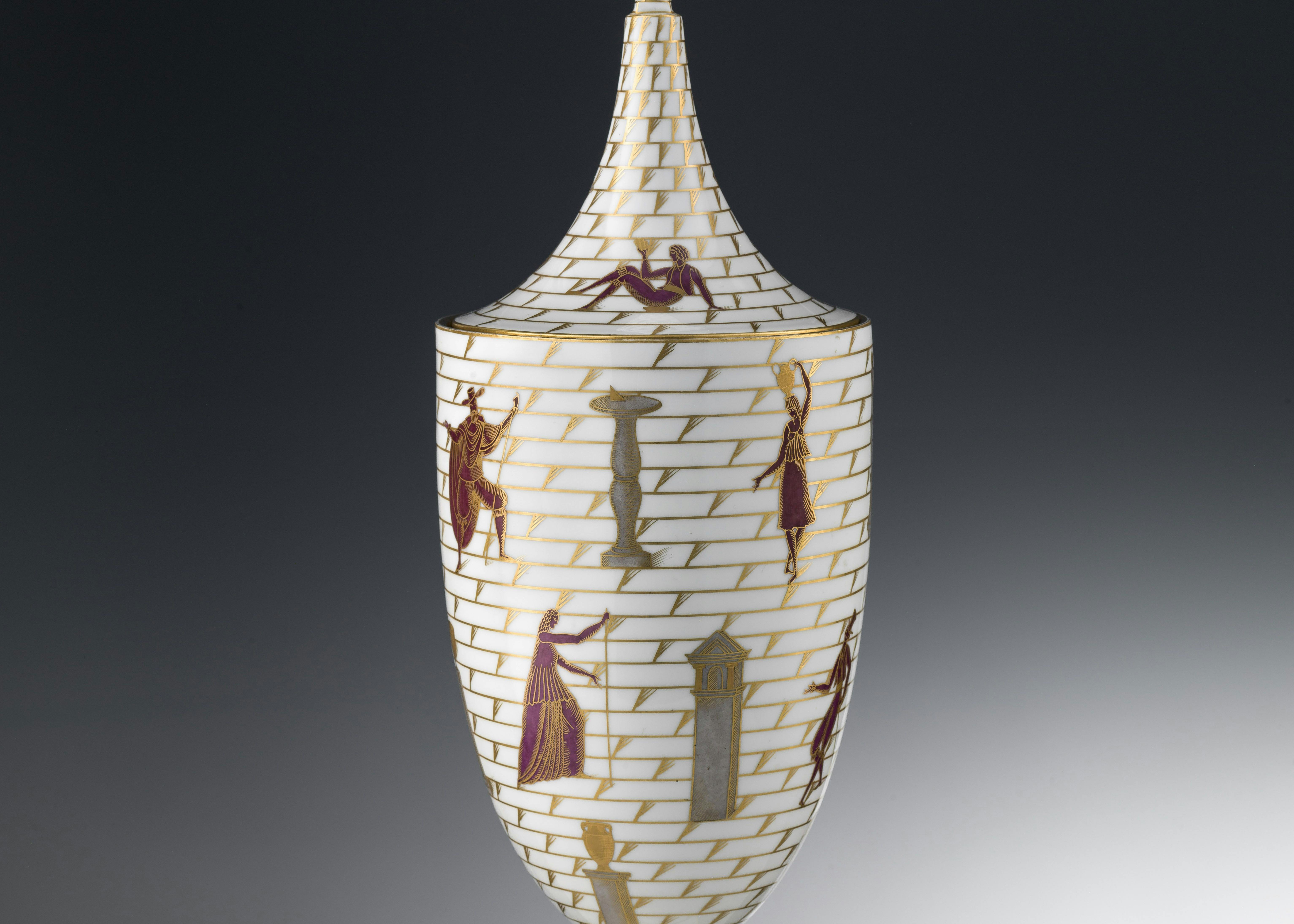
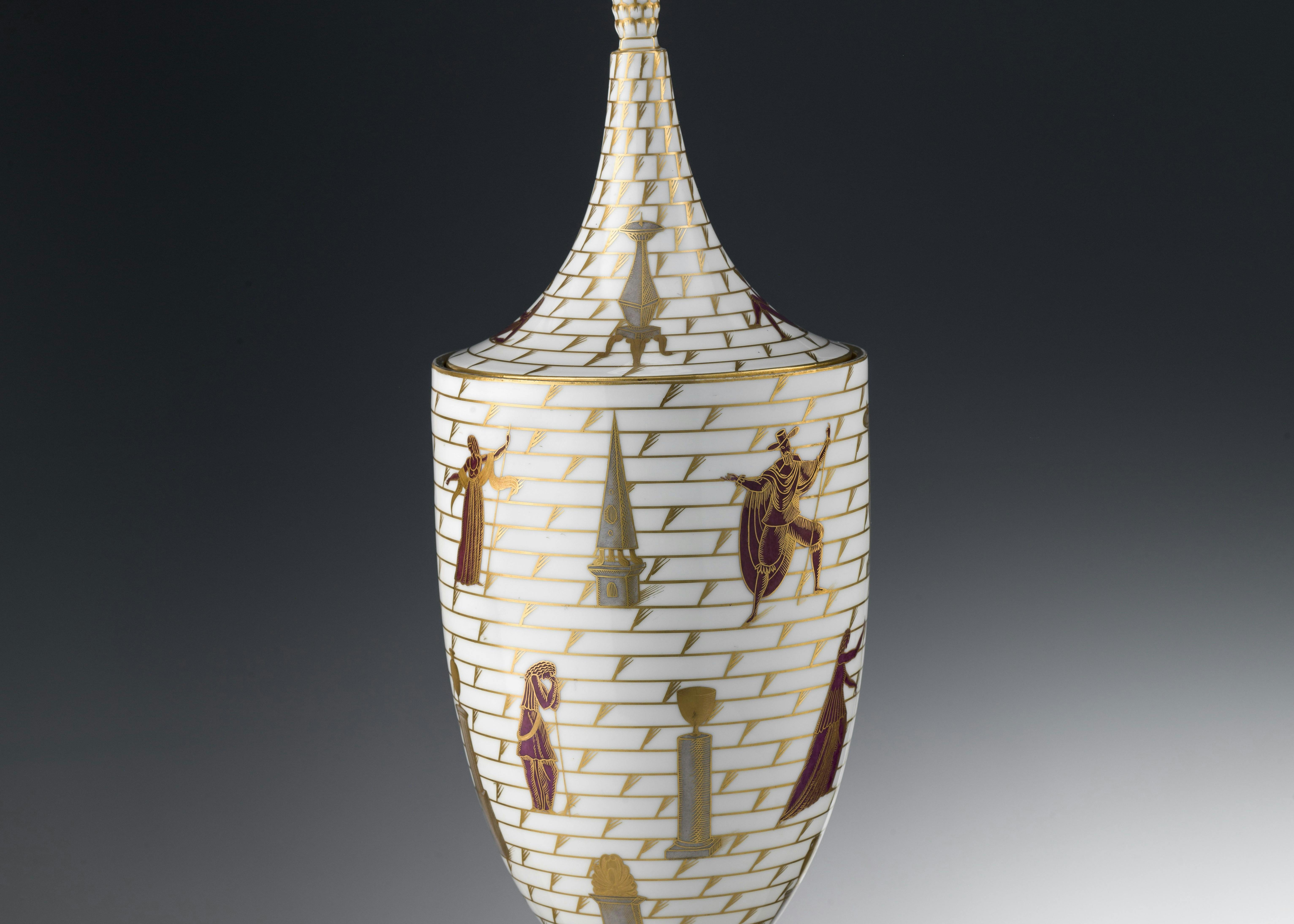

The urn-shaped vase is here paired with the decoration La Passeggiata Archeologica, one of the most original decorative families designed by Gio Ponti for Richard-Ginori. With the typical lightness of his talent, Ponti succeeds in achieving a synthesis between modern style and an unmistakably Italian character that he considered the key path to follow for the renewal of national decorative arts.
The parallelepiped-shaped base (identified by code 395s) is inspired by ancient models, also revived in the Doccia Empire period production. Ponti reworks these by creating an elegant tapered shape, where the vertical thrust is accentuated by the absence of handles.
The model was selected to be presented at the 1925 exhibitions in Paris and Monza, where it established itself as one of Ponti’s most distinctive inventions. The decoration consists of a simple floor-like background that covers the entire object with diagonal angles, creating an illusory architectural setting. Figures and furnishings are rhythmically arranged yet remain prominently in the foreground. The colour scheme follows a strict alternation between the purple of the figures and the grey of the inanimate elements, while gold outlines define all contours and enhance the object's preciousness.
The title La Passeggiata Archeologica evokes the culture of the Grand Tour, alluded to by the eighteenth-century style clothing of some figures, and also echoes the name of the large archaeological park established in Rome in the second decade of the 1900s. The figurative theme dates back to 1923, the year it appeared at the first Biennial Exhibition of Decorative Arts in Monza, and its attribution to Ponti is confirmed by the presence of his signature on many of the ceramics decorated in this way. In this case, the signature and date are displayed on an external face of the base. Usually, however, they are hidden from view, like factory marks.