Porcelain, corals and other experiments
Carlo Ginori, the Cecina colony and the dream of growing coral on porcelain
Besides being at times a visionary entrepreneur and a skilled politician, the founder of the Doccia factory is also an extraordinary and extremely curious experimenter, who - in full harmony with the spirit of his time - cultivates with the same passion an interest in art, science, and craftsmanship.
A particularly enlightening testimony of Carlo Ginori's unconventional approach to entrepreneurship is provided by the experiments he conducts to grow corals on porcelain. The experiments take place in the stretches of sea overlooking his coastal properties, in front of the Calafuria tower and Val di Vetro, near Vada: there the marquis throws groups of porcelain into the water and observes them after years, hoping to see the coral spontaneously grow. His goal is to create unprecedented masterpieces and give them to Emperor Francis Stephen of Lorraine to convince him to invest in fishing, trade, and coral manufacturing, which he considers an important resource for the development of the local economy.

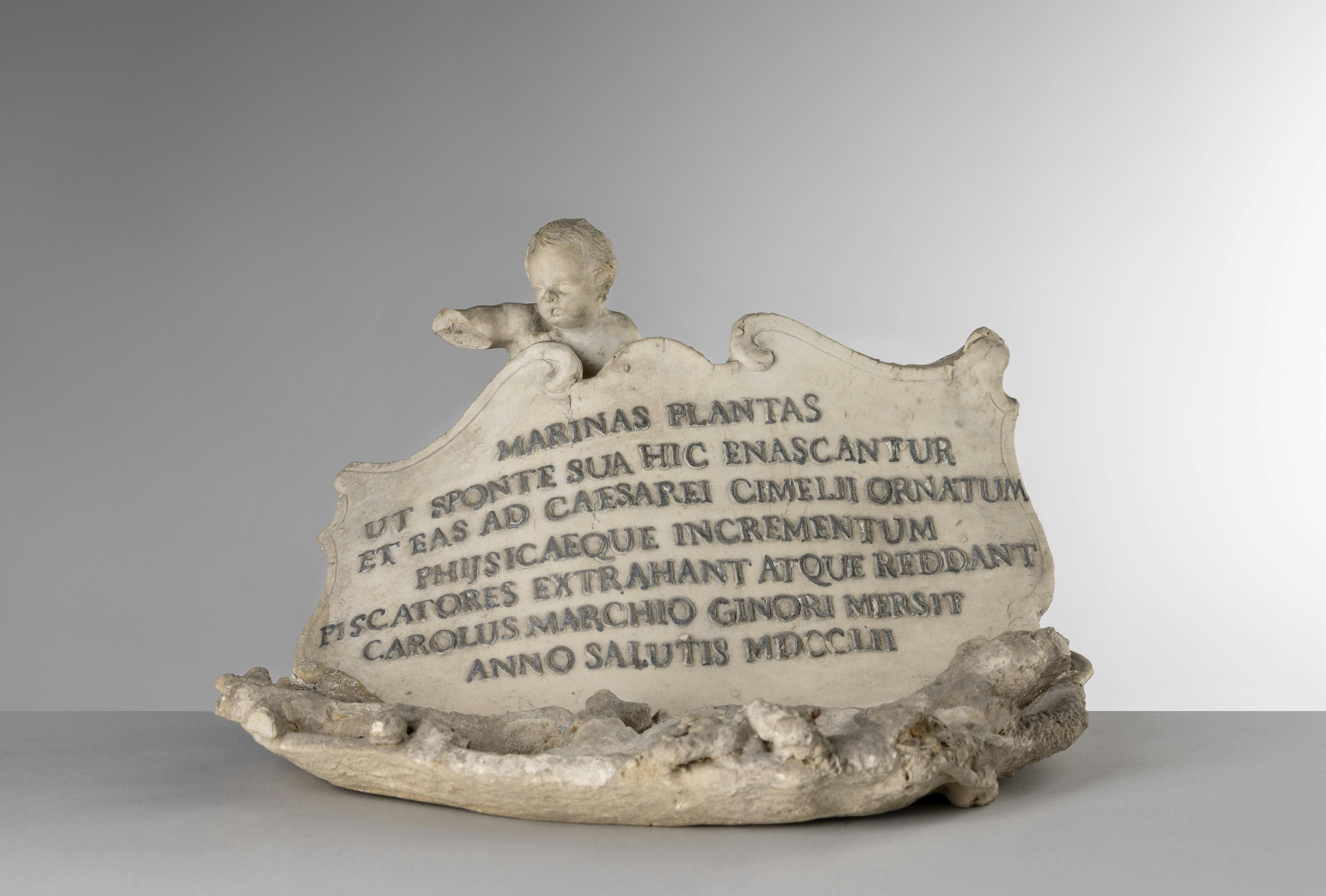
Ginori Manufactory, Coral fishing group, porcelain, 1752, Ginori Museum
Each group thrown into the sea is accompanied by an inscription claiming its ownership. The documents preserved in the Historical Archive of the Ginori Museum recall that when, in January 1758, the agent of Marquis Ginori appeared to retrieve the porcelains, the guard watchman asked for orders from Chancellor Baldasseroni, who had authorized the experiment at the time. The answer, received on April 16, confirmed that the operation was legitimate, provided that only the coral “produced above the said porcelain groups” was retrieved.

ASFi, Council of Regency, f. 710, ins. 1, G. F. Ciocchi, Plan of the Villa of Cecina built by Carlo Ginori in 1739, engraving, in Information and Narrative of fact for the Marquisate of Cecina, plate 2, by permission of the Ministry of Culture / State Archives of Florence
Around the coral Carlo Ginori builds a true enterprise, which excites him no less than the one started in the same years in Doccia. After acquiring, in 1738, the lands of the Cecina estate and combining them with his possessions in Casale, Guardistallo, and Bibbona, the marquis begins the construction of a villa overlooking the sea (known as the Cecina Colony, today a military base) and establishes his new manufacturing activity there: in 1741 the presence in the villa of ‘corallari’ (coral fishermen) coming from Sicily and Naples is documented, and in 1748 there are as many as 17 boats each with fifty sailors (Coral Feluccas) collecting coral along the coasts of Livorno on behalf of Ginori. The coral is worked inside the villa, which also hosts a shipyard for the construction of the feluccas.

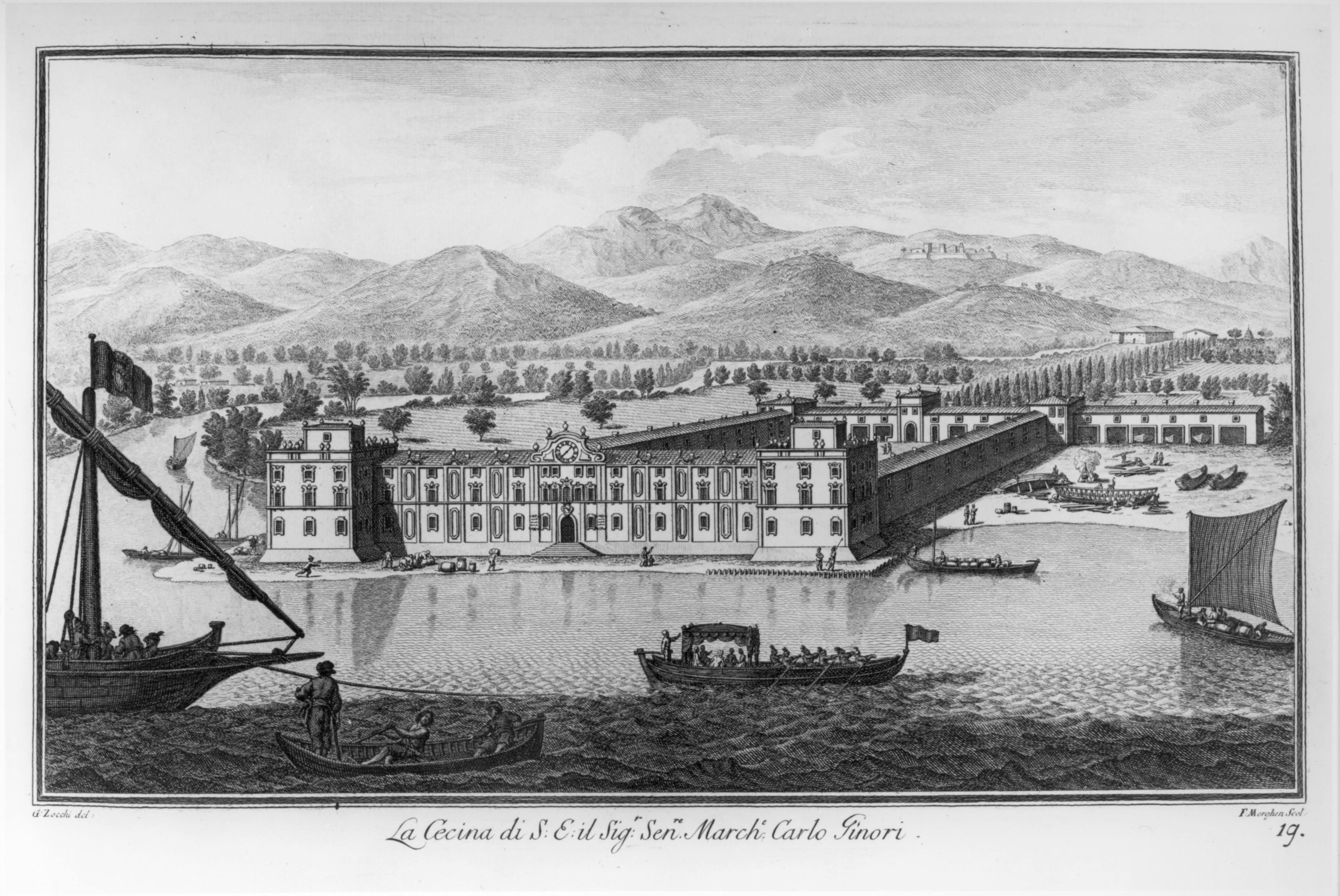
G. Zocchi, View of the villa of Marquis Carlo Ginori in Cecina, in Views of villas and other places of Tuscany, Florence 1744
It is in this extraordinary context that unique works are born, such as the surprising porcelain group with a coral branch from the Fondazione CR Firenze collection and the specimen preserved in the Ginori Museum (inv. 923), with its beautiful Latin cartouche, perfect to make us relive the pioneering spirit of the Manufactory at that time.


Ginori Manufactory, Group with Love, little tritons and corals, circa 1754-1756, CR Florence Foundation Collection

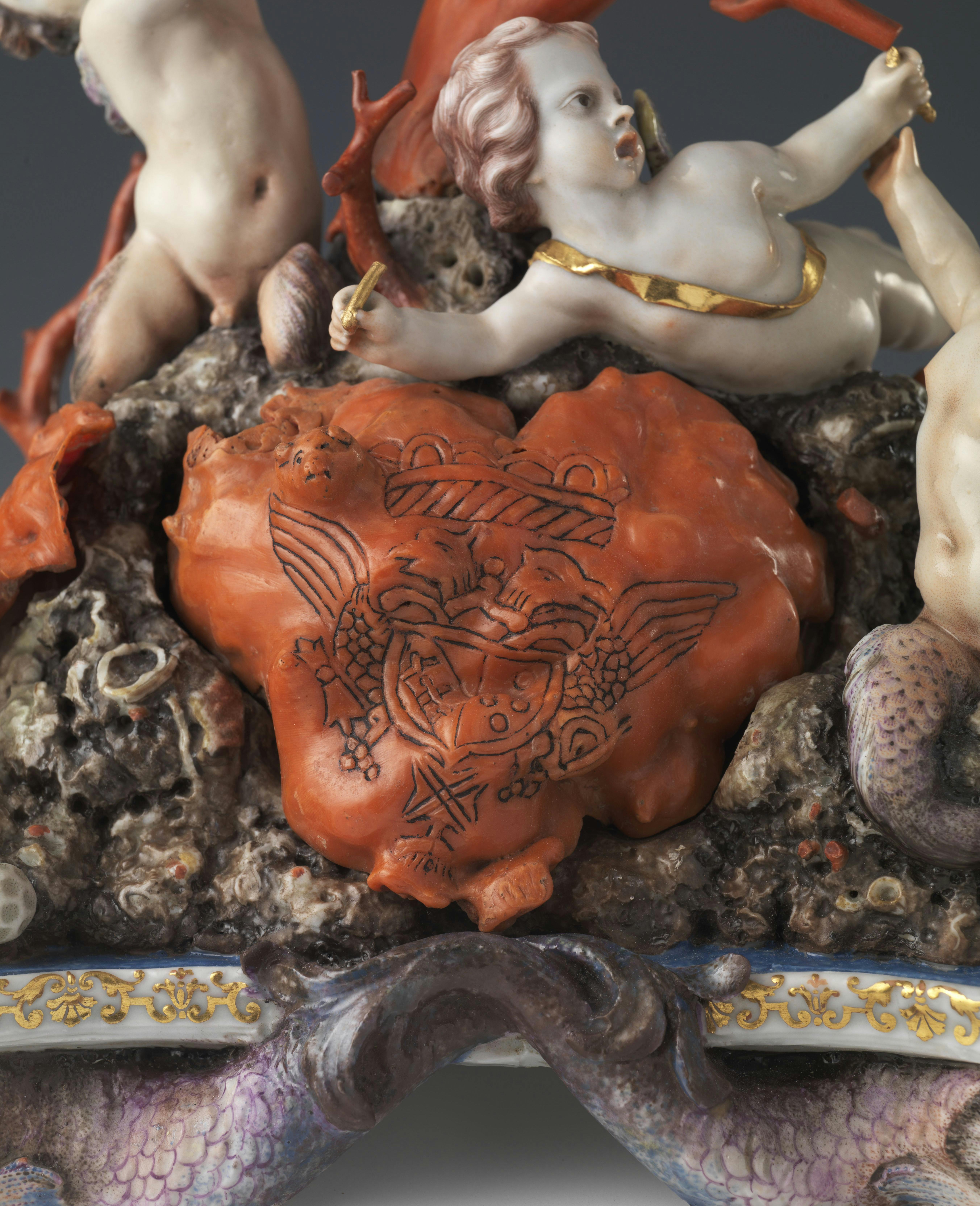
Ginori Manufactory, Gruppo con Amore, tritoncelli and corals, circa 1754-1756, detail
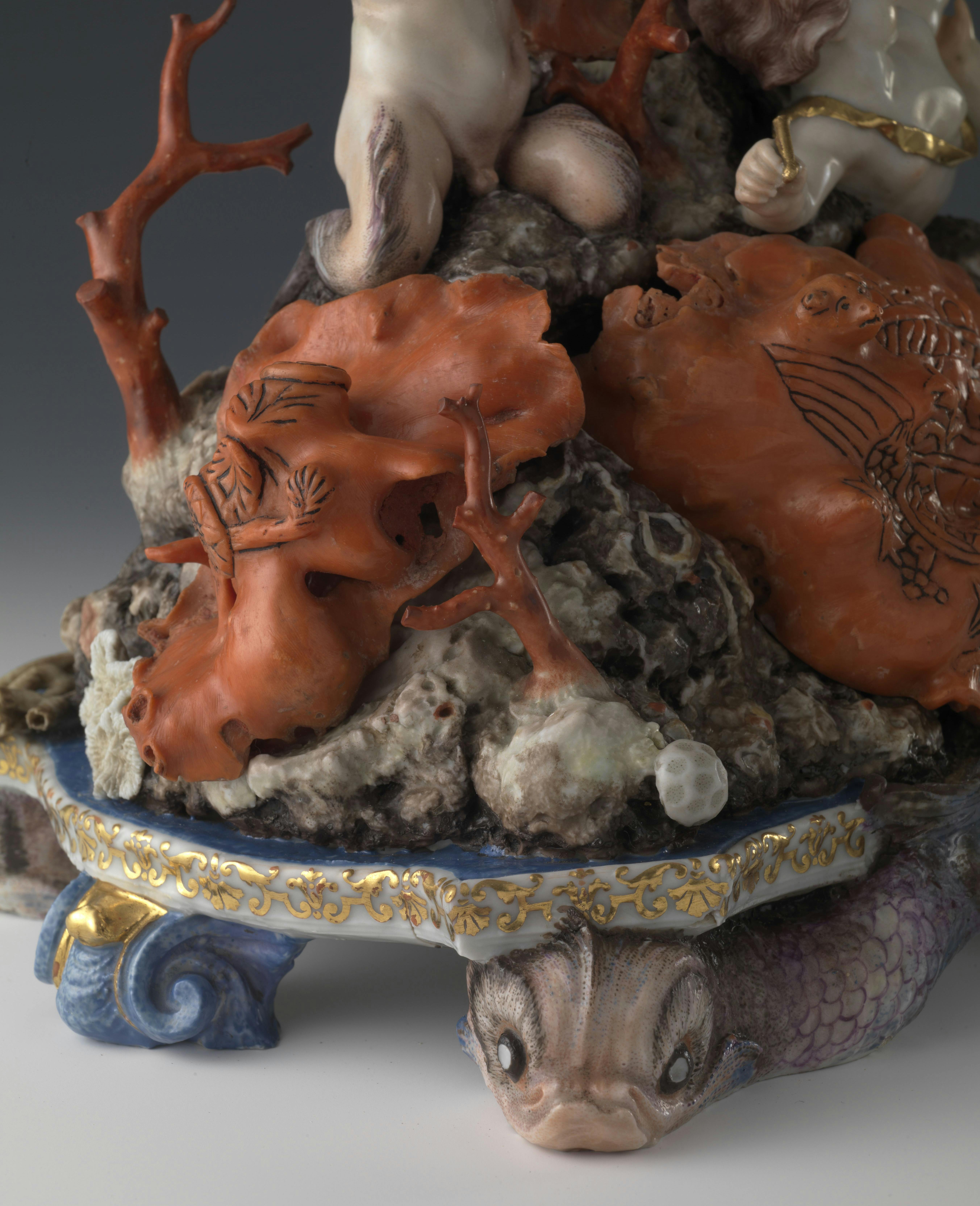
Ginori Manufactory, Group with Love, little tritons and corals, circa 1754-1756, detail
Reading tips
- I. Buonafalce, The production of coral in Livorno. Studies and documents, in Jewelry in Italy. The jewel and the craftsman. Materials, works, commissions. Proceedings of the study conference curated by Lia Lenti, Venice 2005, pp. 49-71
- C. Errico, M. Montanelli, Coral: fishing, trade and processing in Livorno, Ghezzano (PI) 2008, p. 76
-
R. Balleri in Fragile treasures of princes. The paths of porcelain between Vienna and Florence, exhibition catalog curated by R. Balleri, A. d'Agliano, C. Lehner-Jobst, Livorno 2018, pp. 258-259, cat. 60
-
O. Rucellai, The triumph of coral and Doccia porcelain of the Florence Savings Bank Entity, in «Friends of Doccia-Notebooks», VIII, 2014-2015 (2015), pp. 114-117.