The ‘a stampa’ or ‘stampino’ decoration
Artifacts and tools preserved at the Museo Ginori illustrate Marquis Ginori’s remarkable intuition in having inexperienced decorators employ an ancestor of the stencil
In the difficult early years of the manufactory, when—after many experiments—the first high-quality porcelain cups and plates finally came out of the kiln, the founder Carlo Ginori faced the problem of a lack of skilled painters. Painting on porcelain is a challenging art that requires talent, discipline, and a long apprenticeship. Few of the young workers employed in the factory had the necessary skills, and too little time had passed since the arrival in Doccia of the Viennese masters Karl and Anton Anreiter to have personnel capable of mastering the technique.
The ingenious solution devised by Marquis Ginori was to use pre-shaped cutouts, very similar to what we now call stencils, to decorate the precious porcelain without the risk of making mistakes. The decoration thus created, known in Doccia as ‘a stampa’ decoration, allowed an increase in productivity among less experienced decorators, without sacrificing the elegance and originality of the final result.

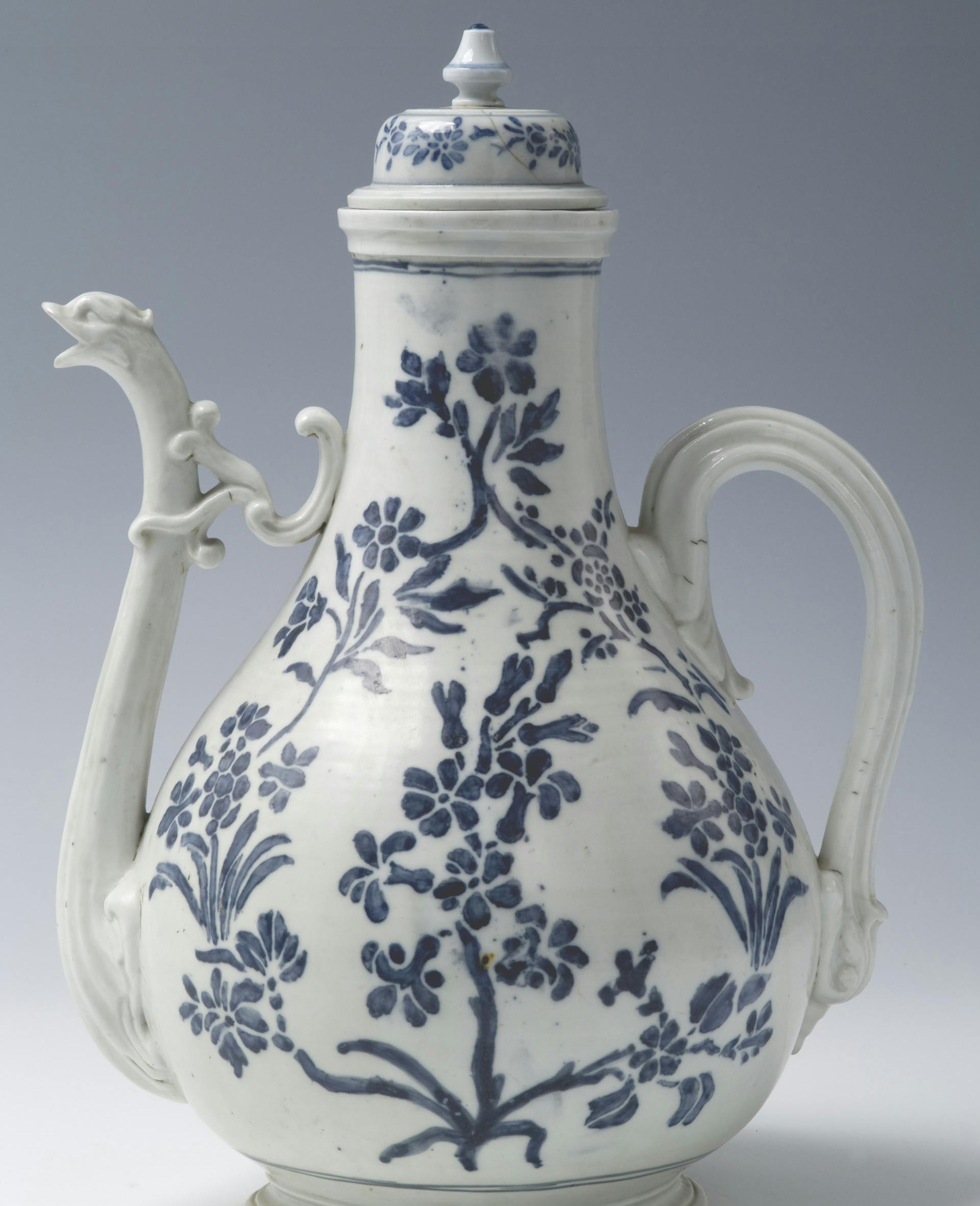
Ginori Manufacturing, Coffeepot with lid, 1750-1760, porcelain

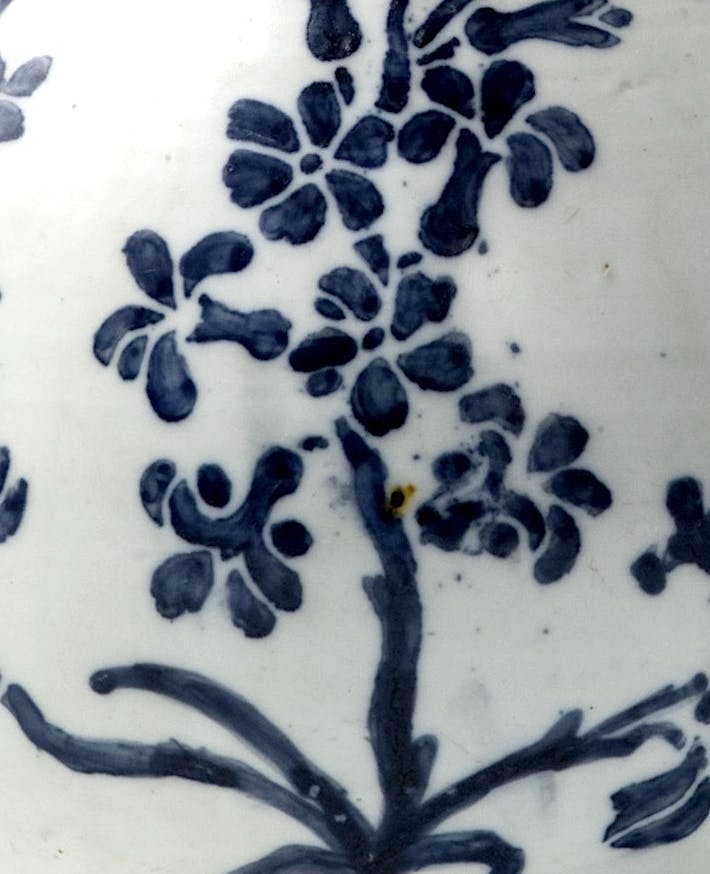
Detail of the stamp decoration

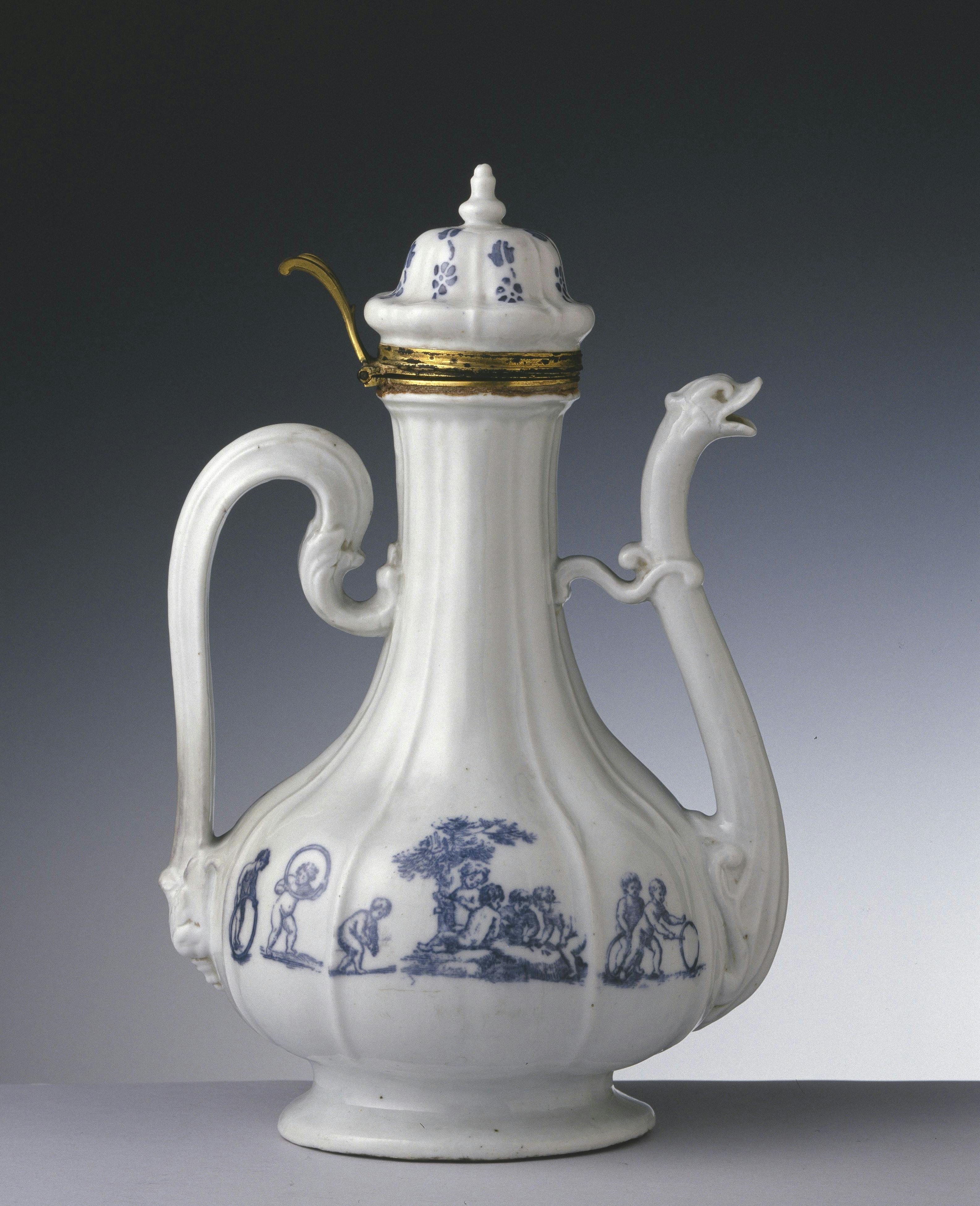
Ginori Manufactory, Coffee Pot with Lid, porcelain, circa 1750
Refined compositions of wild flowers painted in cobalt blue under glaze were created with the help of a copper or parchment stencil in which the shape of the decoration was cut out: placed on the surface to be decorated, it served as a guide for the brush that quickly applied the colour in the spaces left open by the cutout.


Ginori Manufacture, Perforated Mask for ‘a stampa’ or ‘stampino’ Decoration

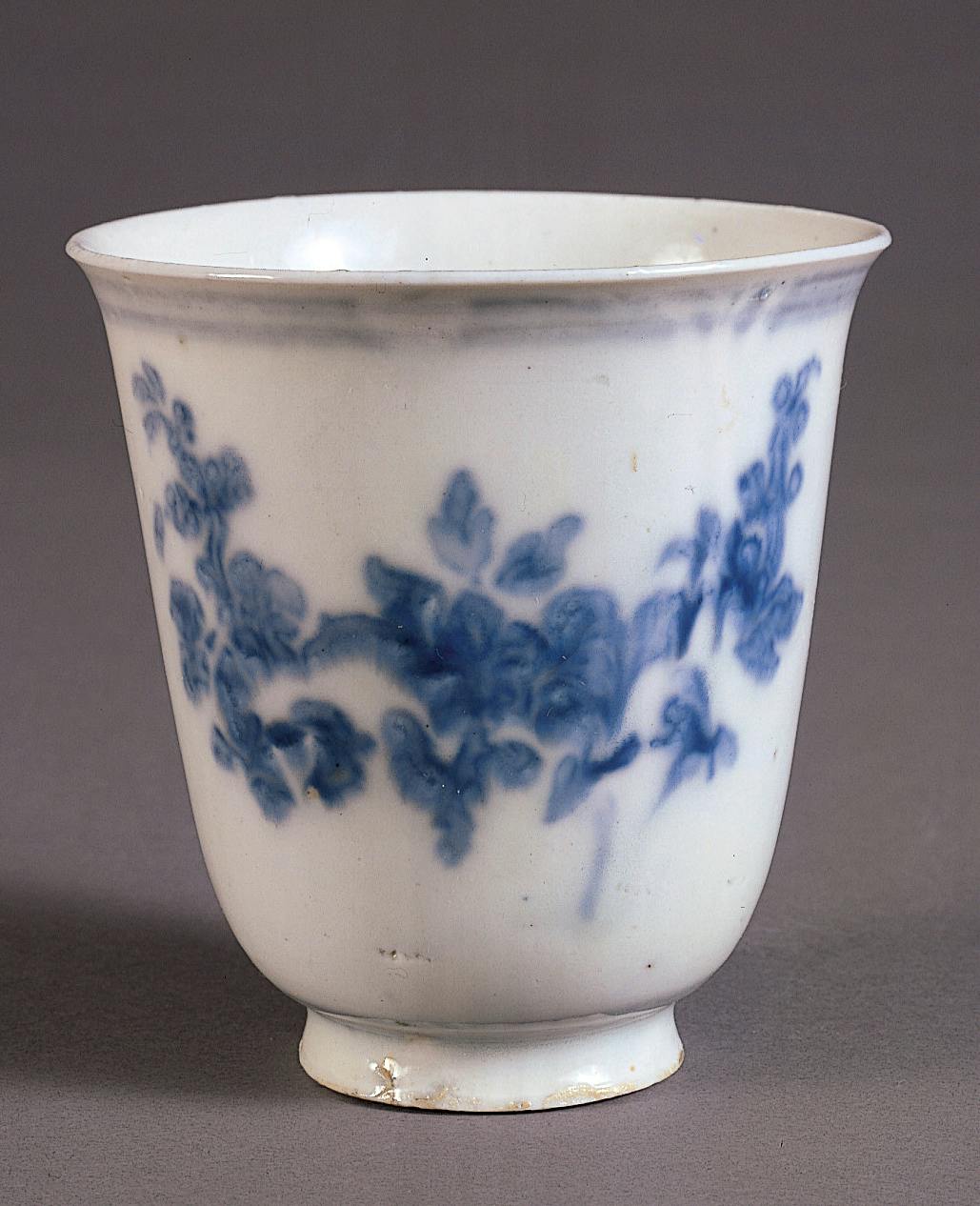
Ginori Manufactory, Bell-shaped cup with a ‘stamped’ decoration trial, porcelain, circa 1750


Ginori Manufactory, Perforated Mask for ‘a stampa’ or ‘stampino’ Decoration
The painter was not required to have high level skills. What was crucial instead was the taste and compositional expertise of the person who had designed the original patterns for the stencils, called ‘stampini’. Even with this type of innovation born out of necessity, the Manifattura Ginori proved to be ahead of its time: this relationship between design and execution anticipates by two centuries what industrial design later established—that the value of a product lies in the quality of its design rather than in the methods of its reproduction.
Simple and intuitive, the technique of pre-cut stencils was very common at the time, even in rural settings, and used to decorate all sorts of surfaces from paper to wood, from fabrics to plastered walls. However, Ginori was the only eighteenth-century factory to have the boldness and ability to successfully apply it to a luxurious material like porcelain.


Ginori Manufactory, Refreshment vessel with lid bearing the coat of arms of Francesco Marana and Laura Isola, porcelain, circa 1749

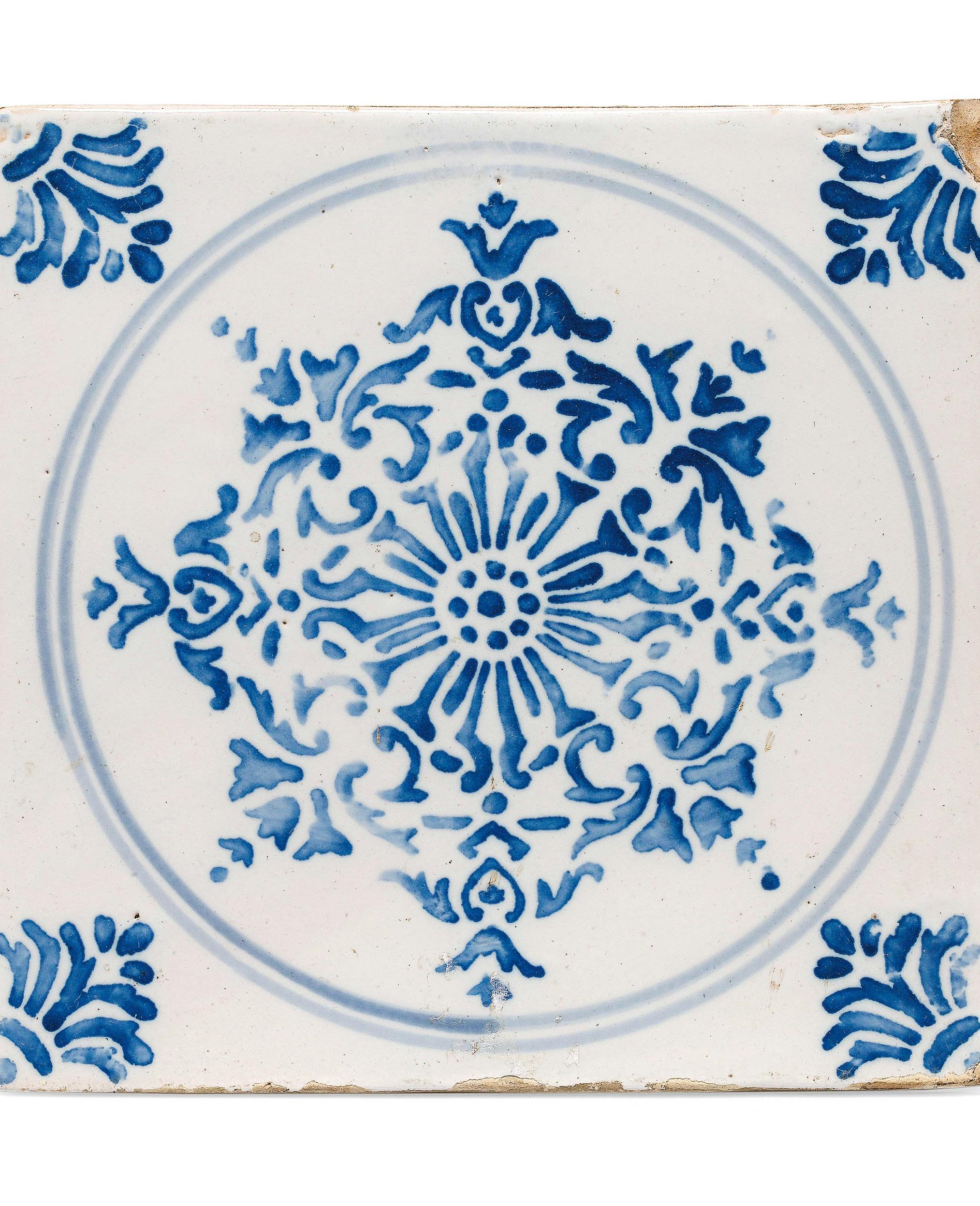
Manifattura Ginori, ‘Ambrogetta’ with ‘a stampa’ decoration, 19th century, maiolica, private collection
In the nineteenth century, when serial reproduction techniques such as chromolithography were introduced for decoration on porcelain and earthenware, the ‘stampino’ continued to be used for the ‘ambrogette’ (or wall tiles) in maiolica with which, for example, ‘French-style’ fireplaces were clad, still preserved in many villas and palaces in Florence and its surroundings. A large surface with Ginori tiles decorated with the stampino remains in place in the stables of Villa Salviati, in Florence, now home to the European University Institute.
Reading recommendations
- L. Ginori Lisci, The Porcelain of Doccia, Florence 1963, pp. 40-42.
- A. Biancalana, Porcelain and Maiolica at Doccia. The Factory of the Marquises Ginori. The First Hundred Years, Florence 2009, pp. 146-147.
- A. Moore Valeri, Ceramics in Use in Florence Between the Eighteenth and Nineteenth Centuries. vol. I Maiolica, Sesto Fiorentino 2019, pp. 219-225.