Column Service
Giovanni Gariboldi
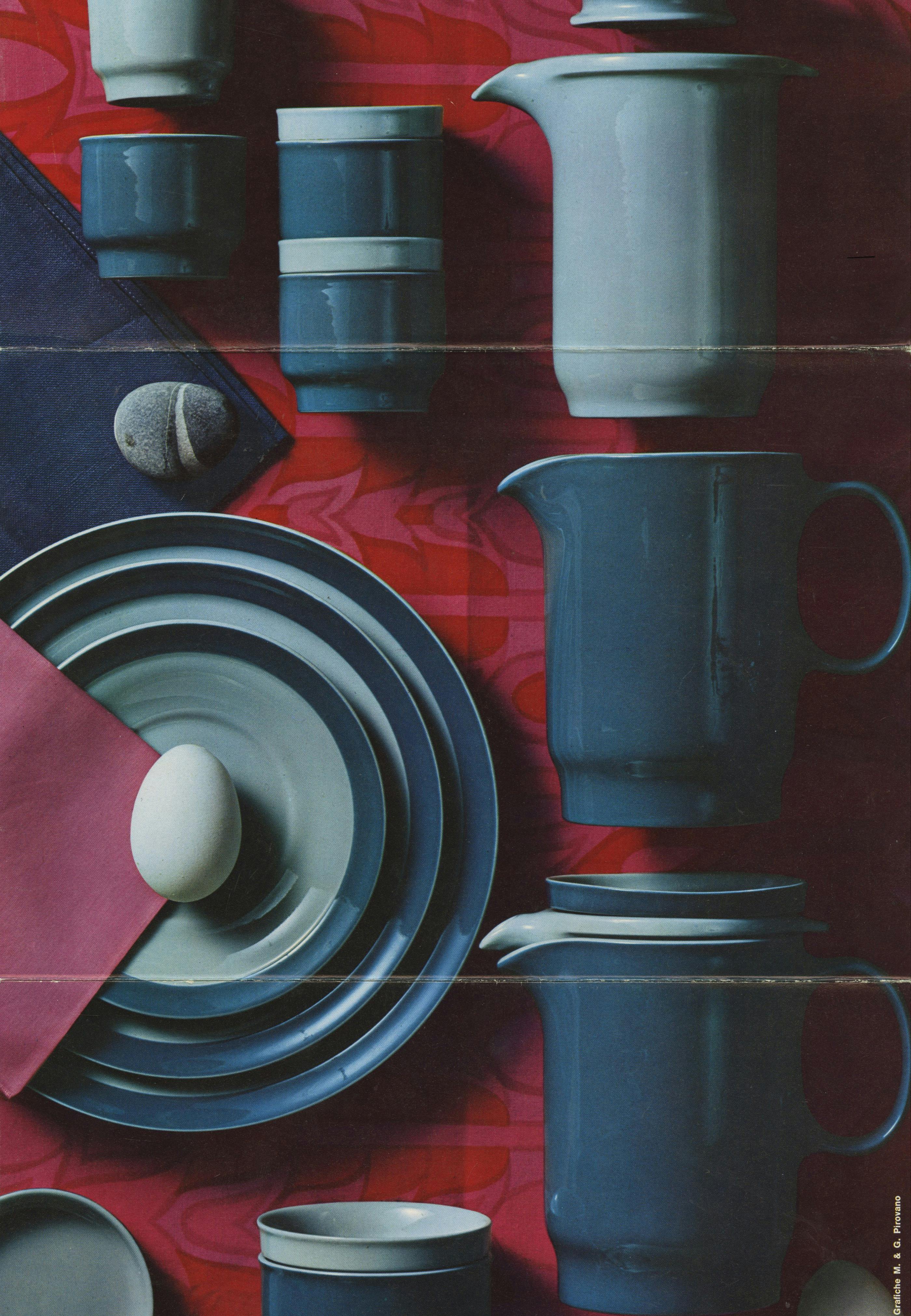
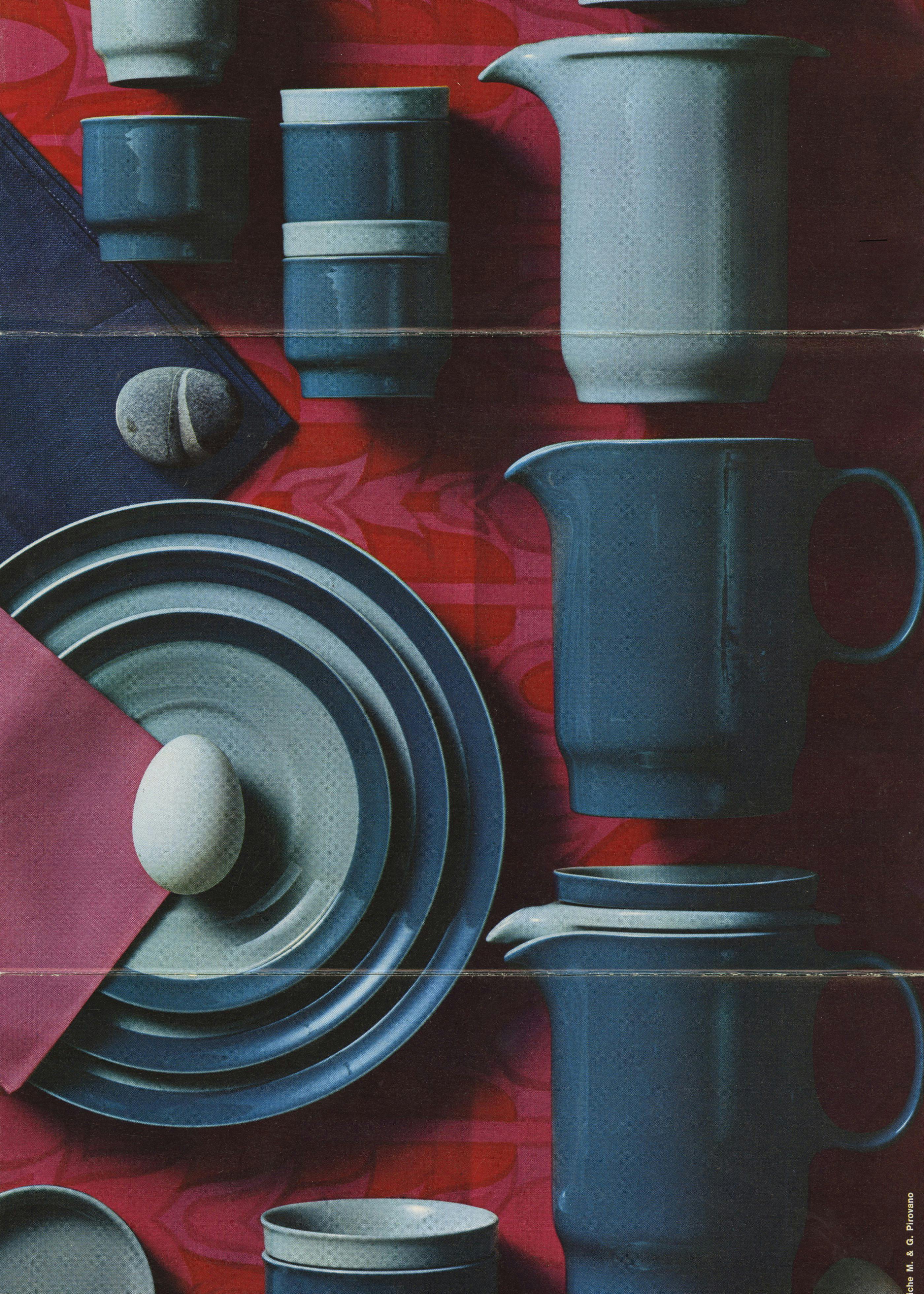
The Colonna set is a cornerstone of Italian industrial design of the post-war period and one of the first stackable sets in Europe. Equally innovative was its packaging, which displayed the stacked items in cross-section, at life size.
The collection was designed by Giovanni Gariboldi in 1954 to participate in the first edition of the Compasso d’oro competition, winning first prize because, according to the jury, it “responds with essential volumes to the functional purpose that determines it, a purpose found in the extreme reduction of occupied space.”
The subsequent version, illustrated in the leaflet pictured, is partly less strict but more versatile than the first as it also allows the addition of certain elements, such as serving dishes and broth cups that did not follow the perfect cylindrical unity of the original design. The pieces could be purchased in blue boxes for six people or individually.
The modern approach combined with the aesthetic quality of the essential decoration and functionality was also recognized in the second edition of the set, which received the Gold Medal from the President of the Senate in 1967 at the International Faenza Ceramics Competition and remained in production for years at the Pisa and Lambrate factories.
- 01
Giovanni Gariboldi, Colonna set (advertisement image)
- 02
Column Service
The Colonna set is a cornerstone of Italian industrial design of the post-war period and one of the first stackable sets in Europe. Equally innovative was its packaging, which displayed the stacked items in cross-section, at life size.
The collection was designed by Giovanni Gariboldi in 1954 to participate in the first edition of the Compasso d’oro competition, winning first prize because, according to the jury, it “responds with essential volumes to the functional purpose that determines it, a purpose found in the extreme reduction of occupied space.”
The subsequent version, illustrated in the leaflet pictured, is partly less strict but more versatile than the first as it also allows the addition of certain elements, such as serving dishes and broth cups that did not follow the perfect cylindrical unity of the original design. The pieces could be purchased in blue boxes for six people or individually.
The modern approach combined with the aesthetic quality of the essential decoration and functionality was also recognized in the second edition of the set, which received the Gold Medal from the President of the Senate in 1967 at the International Faenza Ceramics Competition and remained in production for years at the Pisa and Lambrate factories.