
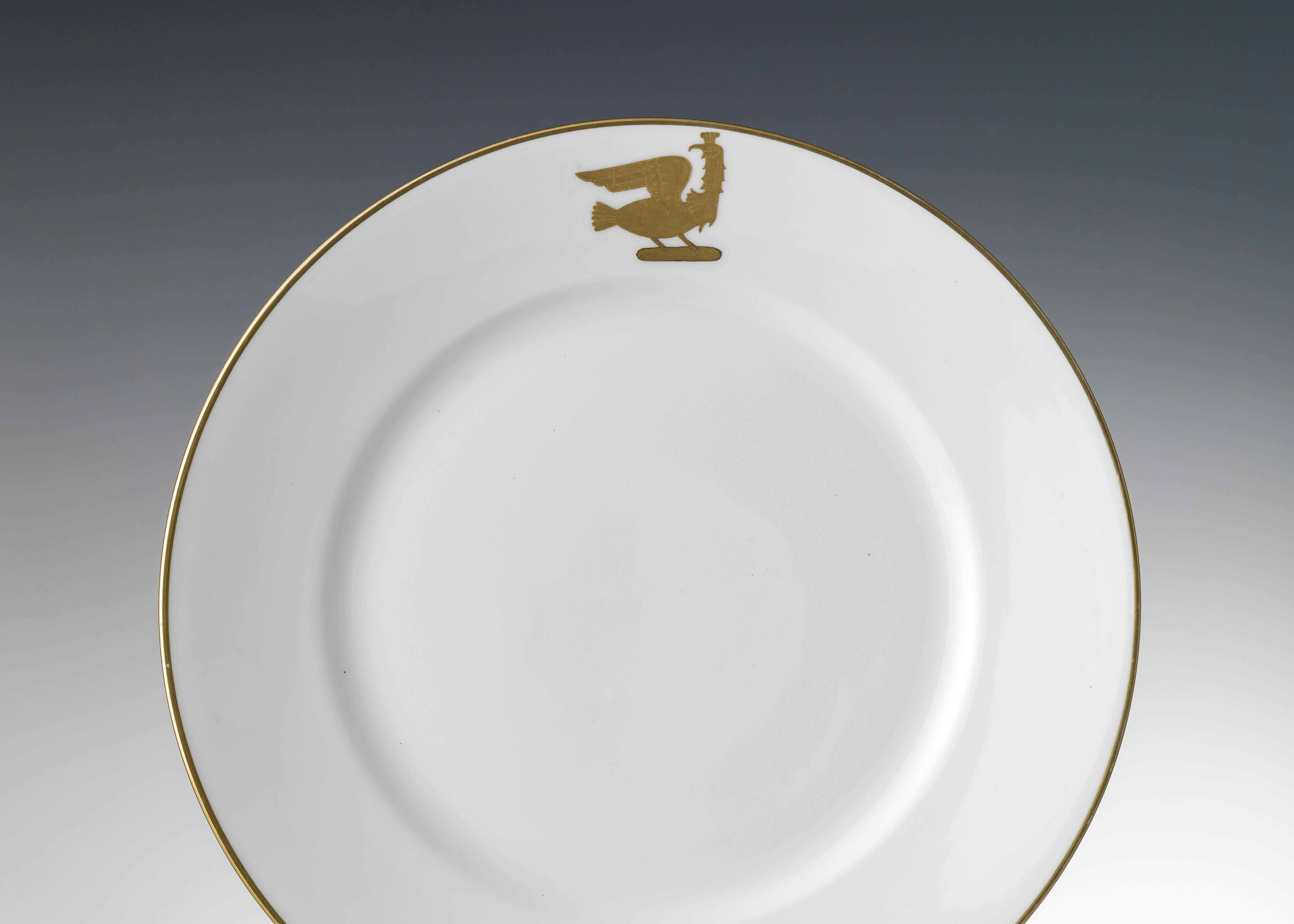
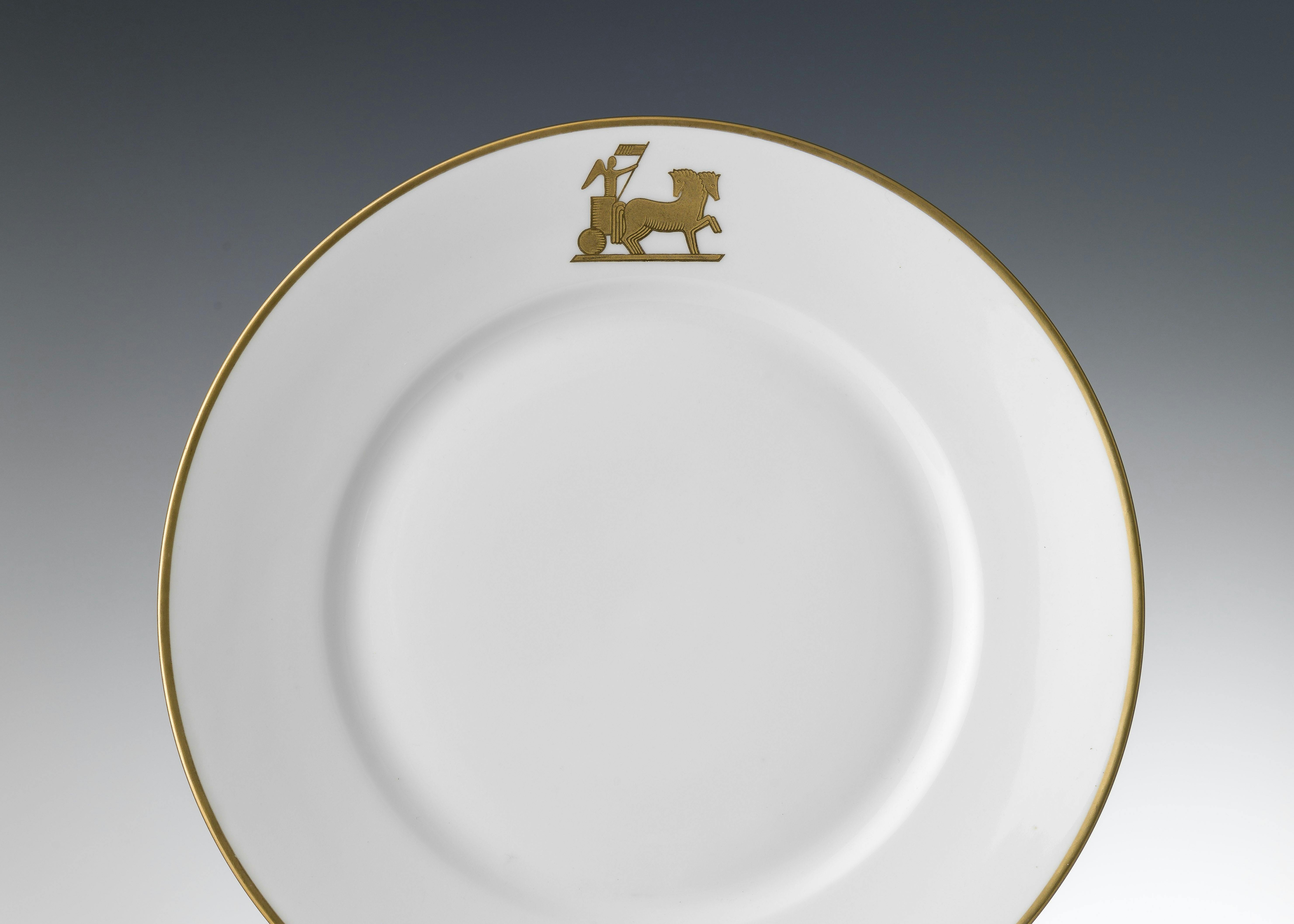
Soup tureen and four plates from the Ala service
Gio Ponti
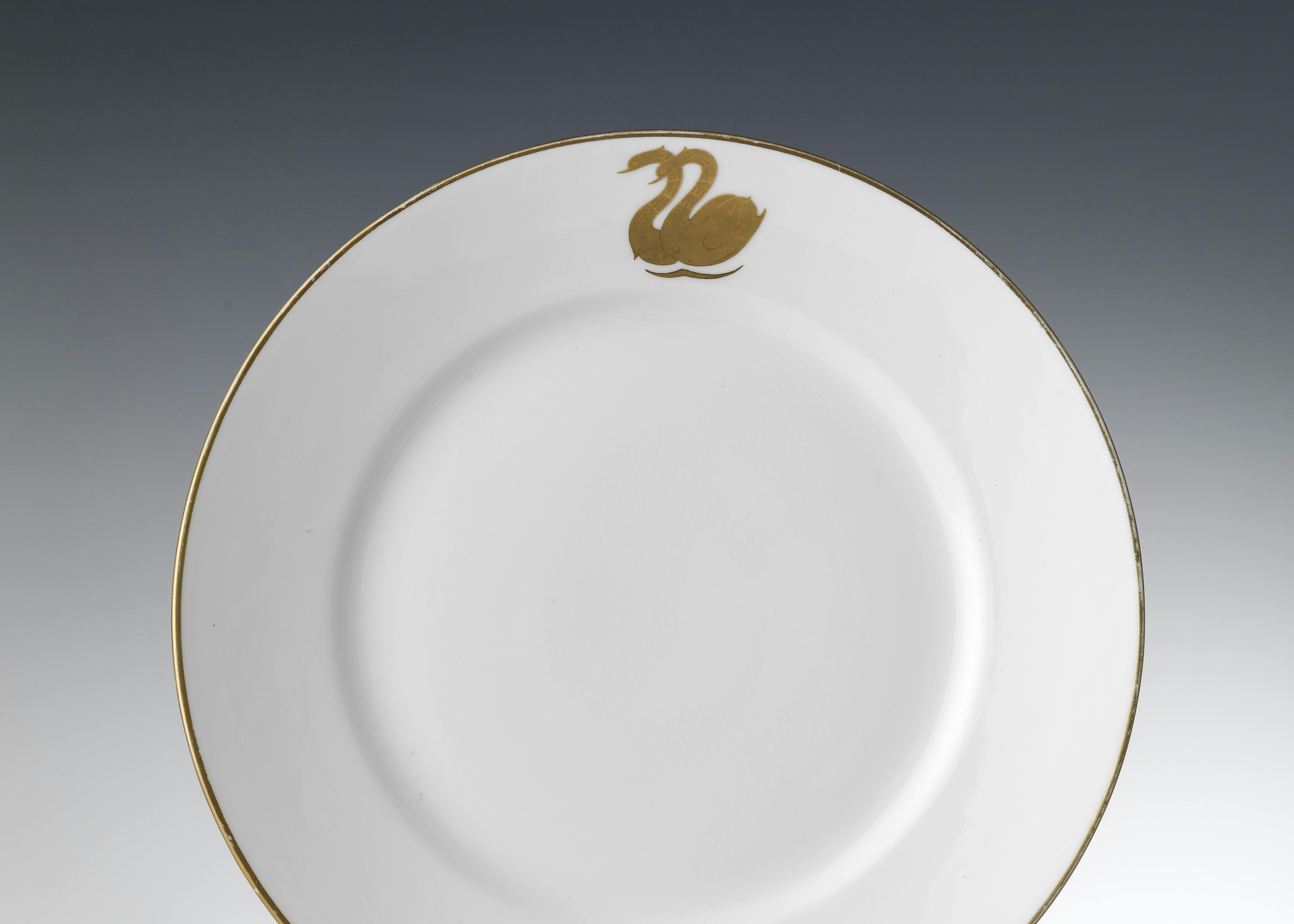
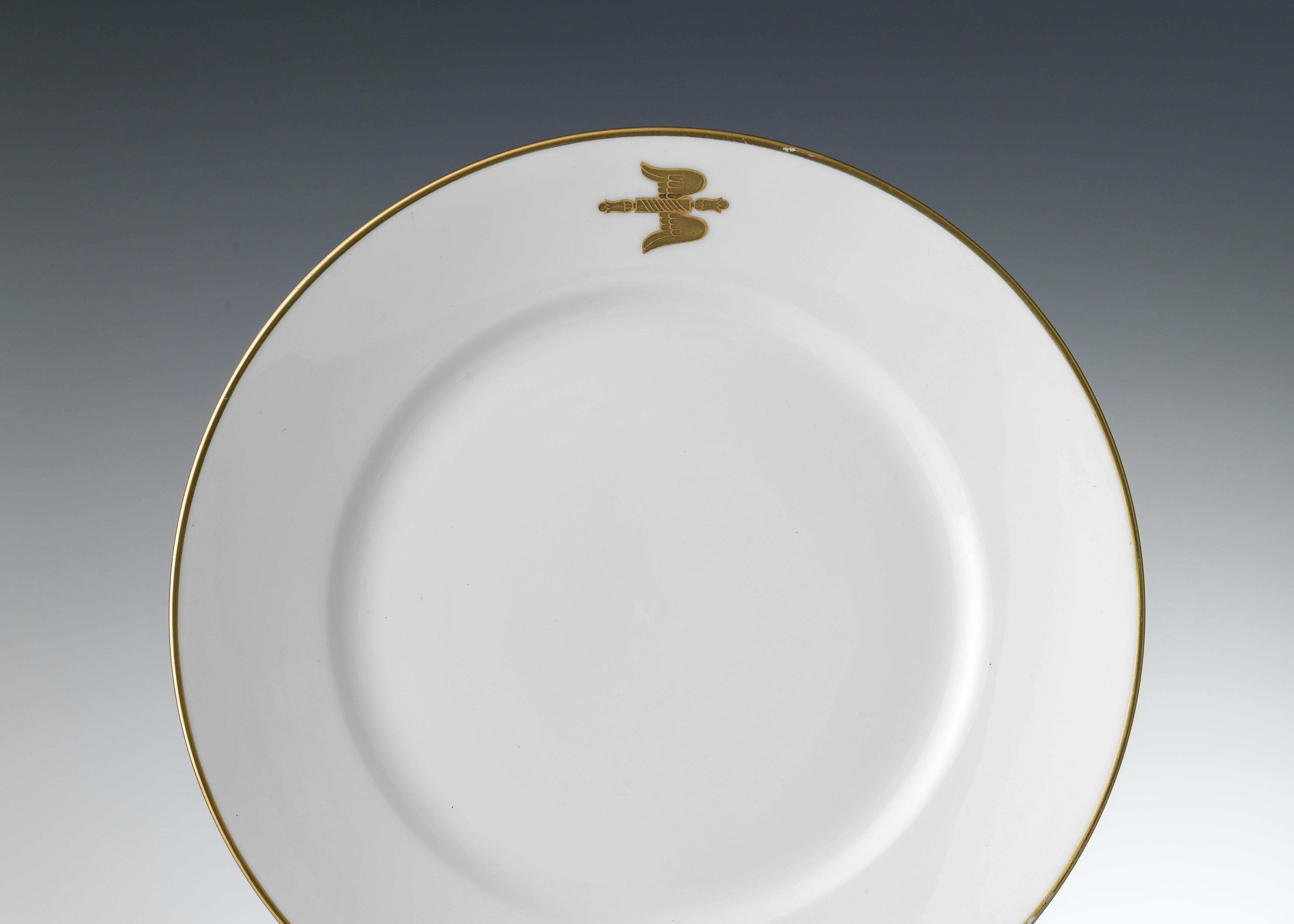
The Ala tableware set was designed by Ponti between the end of 1929 and the beginning of 1930. It is characterized by the soup tureen with handles shaped like stylized wings, which is mentioned in documents from October 1929 onward. In a note related to one of his visits to the Richard-Ginori factory, dated January 10, 1930, Ponti lists the subjects planned for the decoration of the various elements: "a) triumph b) dragon c) fragment d) phoenix e) pair of swans f) flying swan g) flying mermaid queen".
The small motifs are all united by the presence of wings. Some of them, such as the triumphal chariot or the flying mermaid, also appear larger on other porcelain objects designed by Ponti during the same period. The theme of winged figures was particularly dear to Ponti, who would continue to use it throughout his entire career.
The decorations are all made using the complex hydrofluoric acid engraving technique which, by corroding the porcelain’s glaze, allows for a slight relief and a contrast between glossy and matte gold. The set was presented at the 1930 Triennale in Monza and partly illustrated in the catalogue Ceramiche Moderne d'Arte [1930], p. 68) and in Domus( August 1930, p. 36), where the selling price is listed as 2900 lire.
- 01
Gio Ponti, Servizio Ala, Zuppiera e piatto
- 02
Gio Ponti, Ala service, tureen
- 03
Gio Ponti, Ala service, plate
- 04
Gio Ponti, Ala service, plate
- 05
Gio Ponti, Ala service, plate
- 06
Gio Ponti, Ala service, plate


The Ala tableware set was designed by Ponti between the end of 1929 and the beginning of 1930. It is characterized by the soup tureen with handles shaped like stylized wings, which is mentioned in documents from October 1929 onward. In a note related to one of his visits to the Richard-Ginori factory, dated January 10, 1930, Ponti lists the subjects planned for the decoration of the various elements: "a) triumph b) dragon c) fragment d) phoenix e) pair of swans f) flying swan g) flying mermaid queen".
The small motifs are all united by the presence of wings. Some of them, such as the triumphal chariot or the flying mermaid, also appear larger on other porcelain objects designed by Ponti during the same period. The theme of winged figures was particularly dear to Ponti, who would continue to use it throughout his entire career.
The decorations are all made using the complex hydrofluoric acid engraving technique which, by corroding the porcelain’s glaze, allows for a slight relief and a contrast between glossy and matte gold. The set was presented at the 1930 Triennale in Monza and partly illustrated in the catalogue Ceramiche Moderne d'Arte [1930], p. 68) and in Domus( August 1930, p. 36), where the selling price is listed as 2900 lire.