Centerpiece for the Italian Ministry of Foreign Affairs
Gio Ponti






In the second half of the 1920s, the Manifattura di Doccia created a table centerpiece masterpiece, intended for furnishing the diplomatic offices of the Italian Ministry of Foreign Affairs. The monumental ensemble, composed of many pieces, was designed by Gio Ponti with the collaboration of Tomaso Buzzi (probably only for the initial draft of the armory trophies) and the sculptor Italo Griselli for the modelling. The centerpiece is largely made up of white porcelain elements painted in agate gold by Elena Diana, the most skilled expert of this technique at the Manifattura di Doccia.
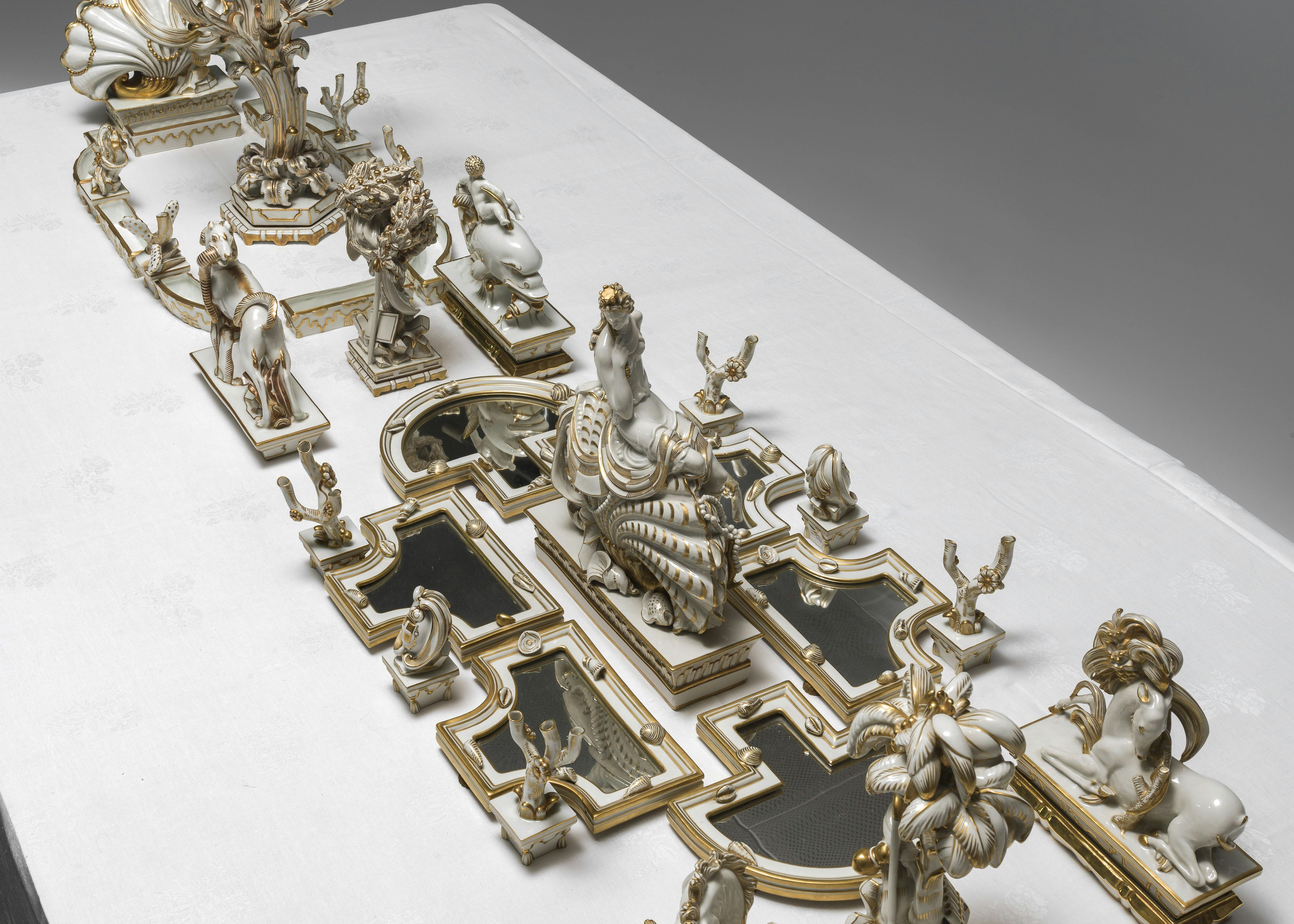
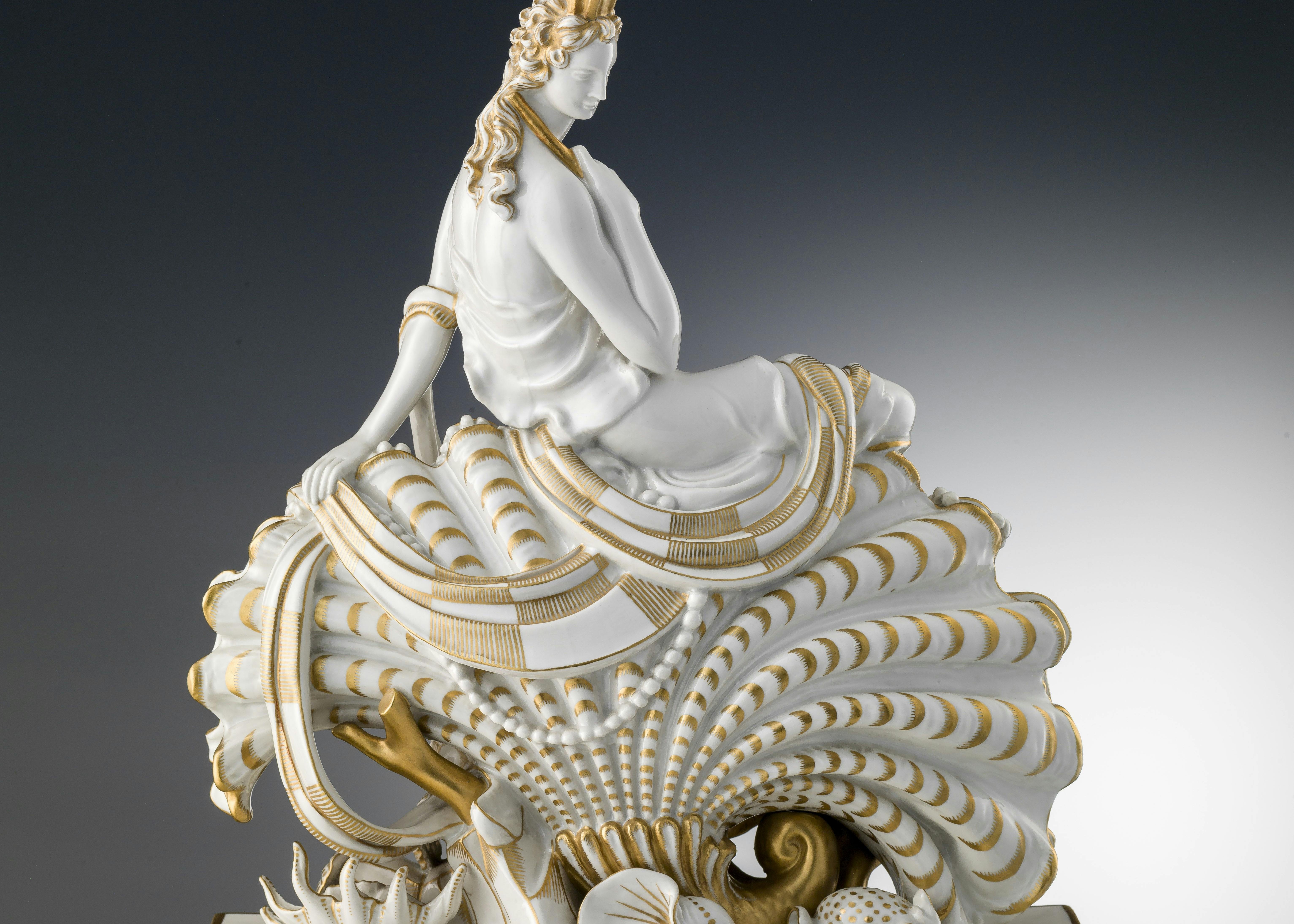
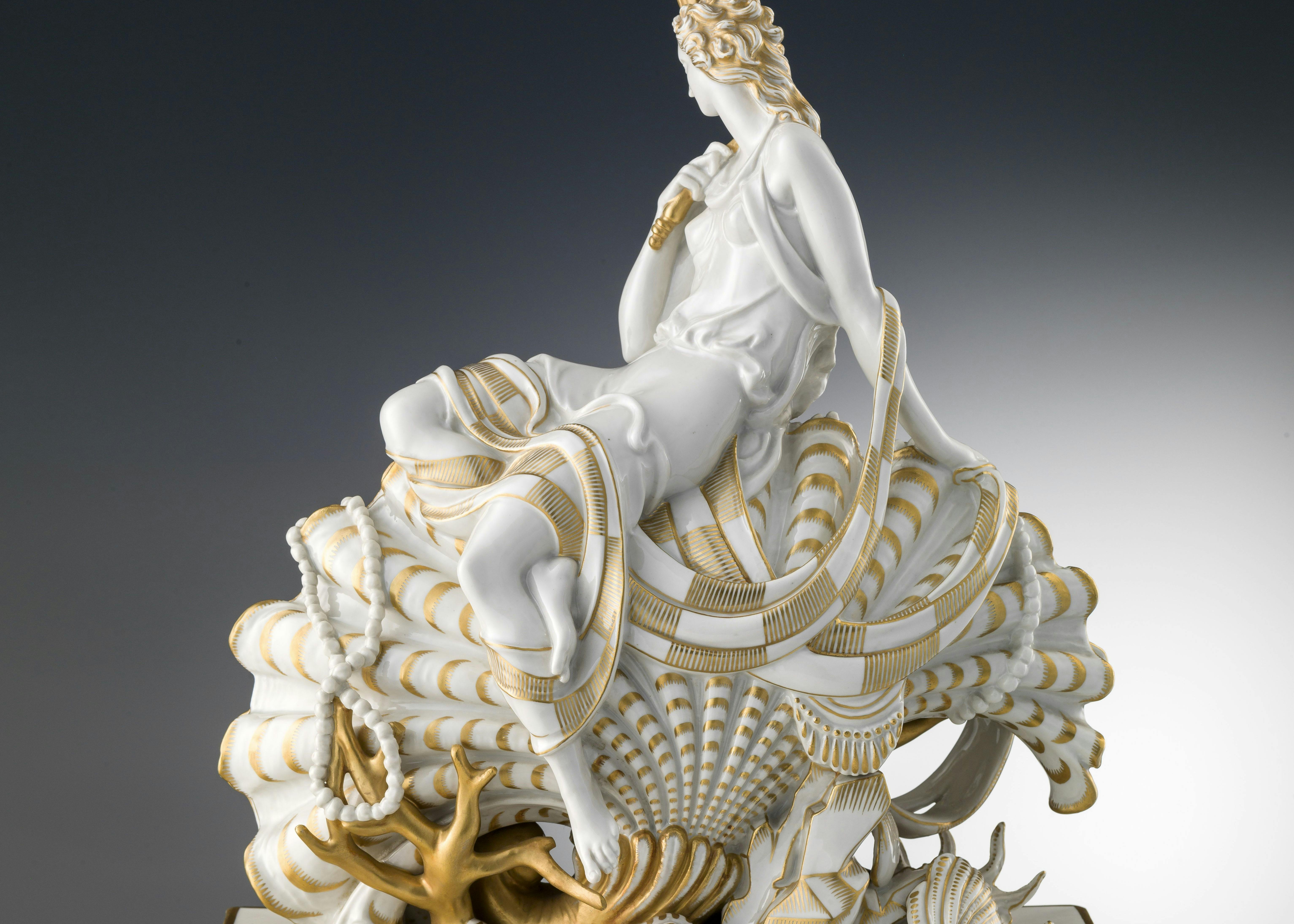
The main element of the eclectic composition, which revives a typically eighteenth-century genre but also draws on the ancient world, is the figure of the Italia turrita (inv. 5366), seated on a huge shell and surrounded by mirrors that allude to the surface of the sea. The allegorical depiction of Italy with a turreted head is frequent in monumental statuary from the time of National Unification onwards; inspired by the pose of the Tyche of Antioch, Ponti reimagined it in an Art Deco version, with a dress revealing its slender forms and confident attitude. The shell serving as her throne, embellished with draperies, pearls, corals and other crustaceans, probably alludes to Mediterranean dominance during the years of colonialism and the Empire.
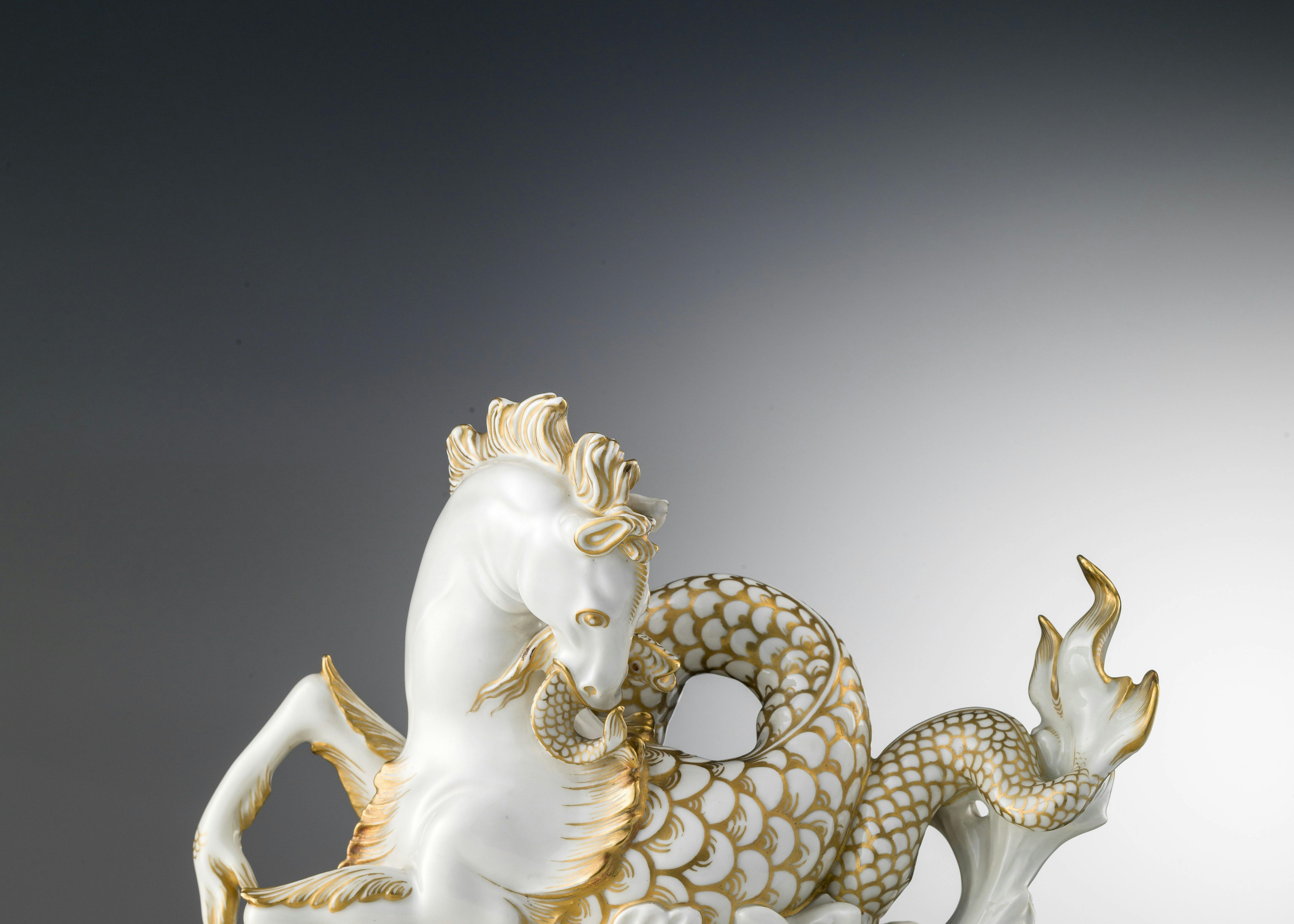
All around are arranged small and large sculptures taken from the ancient repertoire depicting plants and animals, such as the Seahorse (inv. 3054), the Putto riding a dolphin (inv. 3053) and the Dog biting a snake (inv. 3057), all references to Italian culture, history and nature.
The exact date and the way in which Gio Ponti was commissioned to design the ensemble remain not entirely clear to this day, but art historian Roberto Papini, advisor for embassy furnishings and admirer of Gio Ponti, certainly played an important role. Ponti’s first contacts with the Ministry for the design of the table centerpiece date back to 1925, but the final version was not approved until 1929. This included also decorative elements, such as the imperial eagle, the Roman she-wolf and two military trophies with Fascist symbols, which are not present in the Museum’s version and were imposed, in whole or with modifications, directly from Mussolini's government. Some elements, such as the Italia, were presented at the 1927 Monza Biennial of Decorative Arts. The centerpiece was reserved exclusively for the Ministry and the various parts were each marked with a different letter of the alphabet and the inscription "Ministero degli Esteri," designed by Ponti himself. However, later on, some pieces, sometimes with slight variants, were made available for sale, as confirmed by some examples that have appeared on the market and are now in private collections.
- 01
- 02
Centerpiece for the Ministry of Foreign Affairs
- 03
Centerpiece for the Ministry of Foreign Affairs
- 04
Centerpiece for the Ministry of Foreign Affairs
- 05
Centerpiece for the Ministry of Foreign Affairs
- 06
Centerpiece for the Ministry of Foreign Affairs
In the second half of the 1920s, the Manifattura di Doccia created a table centerpiece masterpiece, intended for furnishing the diplomatic offices of the Italian Ministry of Foreign Affairs. The monumental ensemble, composed of many pieces, was designed by Gio Ponti with the collaboration of Tomaso Buzzi (probably only for the initial draft of the armory trophies) and the sculptor Italo Griselli for the modelling. The centerpiece is largely made up of white porcelain elements painted in agate gold by Elena Diana, the most skilled expert of this technique at the Manifattura di Doccia.
The main element of the eclectic composition, which revives a typically eighteenth-century genre but also draws on the ancient world, is the figure of the Italia turrita (inv. 5366), seated on a huge shell and surrounded by mirrors that allude to the surface of the sea. The allegorical depiction of Italy with a turreted head is frequent in monumental statuary from the time of National Unification onwards; inspired by the pose of the Tyche of Antioch, Ponti reimagined it in an Art Deco version, with a dress revealing its slender forms and confident attitude. The shell serving as her throne, embellished with draperies, pearls, corals and other crustaceans, probably alludes to Mediterranean dominance during the years of colonialism and the Empire.
All around are arranged small and large sculptures taken from the ancient repertoire depicting plants and animals, such as the Seahorse (inv. 3054), the Putto riding a dolphin (inv. 3053) and the Dog biting a snake (inv. 3057), all references to Italian culture, history and nature.
The exact date and the way in which Gio Ponti was commissioned to design the ensemble remain not entirely clear to this day, but art historian Roberto Papini, advisor for embassy furnishings and admirer of Gio Ponti, certainly played an important role. Ponti’s first contacts with the Ministry for the design of the table centerpiece date back to 1925, but the final version was not approved until 1929. This included also decorative elements, such as the imperial eagle, the Roman she-wolf and two military trophies with Fascist symbols, which are not present in the Museum’s version and were imposed, in whole or with modifications, directly from Mussolini's government. Some elements, such as the Italia, were presented at the 1927 Monza Biennial of Decorative Arts. The centerpiece was reserved exclusively for the Ministry and the various parts were each marked with a different letter of the alphabet and the inscription "Ministero degli Esteri," designed by Ponti himself. However, later on, some pieces, sometimes with slight variants, were made available for sale, as confirmed by some examples that have appeared on the market and are now in private collections.