Cista Triumphus Mortis and Triumphus Amoris
Gio Ponti


Derived from a form typical of Etruscan art, the model of the casket with lid paired with the most refined decorations was considered by Gio Ponti a true summa of the artistic quality of the porcelains he designed for Richard-Ginori. The version decorated in bright blue and agate-point gold is part of the decorative series Trionfi, conceived by Ponti and presented at the 1st Milan Triennale in 1930, where a specimen with a dedication and variants was gifted to Benito Mussolini.
The body of the vase features the Triumphus Amoris (Triumph of Love) and the Triumphus Mortis (Triumph of Death), accompanied by their respective arches adorned with doves, flowers, ribbons, and the tree of life for the former; cords, draperies, and laurel wreath for the latter. Added to these are small symbols such as the cornucopia, putto, drapery, and a comet. The theme alludes to the military triumphs customary in ancient Rome, though reimagined allegorically as in Francesco Petrarca’s poem Trionfi.
The choice of bright blue and agate-point gold colours is inspired by the Empire-style decorations of the Sèvres manufactory, which Ponti himself references in his letters to the Richard Ginori factory. In ancient decorations, the refined agate gold technique was mainly used for bands and borders, whereas in this case it becomes the absolute protagonist of the decoration, demonstrating Ponti’s skill in enhancing artisanal knowledge with modern inventions that would otherwise be confined to imitative production.
- 01
- 02
Cista Triumphus Mortis and Triumphus Amoris
- 03
Cista Triumphus Mortis and Triumphus Amoris
- 04
Cista Triumphus Mortis and Triumphus Amoris
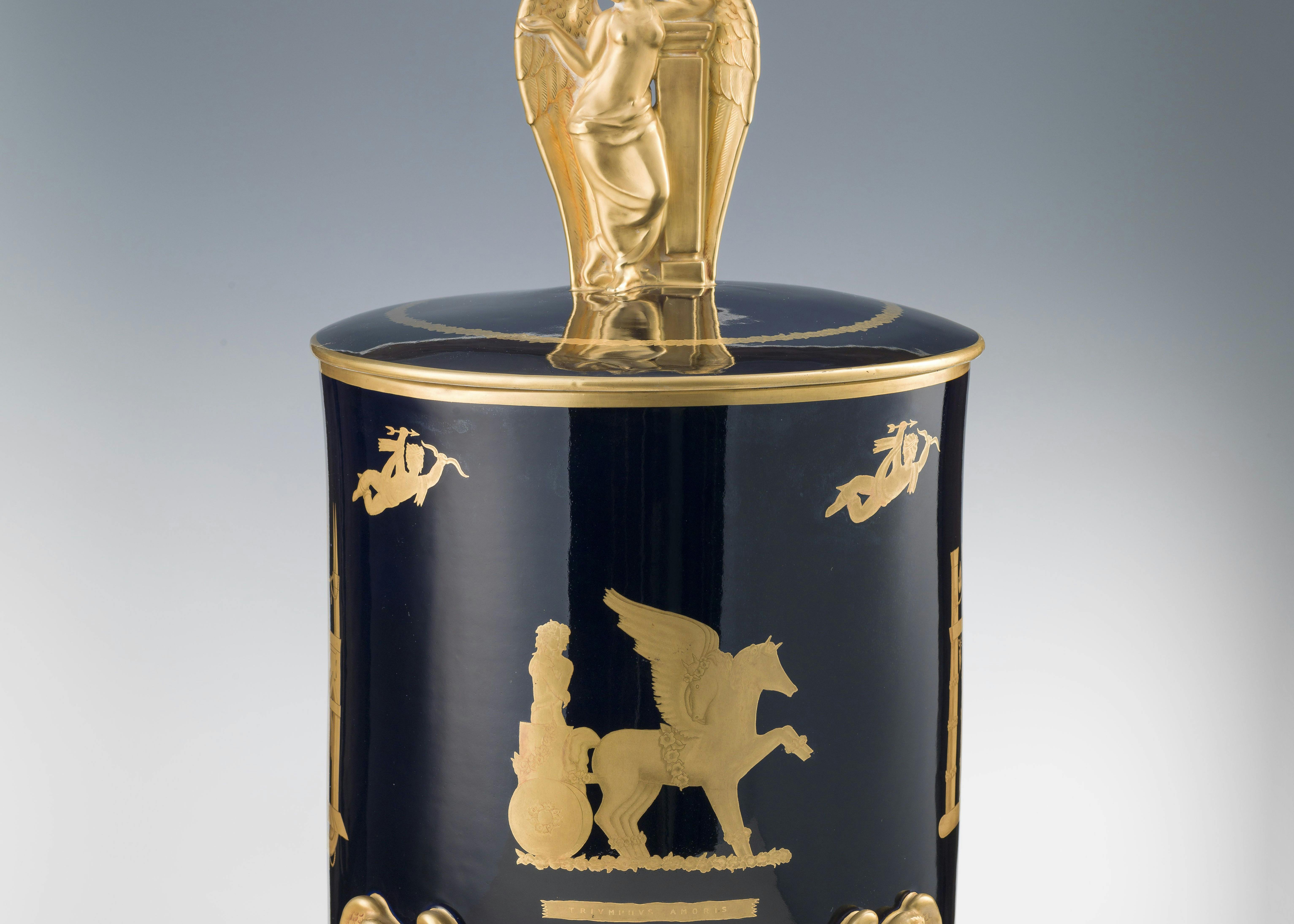
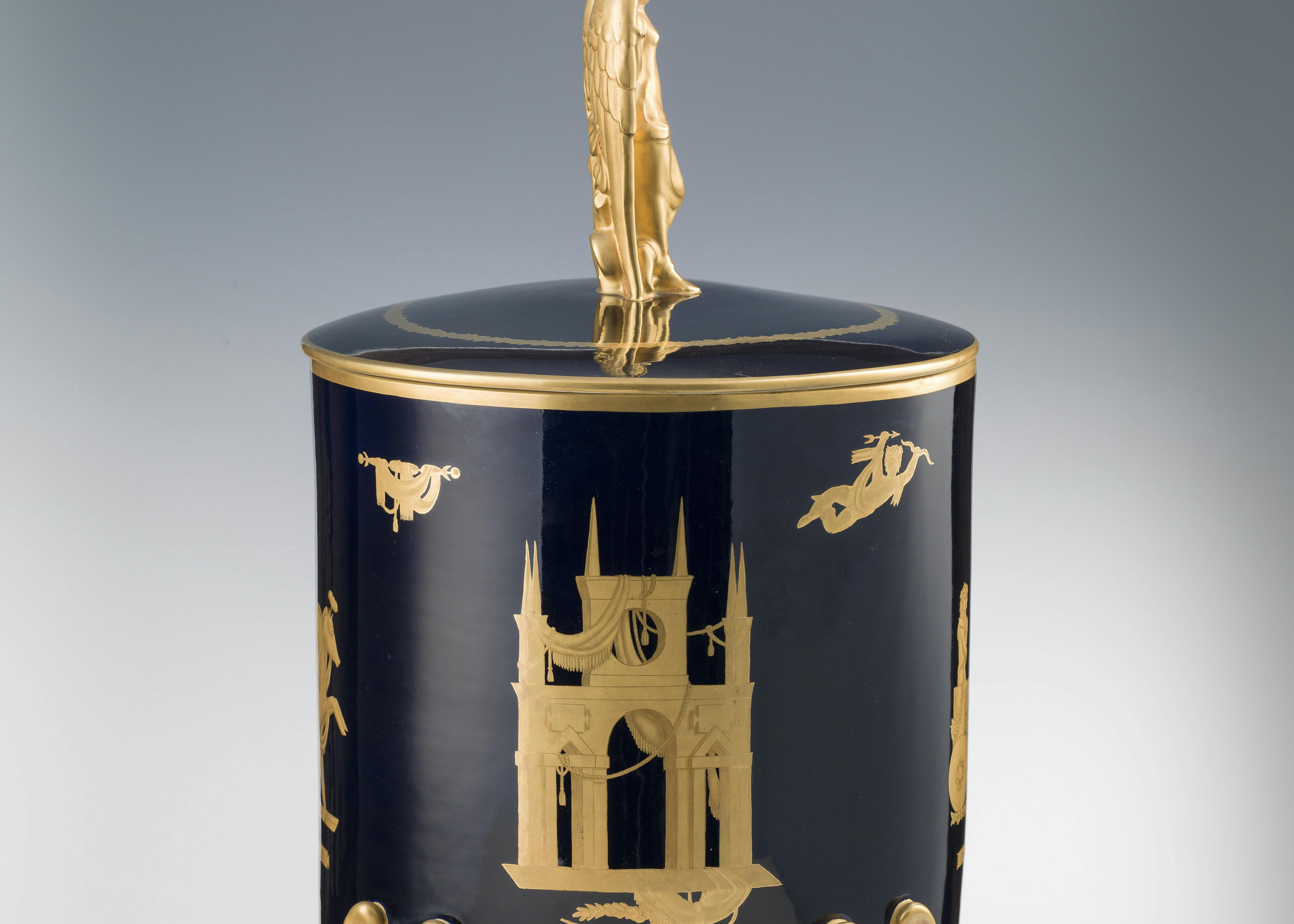
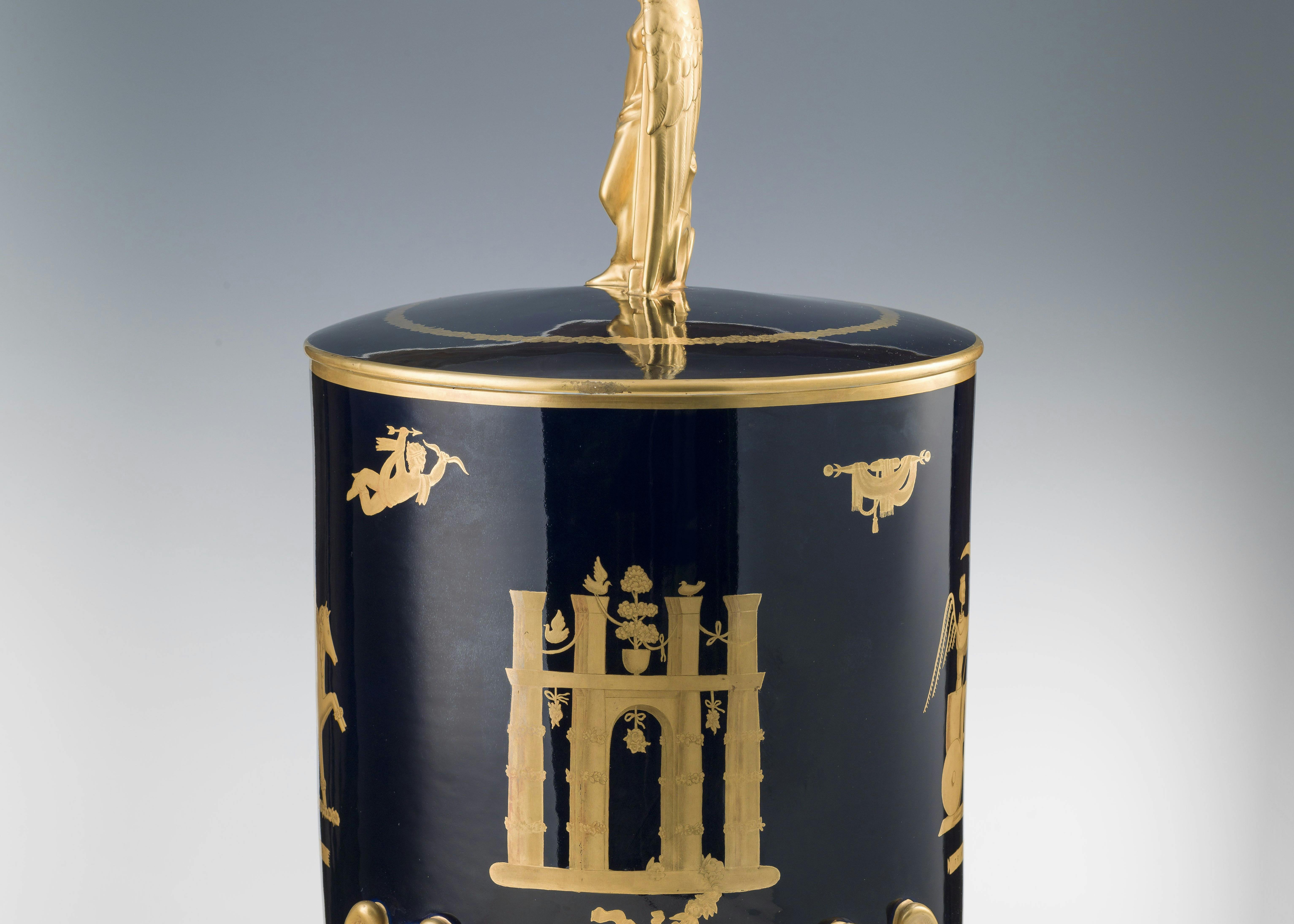
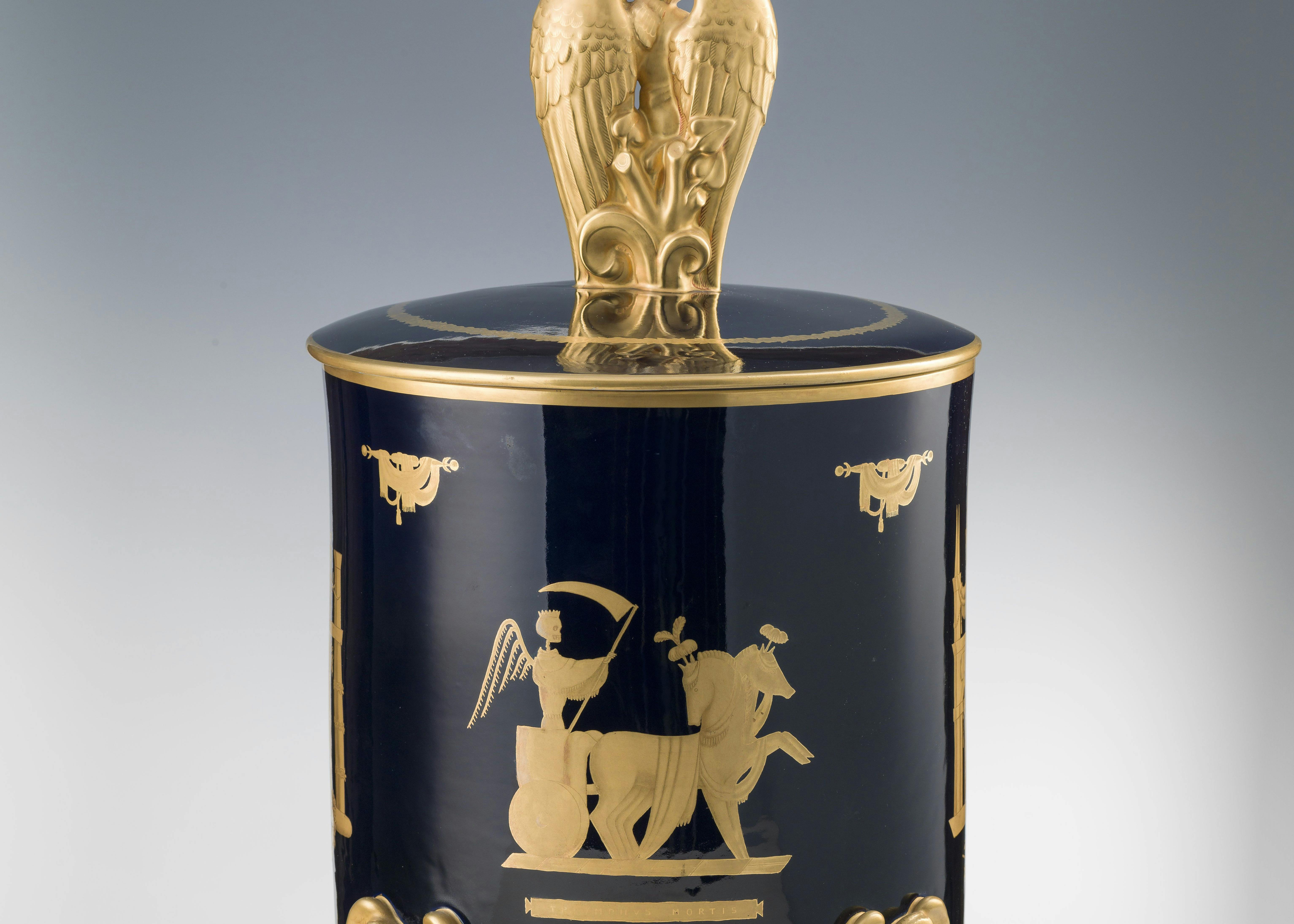
Derived from a form typical of Etruscan art, the model of the casket with lid paired with the most refined decorations was considered by Gio Ponti a true summa of the artistic quality of the porcelains he designed for Richard-Ginori. The version decorated in bright blue and agate-point gold is part of the decorative series Trionfi, conceived by Ponti and presented at the 1st Milan Triennale in 1930, where a specimen with a dedication and variants was gifted to Benito Mussolini.
The body of the vase features the Triumphus Amoris (Triumph of Love) and the Triumphus Mortis (Triumph of Death), accompanied by their respective arches adorned with doves, flowers, ribbons, and the tree of life for the former; cords, draperies, and laurel wreath for the latter. Added to these are small symbols such as the cornucopia, putto, drapery, and a comet. The theme alludes to the military triumphs customary in ancient Rome, though reimagined allegorically as in Francesco Petrarca’s poem Trionfi.
The choice of bright blue and agate-point gold colours is inspired by the Empire-style decorations of the Sèvres manufactory, which Ponti himself references in his letters to the Richard Ginori factory. In ancient decorations, the refined agate gold technique was mainly used for bands and borders, whereas in this case it becomes the absolute protagonist of the decoration, demonstrating Ponti’s skill in enhancing artisanal knowledge with modern inventions that would otherwise be confined to imitative production.