Cupid and Psyche
From the ancient marble preserved in the Uffizi Galleries, with variations
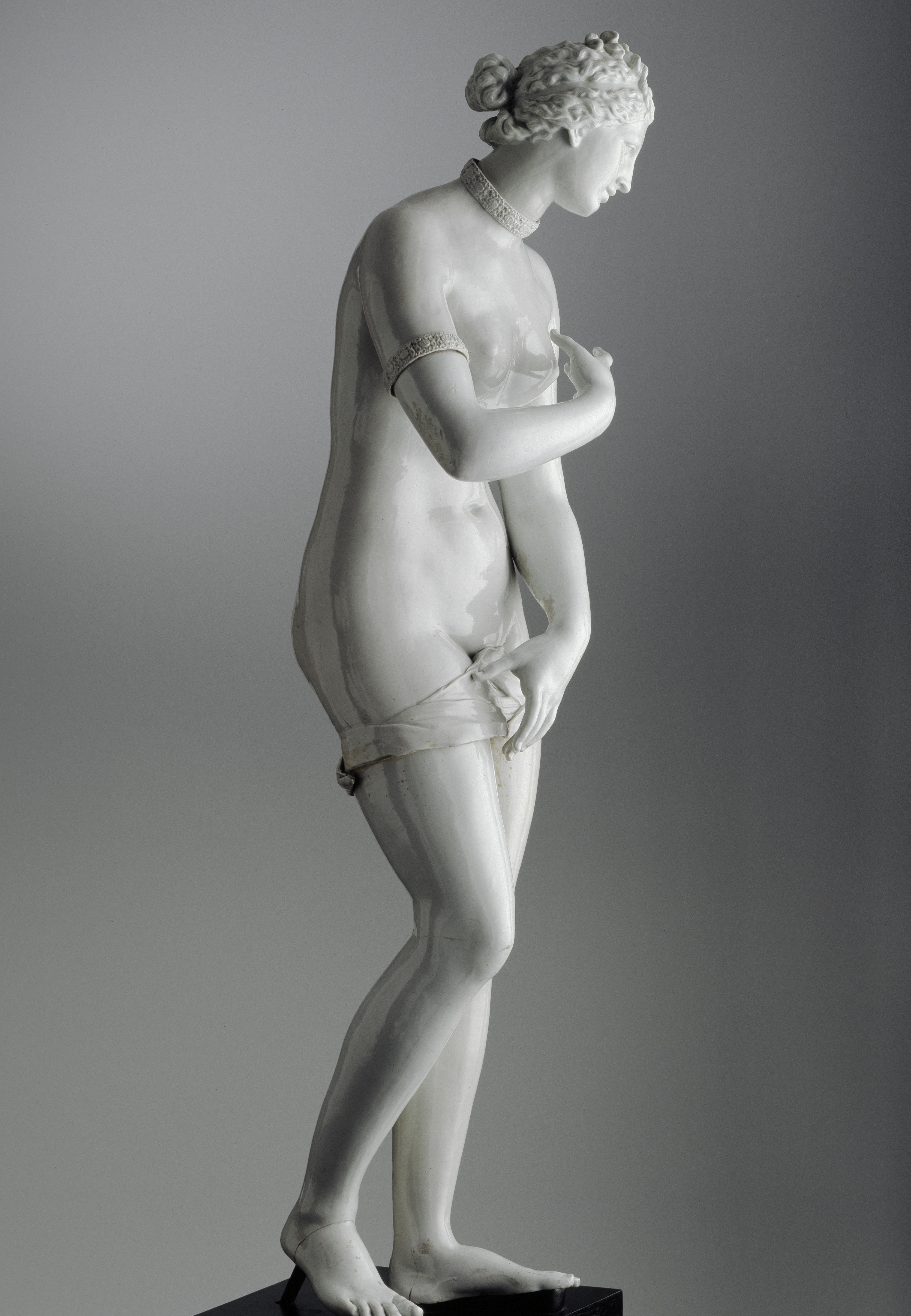
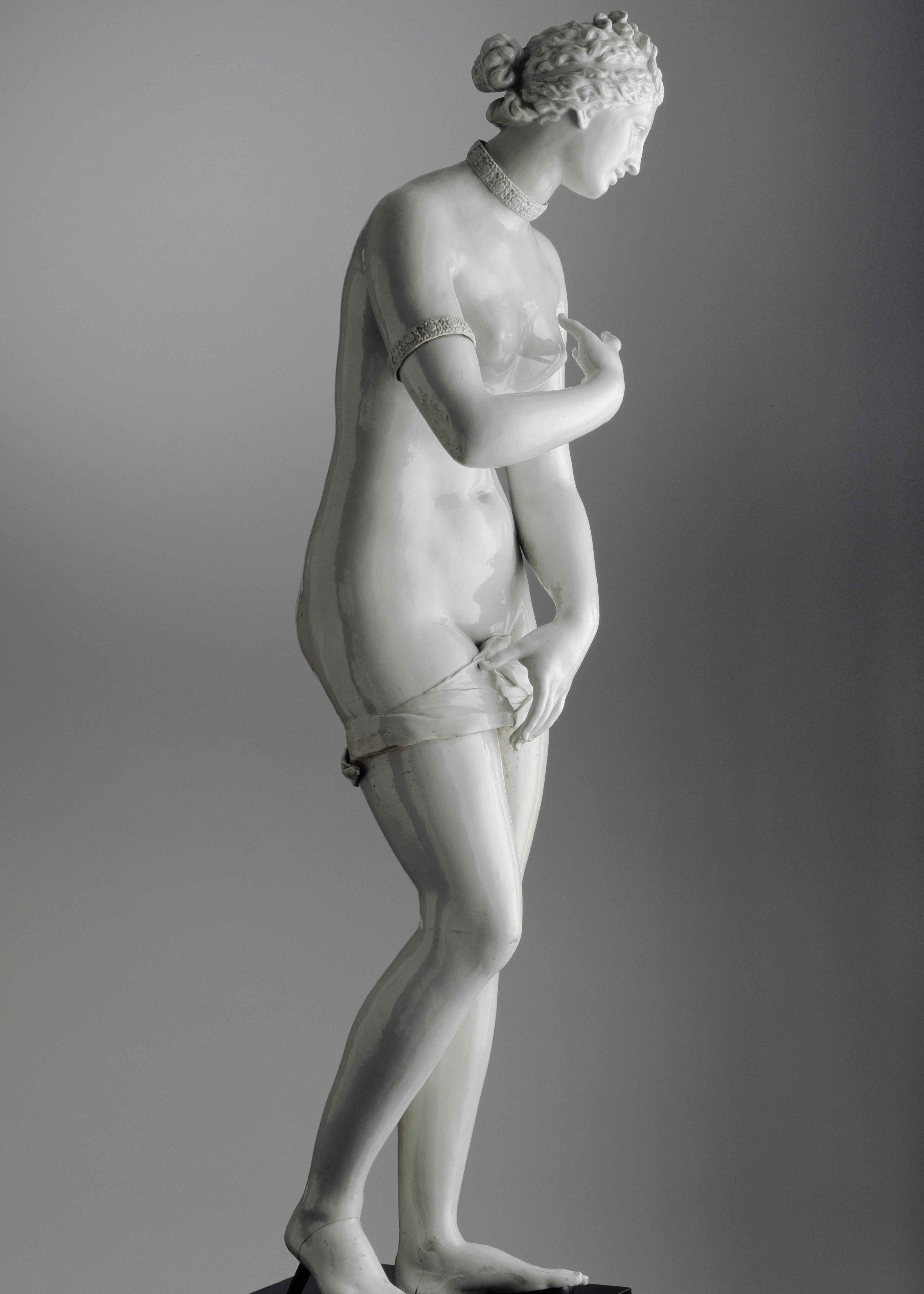
From its inception, the Ginori Manufactory of Doccia distinguished itself from all other European manufactories for the creation of large porcelain statues, derived both from ancient sculpture and from compositions by late Baroque Florentine sculptors.
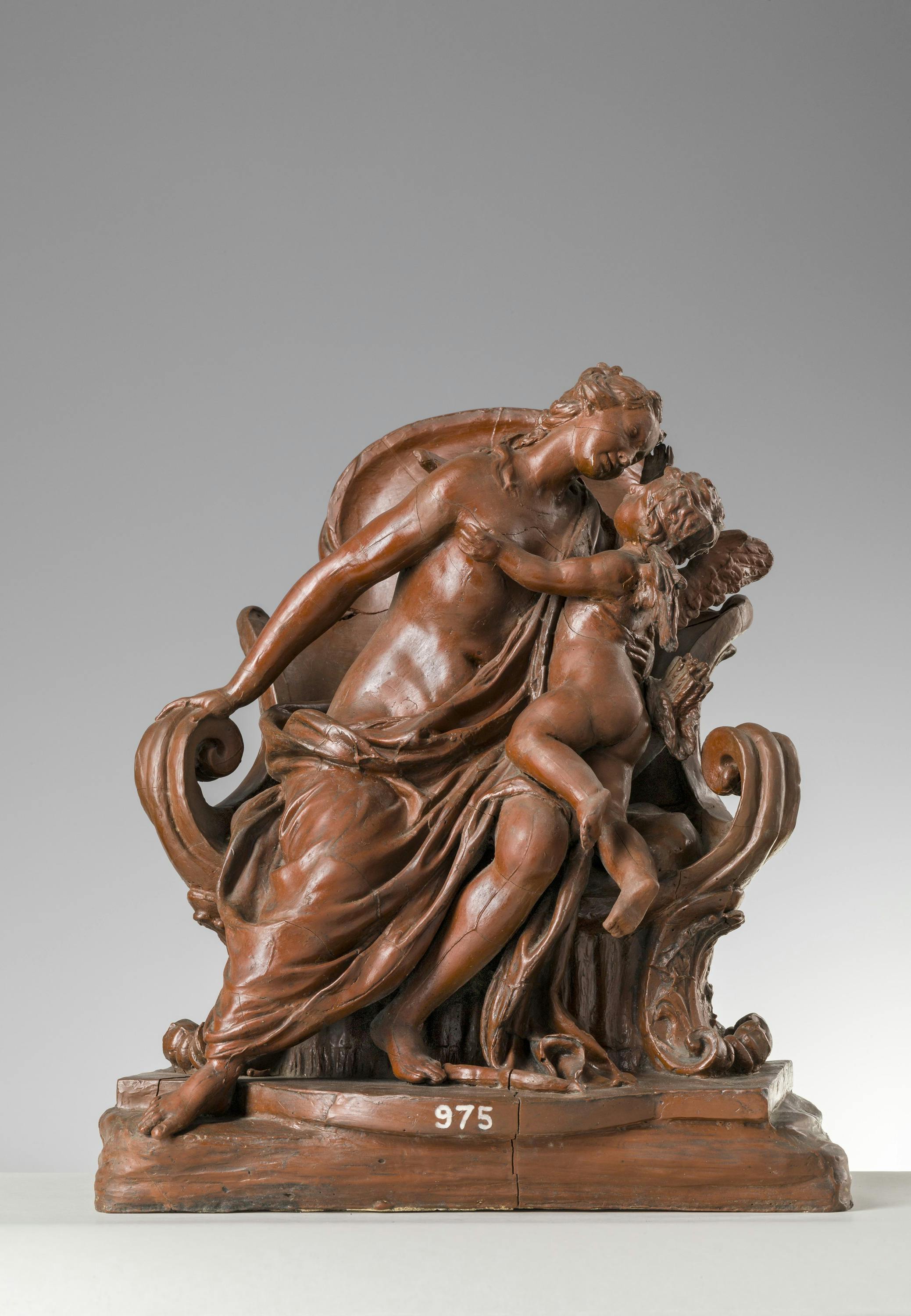
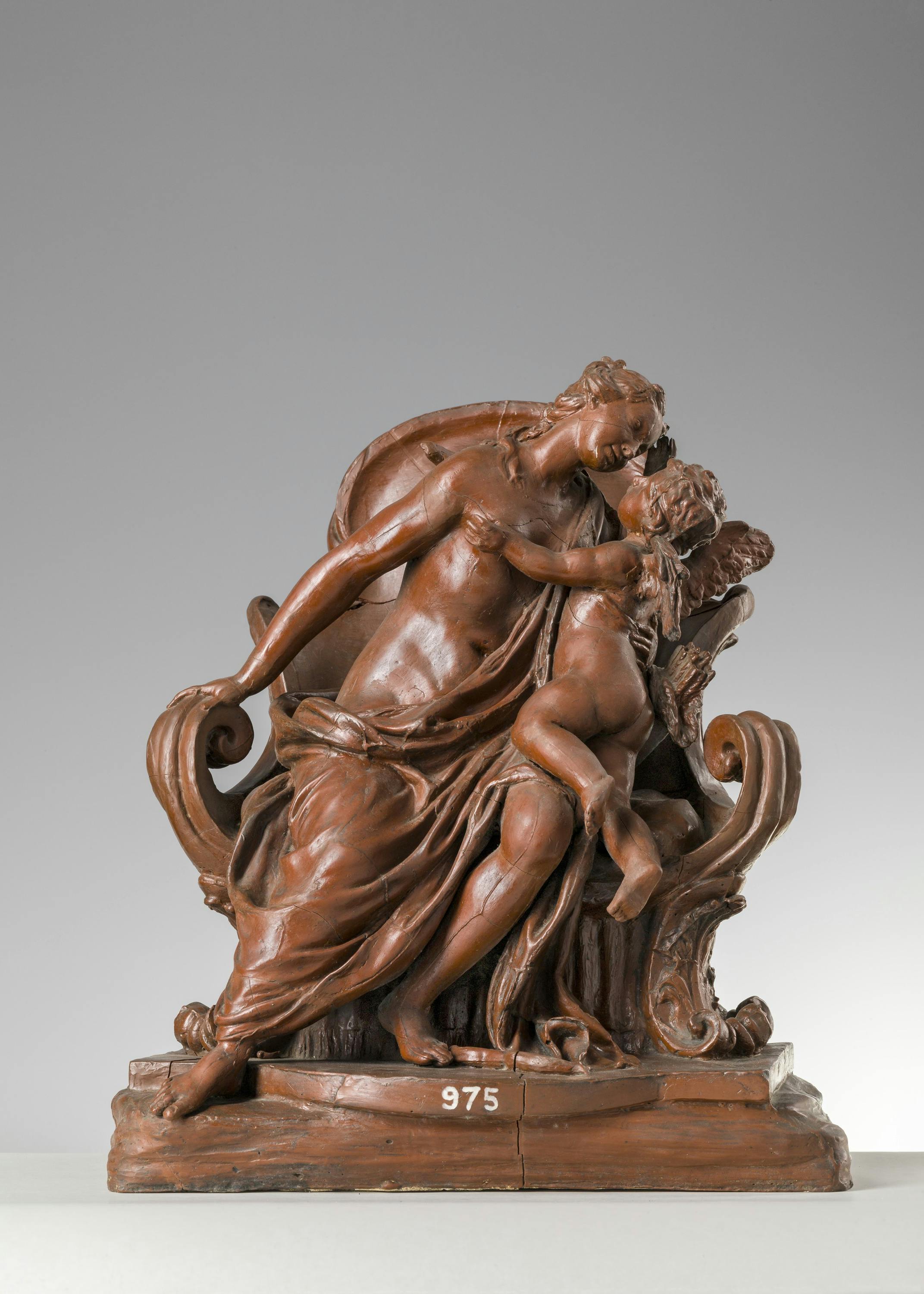
Among the accurate scale translations of masterpieces of antiquity preserved in the Uffizi Galleries is also Amore e Psiche, of which two further examples are now known, one in the Musée National de Céramique in Sèvres and one in the International Museum of Ceramics in Faenza.
Derived from the forms requested in 1746 by Carlo Ginori from Florentine sculptors Gaetano Traballesi and Nicola Kindermann, the one preserved in the Ginori Museum differs from the Medici archetype in the positioning of the figures and in the draperies on Cupid’s forearms and side. These variations were a device introduced by the manufactory to conceal the heavy plaster stuccoes used to reassemble the group after firing. The absence of this solution in the other mentioned examples, which thus come closer to the original archetype, allows us to hypothesize that the one in the Ginori Museum is the first translation of this subject produced at Doccia.
The particularity that distinguishes this group from other porcelain translations of ancient statuary is the presence of two figures in dialogue with each other, as noted in a 1748 letter by the manufactory’s chief modeller Gaspero Bruschi, who wrote: “that of Amore e Siche [the group] does not turn out badly, of equal color and solid, except that the heads do not come as close as the original, but it can still stand.”
- 01
From its inception, the Ginori Manufactory of Doccia distinguished itself from all other European manufactories for the creation of large porcelain statues, derived both from ancient sculpture and from compositions by late Baroque Florentine sculptors.
Among the accurate scale translations of masterpieces of antiquity preserved in the Uffizi Galleries is also Amore e Psiche, of which two further examples are now known, one in the Musée National de Céramique in Sèvres and one in the International Museum of Ceramics in Faenza.
Derived from the forms requested in 1746 by Carlo Ginori from Florentine sculptors Gaetano Traballesi and Nicola Kindermann, the one preserved in the Ginori Museum differs from the Medici archetype in the positioning of the figures and in the draperies on Cupid’s forearms and side. These variations were a device introduced by the manufactory to conceal the heavy plaster stuccoes used to reassemble the group after firing. The absence of this solution in the other mentioned examples, which thus come closer to the original archetype, allows us to hypothesize that the one in the Ginori Museum is the first translation of this subject produced at Doccia.
The particularity that distinguishes this group from other porcelain translations of ancient statuary is the presence of two figures in dialogue with each other, as noted in a 1748 letter by the manufactory’s chief modeller Gaspero Bruschi, who wrote: “that of Amore e Siche [the group] does not turn out badly, of equal color and solid, except that the heads do not come as close as the original, but it can still stand.”