Venus de' Medici
From the ancient marble preserved in the Tribune of the Uffizi Galleries, with variations
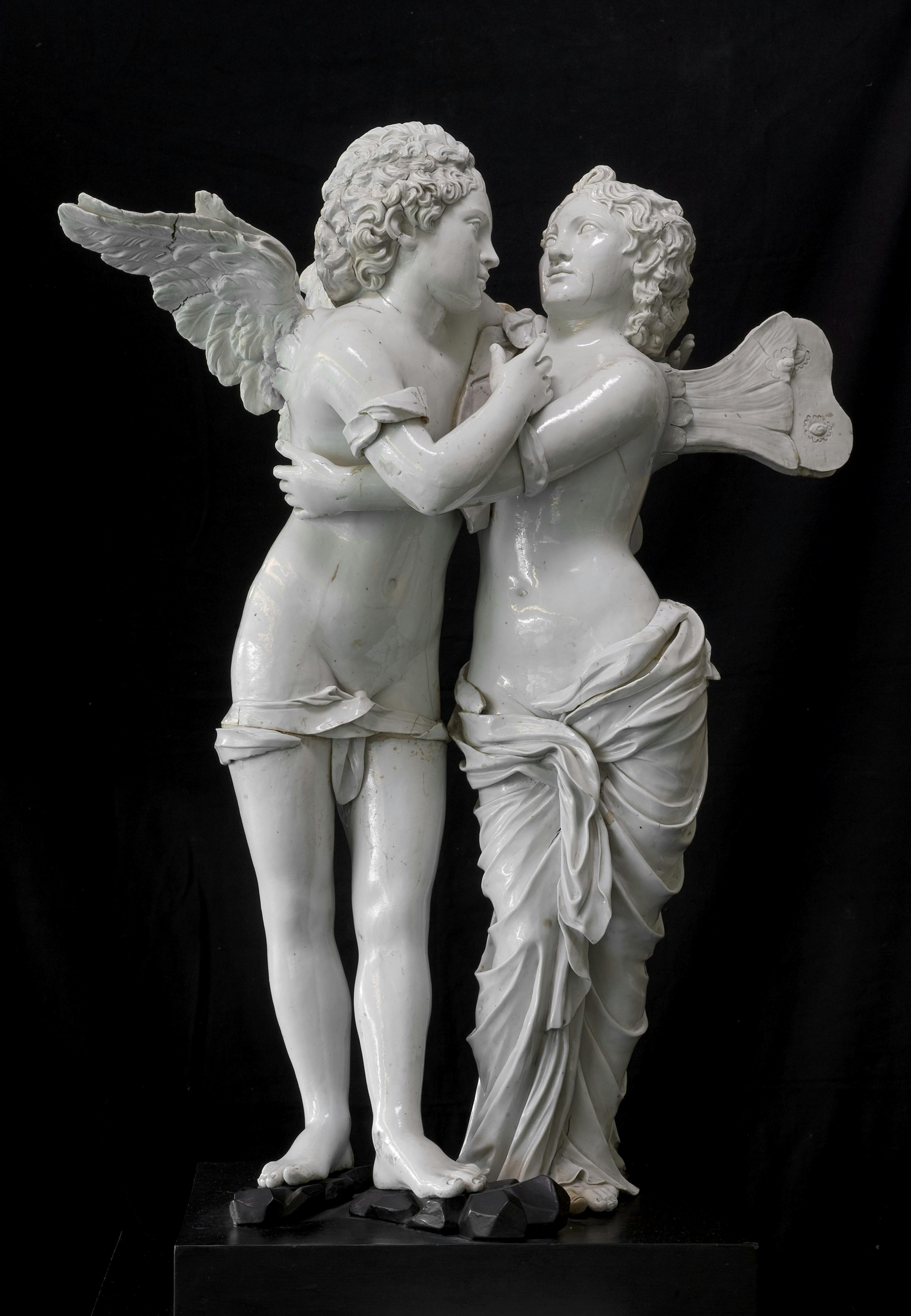
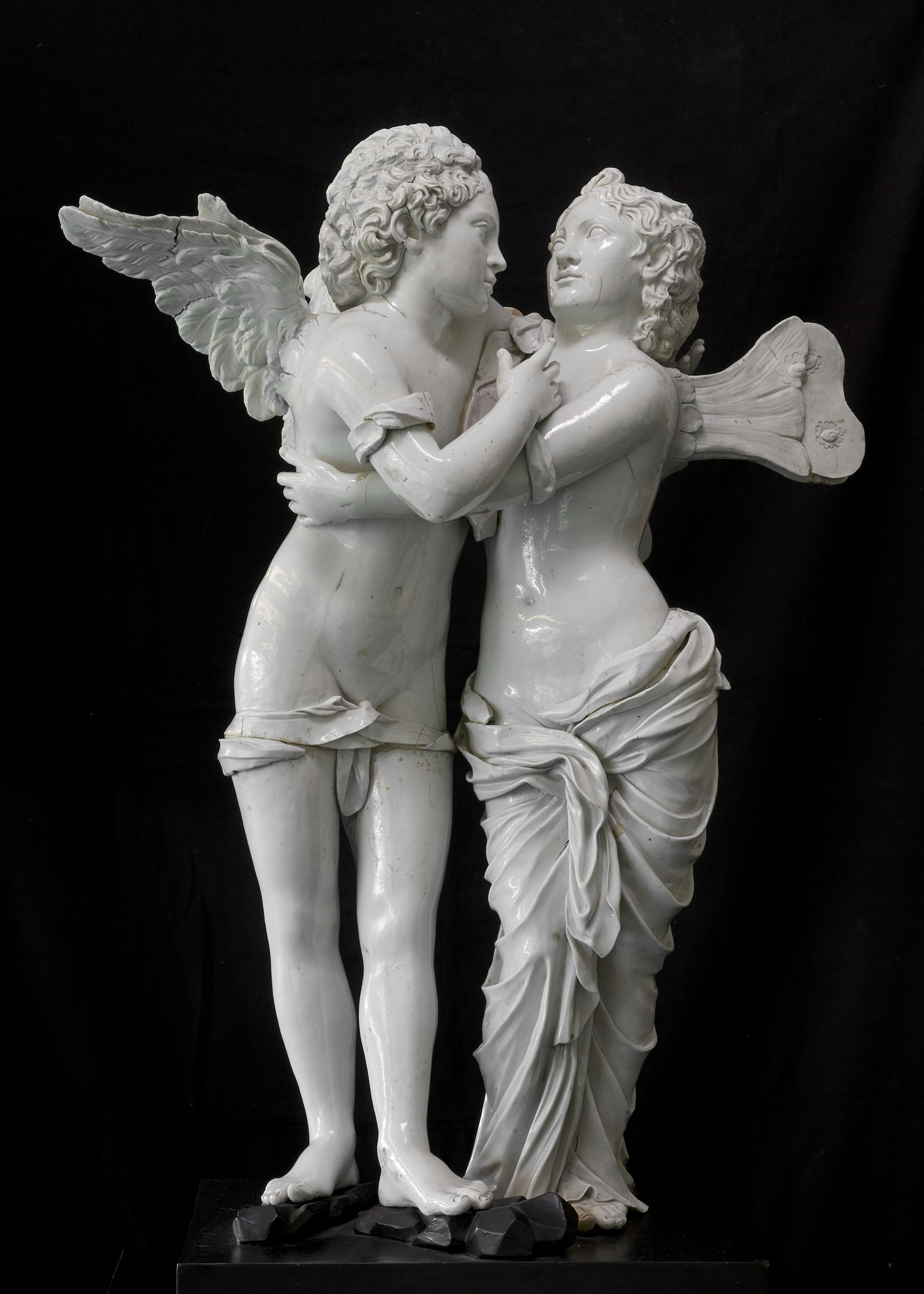
The Venus de’ Medici in porcelain is one of the great ancient statues reproduced to scale by the Ginori Manufactory of Doccia between the 1740s and 1750s. An exclusive prerogative of the production initiated by Carlo Ginori, the execution of this type of work involved evident technical and practical difficulties, mainly due to the very nature of the material. In fact, the figure is composed of multiple parts fired separately and assembled using plaster stuccoes. The joints are concealed by the presence of the drapery at the hips and jewelry on the neck and arms, additions in this version.
Created under the supervision of the manufactory’s chief modeller Gaspero Bruschi, the composition differs from the Hellenistic marble preserved in the Tribune of the Uffizi Galleries, also due to the absence of the base with the tree trunk-shaped support and the small group with dolphin and putti.
The version at the Ginori Museum was probably derived from the models made in 1746 for Carlo Ginori by the Florentine sculptors Gaetano Traballesi and Nicola Kindermann, collaborators of the Royal Gallery.

- 01
- 02
Venus de' Medici
The Venus de’ Medici in porcelain is one of the great ancient statues reproduced to scale by the Ginori Manufactory of Doccia between the 1740s and 1750s. An exclusive prerogative of the production initiated by Carlo Ginori, the execution of this type of work involved evident technical and practical difficulties, mainly due to the very nature of the material. In fact, the figure is composed of multiple parts fired separately and assembled using plaster stuccoes. The joints are concealed by the presence of the drapery at the hips and jewelry on the neck and arms, additions in this version.
Created under the supervision of the manufactory’s chief modeller Gaspero Bruschi, the composition differs from the Hellenistic marble preserved in the Tribune of the Uffizi Galleries, also due to the absence of the base with the tree trunk-shaped support and the small group with dolphin and putti.
The version at the Ginori Museum was probably derived from the models made in 1746 for Carlo Ginori by the Florentine sculptors Gaetano Traballesi and Nicola Kindermann, collaborators of the Royal Gallery.