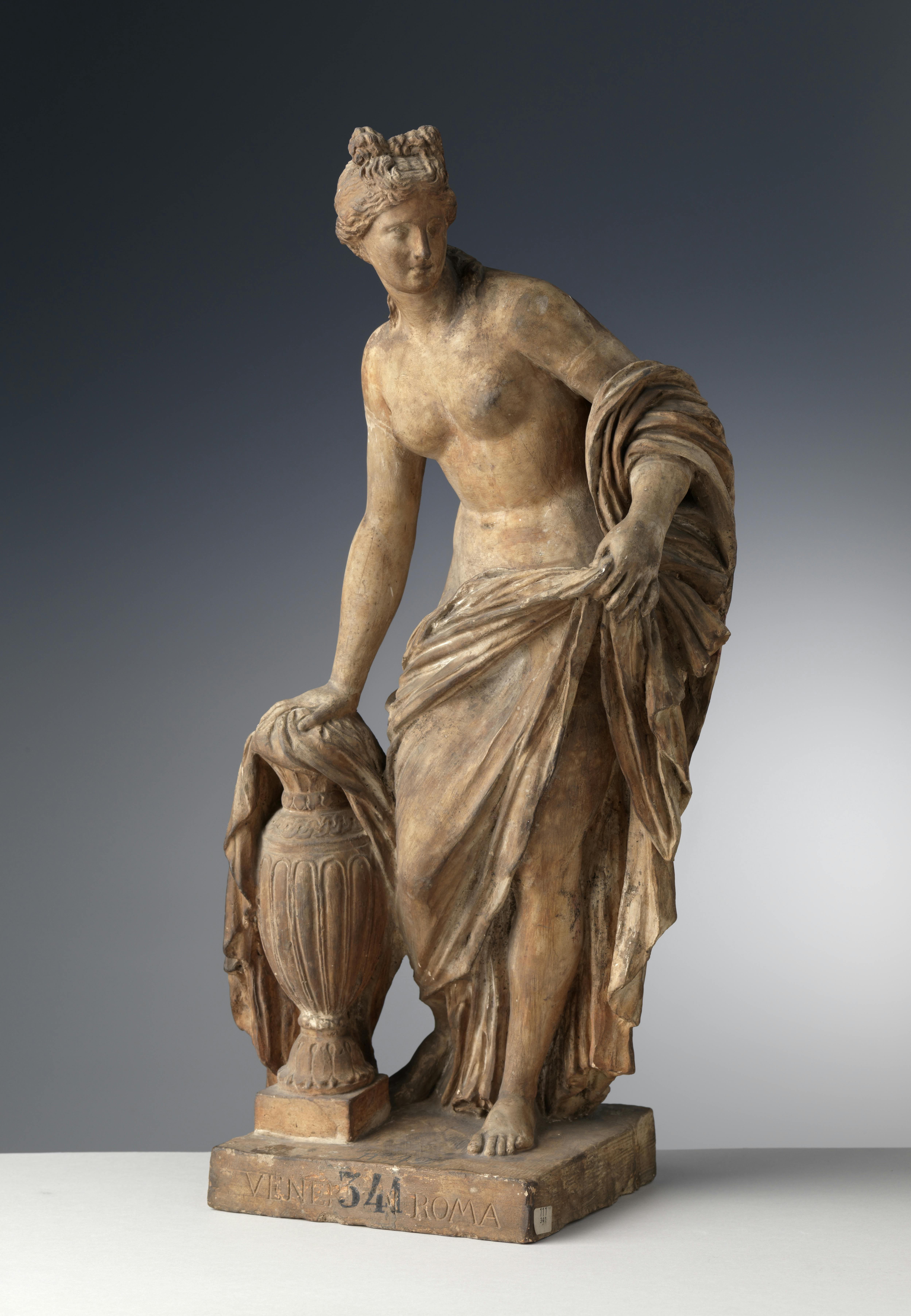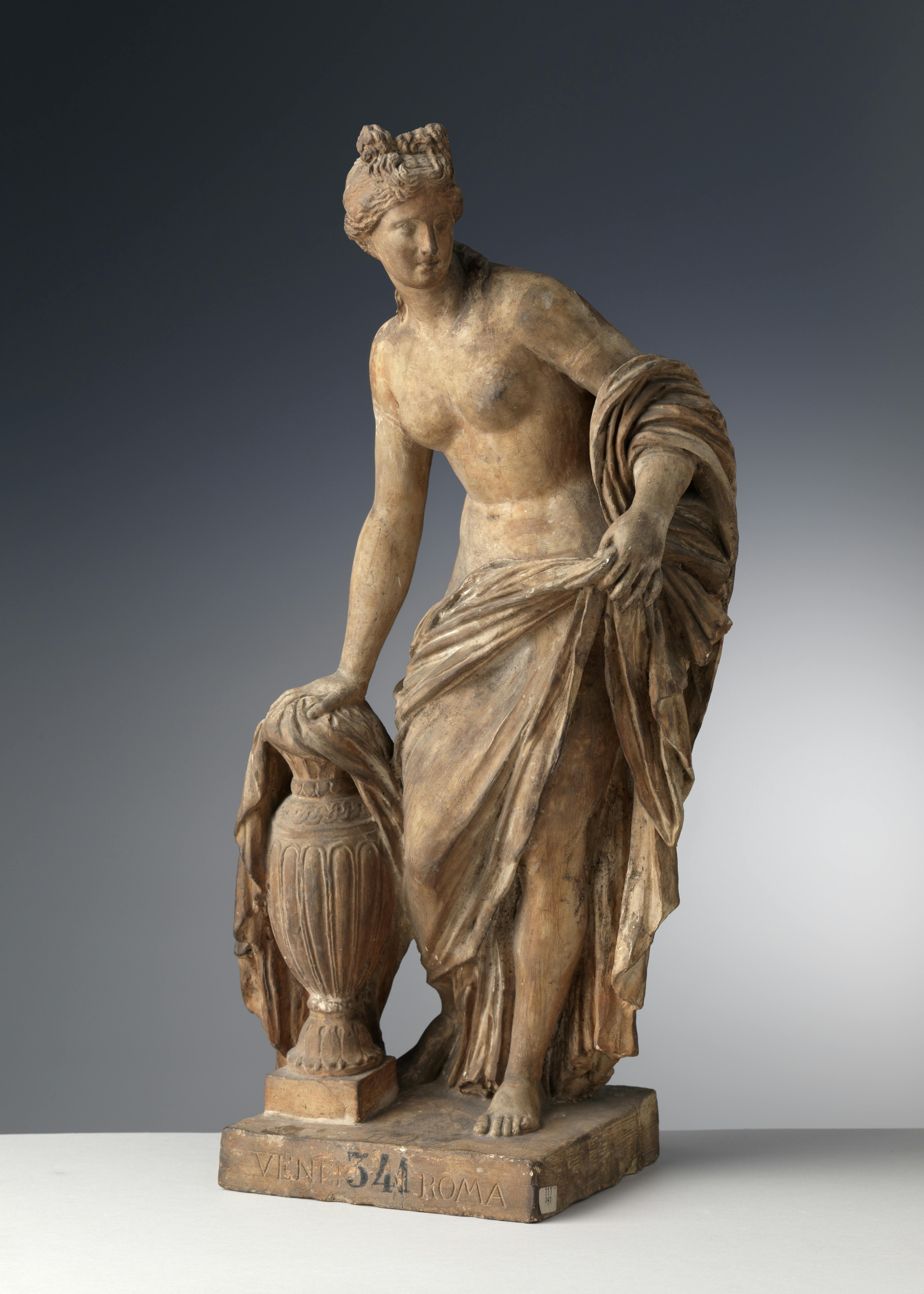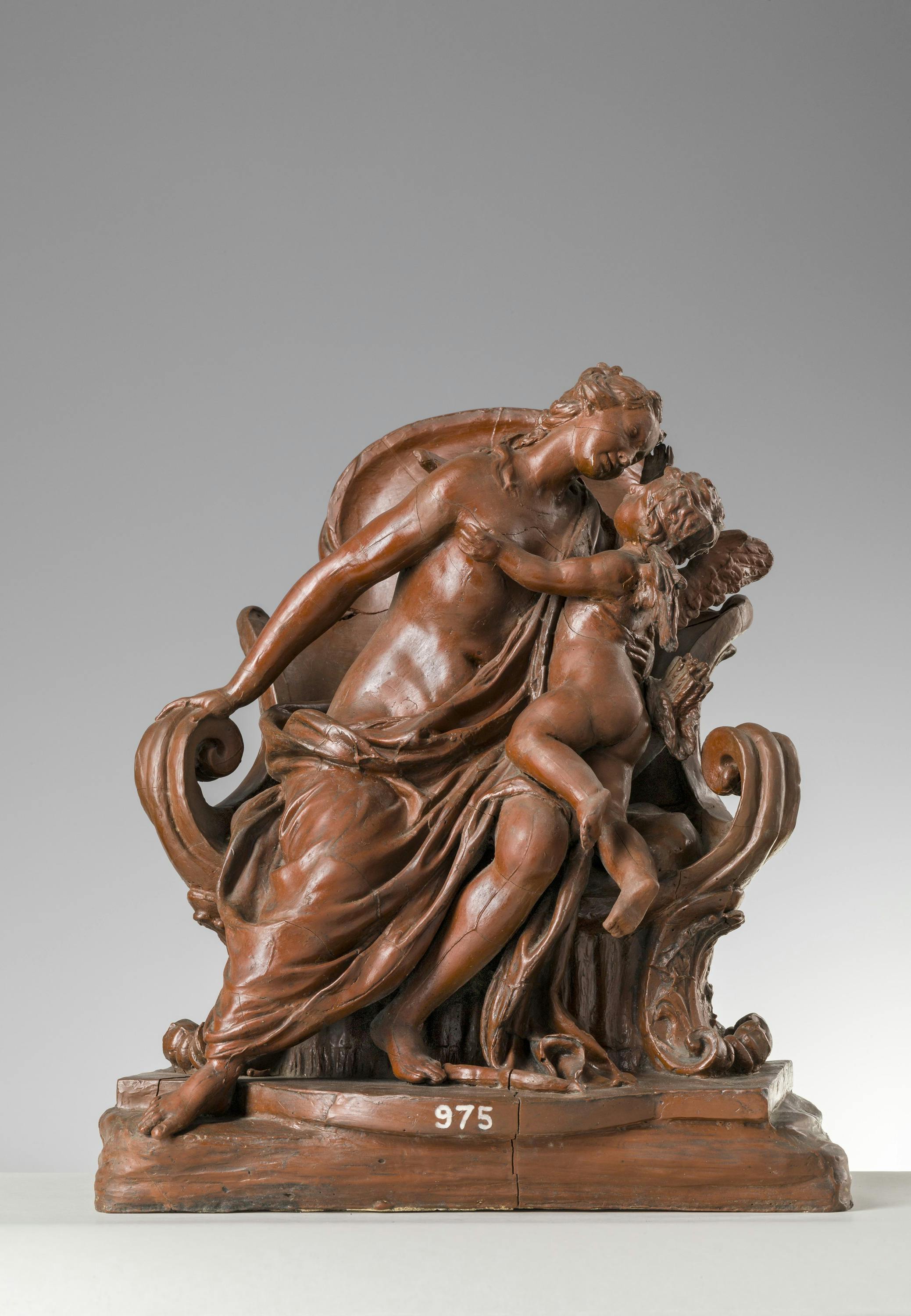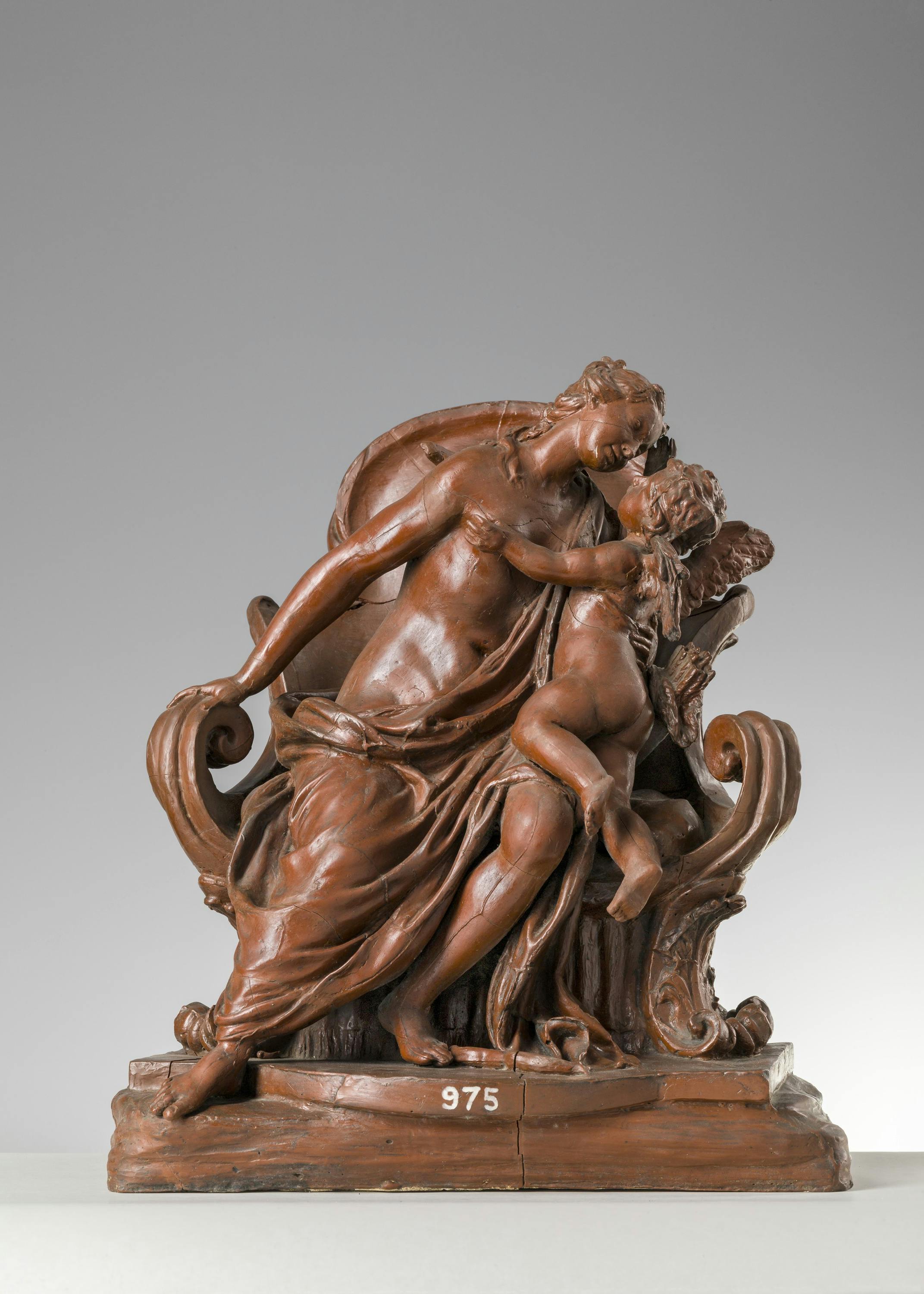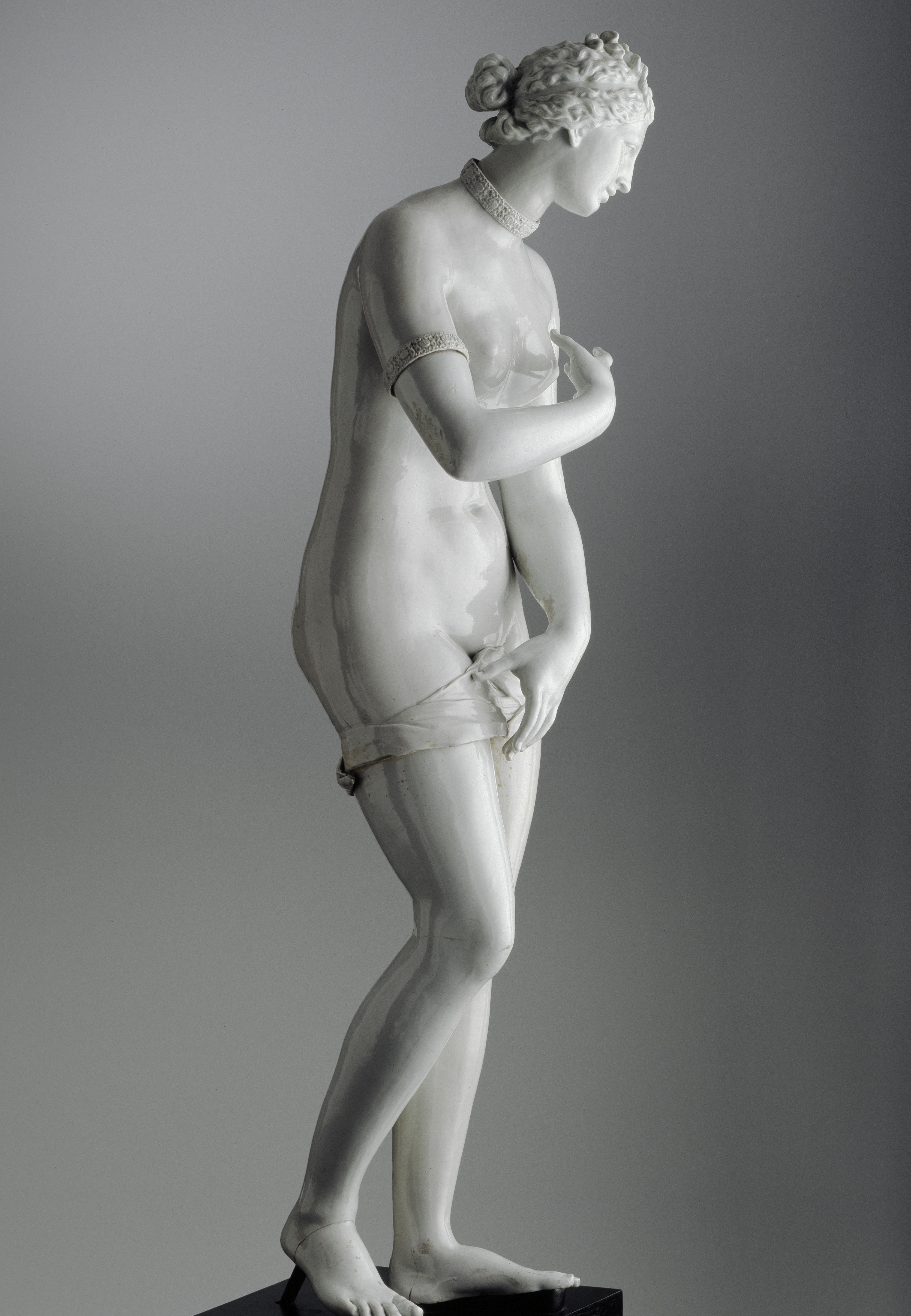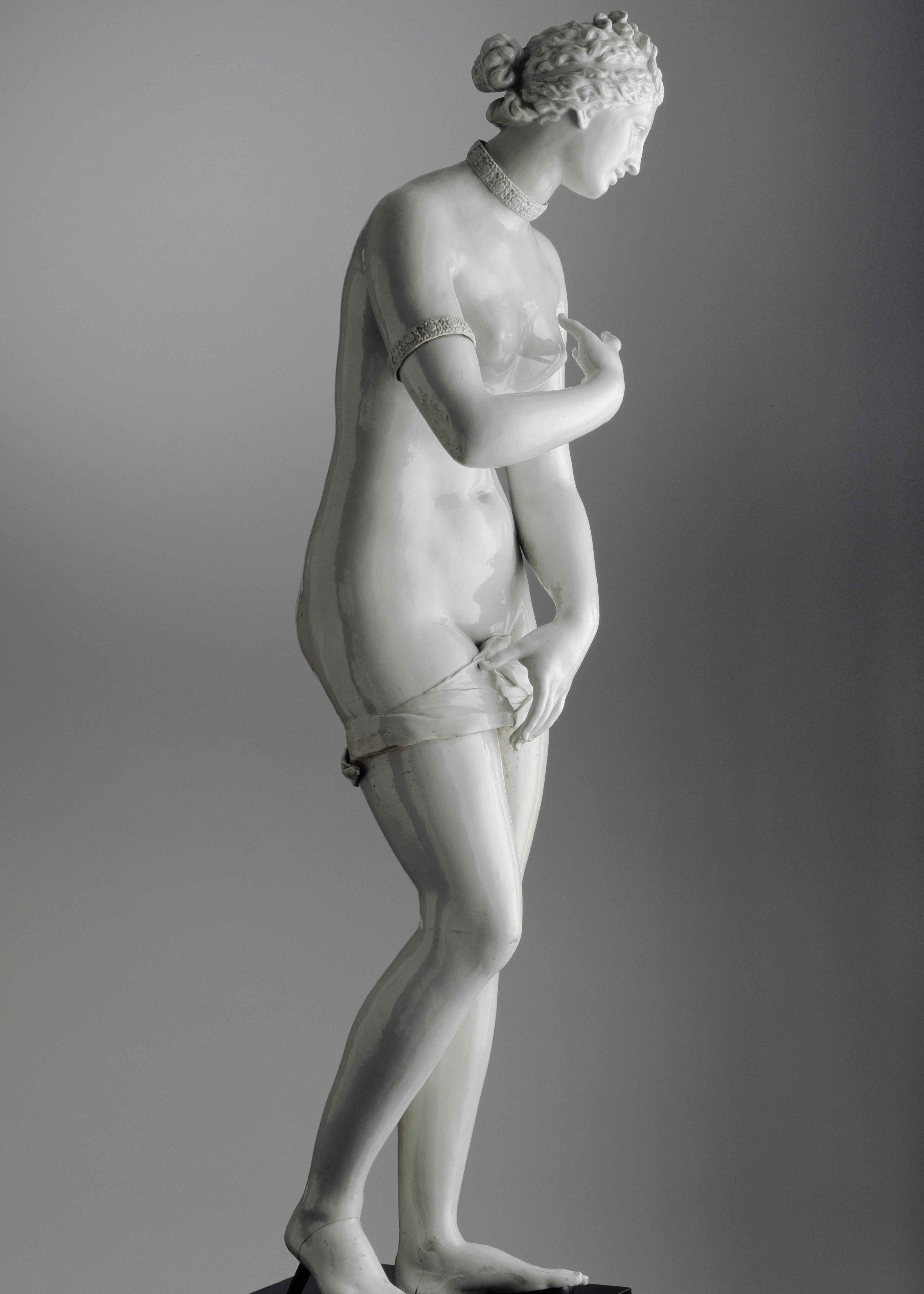
Cameo depicting the Callipygian Venus
Roman workshops of the 18th century
During the eighteenth century, workshops specializing in engraving and carving on hard stones developed, especially in Rome, where it was possible to purchase cameos copied from ancient examples or inspired by classical models, as well as sulfur and plaster casts of works from private and scarcely accessible collections. Some sulfur casts also showed reinterpretations of ancient statues, such as the Venus Callipygian depicted in the Museo Ginori model.
These types of artifacts enjoyed great popularity throughout the eighteenth century, becoming a sort of souvenir linked to the antiquarian passion typical of the Grand Tour. Cameos prepared for sale were placed inside stackable wooden boxes, each bearing on the gilded trim, framing it, a sequential number that corresponded to a register with the description and indication of the archetype of origin. At the Museo Ginori, several wooden boxes containing sulfur casts are preserved (invv. 9485-9513), attributable to at least two series dating to the 1780s. Most likely, these casts were acquired by Lorenzo Ginori to be used as functional models for porcelain translation. However, no pieces produced by the Ginori Manufactory in the second half of the eighteenth century can be linked to the Museo series. It is certain, though, that at the manufactory, from the early years of production, porcelain cameos were made and used, for example, in the decoration of some snuffboxes.
- 01
During the eighteenth century, workshops specializing in engraving and carving on hard stones developed, especially in Rome, where it was possible to purchase cameos copied from ancient examples or inspired by classical models, as well as sulfur and plaster casts of works from private and scarcely accessible collections. Some sulfur casts also showed reinterpretations of ancient statues, such as the Venus Callipygian depicted in the Museo Ginori model.
These types of artifacts enjoyed great popularity throughout the eighteenth century, becoming a sort of souvenir linked to the antiquarian passion typical of the Grand Tour. Cameos prepared for sale were placed inside stackable wooden boxes, each bearing on the gilded trim, framing it, a sequential number that corresponded to a register with the description and indication of the archetype of origin. At the Museo Ginori, several wooden boxes containing sulfur casts are preserved (invv. 9485-9513), attributable to at least two series dating to the 1780s. Most likely, these casts were acquired by Lorenzo Ginori to be used as functional models for porcelain translation. However, no pieces produced by the Ginori Manufactory in the second half of the eighteenth century can be linked to the Museo series. It is certain, though, that at the manufactory, from the early years of production, porcelain cameos were made and used, for example, in the decoration of some snuffboxes.