Venus of Rome
By Bartolomeo Cavaceppi, with variations
Among the groups of plaster models composed of reductions of ancient statuary preserved at the Ginori Museum, one series stands out due to the presence of inscriptions at the base indicating the name and location of the prototype from which they derive. This detail allows us to classify the models as a genre modernly defined as souvenirs, in accordance with the eighteenth-century antiquarian taste strongly influenced by Grand Tour travelers.
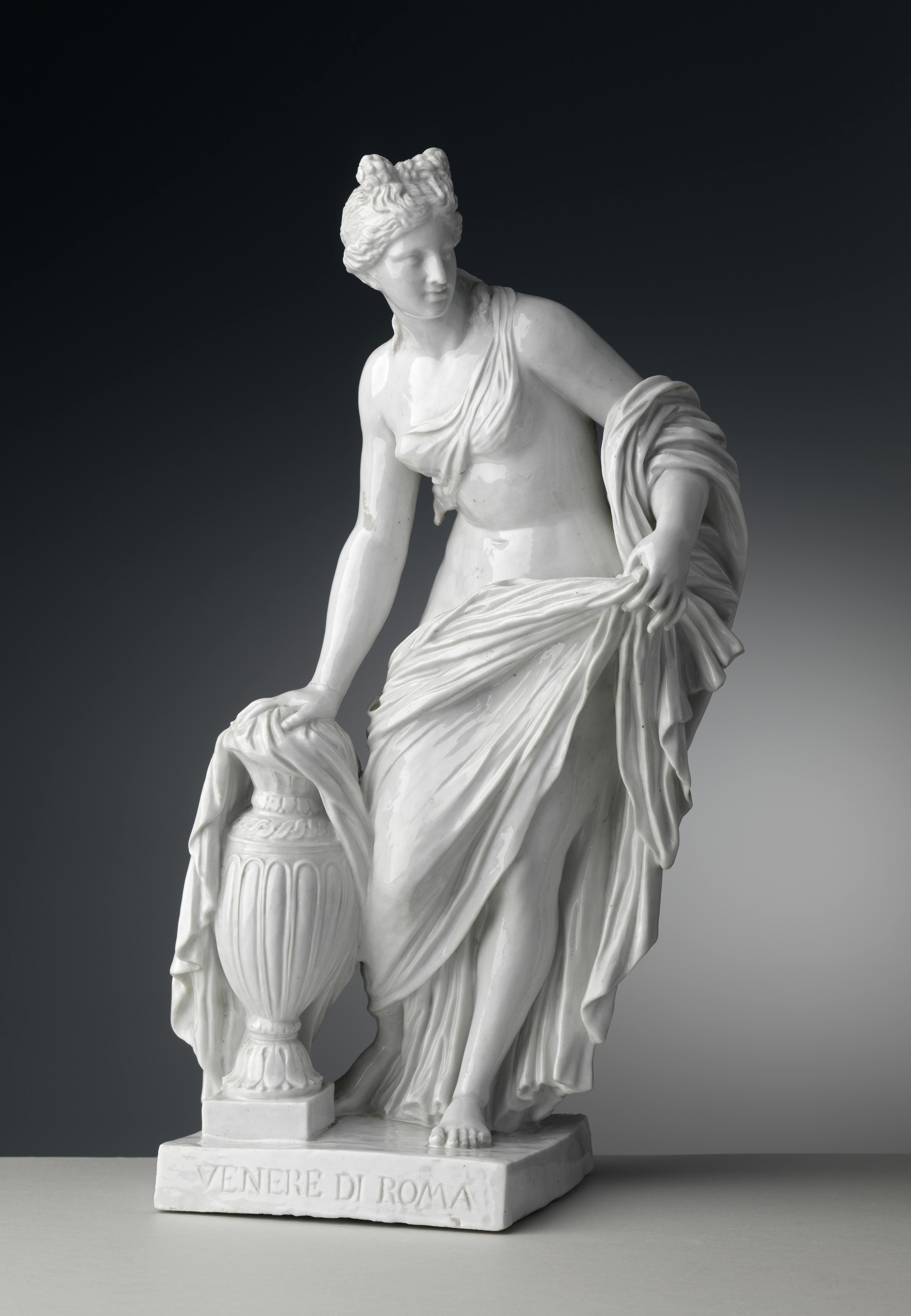
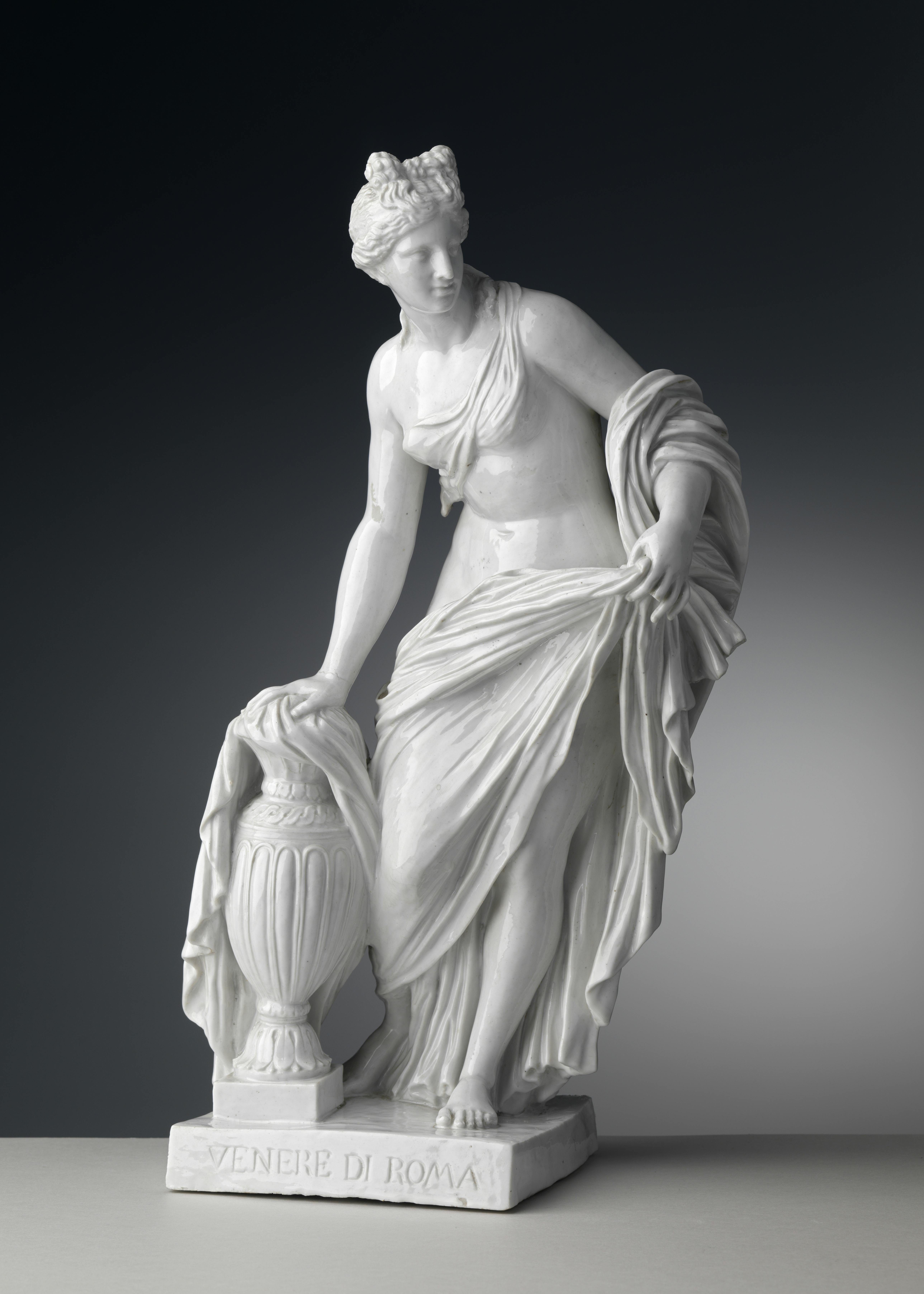
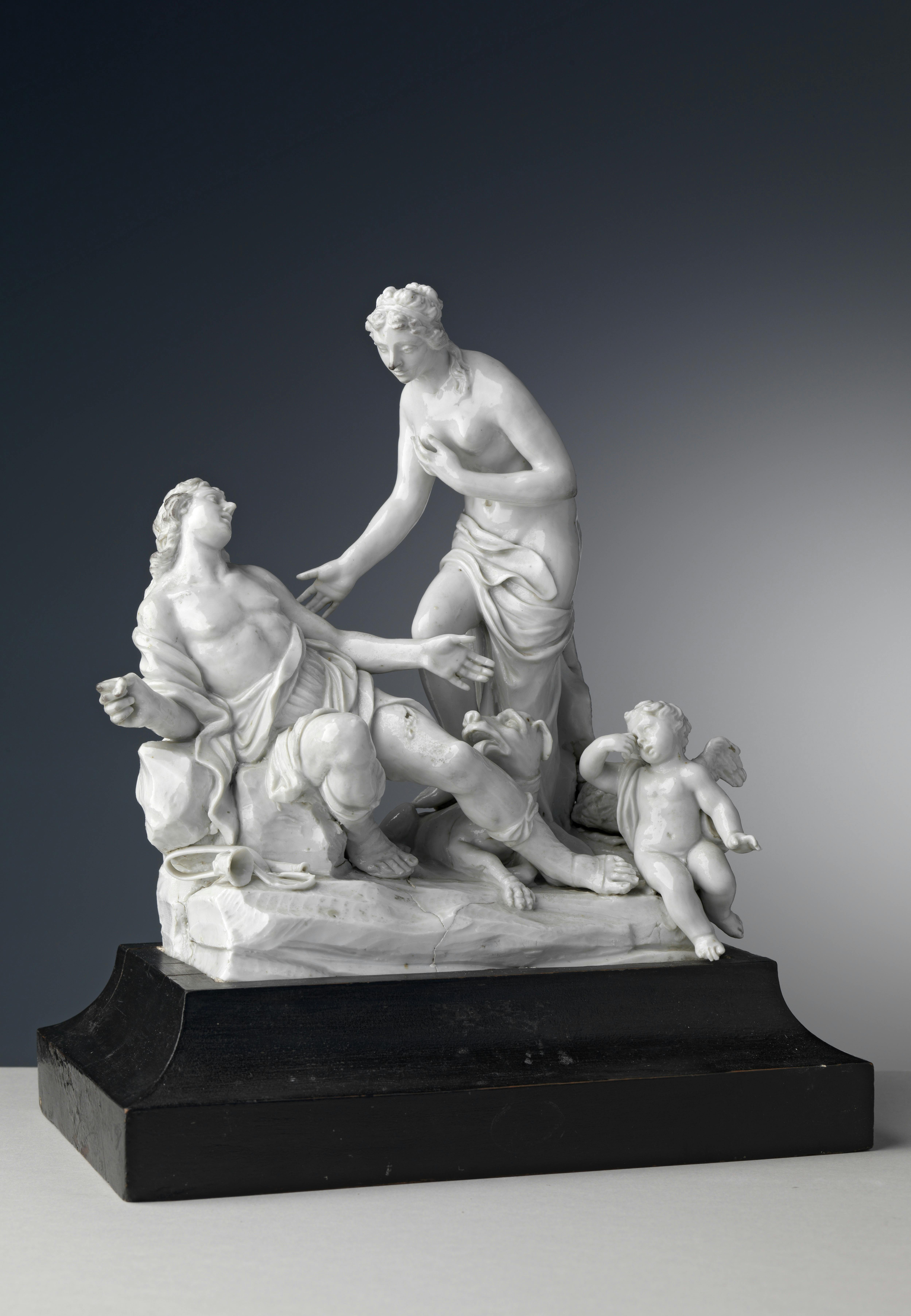
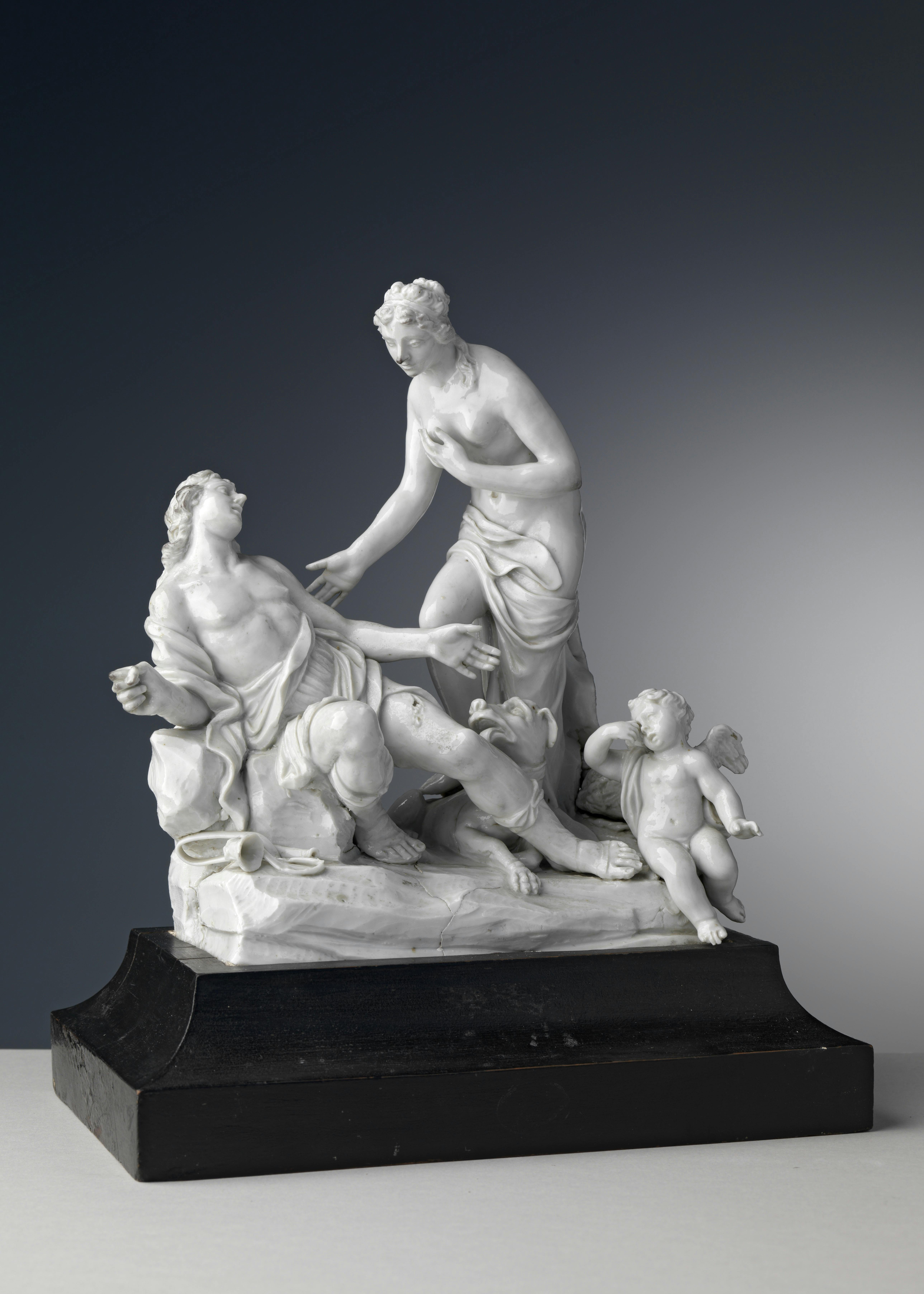
The model presented here, identifiable as Venus of Rome from the inscription at the base, is not a reduction from an ancient marble but a composition ’in the antique style’ attributable to the invention of the Roman sculptor and restorer, Bartolomeo Cavaceppi. The same composition appears behind his portrait executed by Anton von Maron and reproduced as an engraving on the frontispiece of the second volume of the Collection of Ancient Statues of 1769, where the activity of his workshop is illustrated.
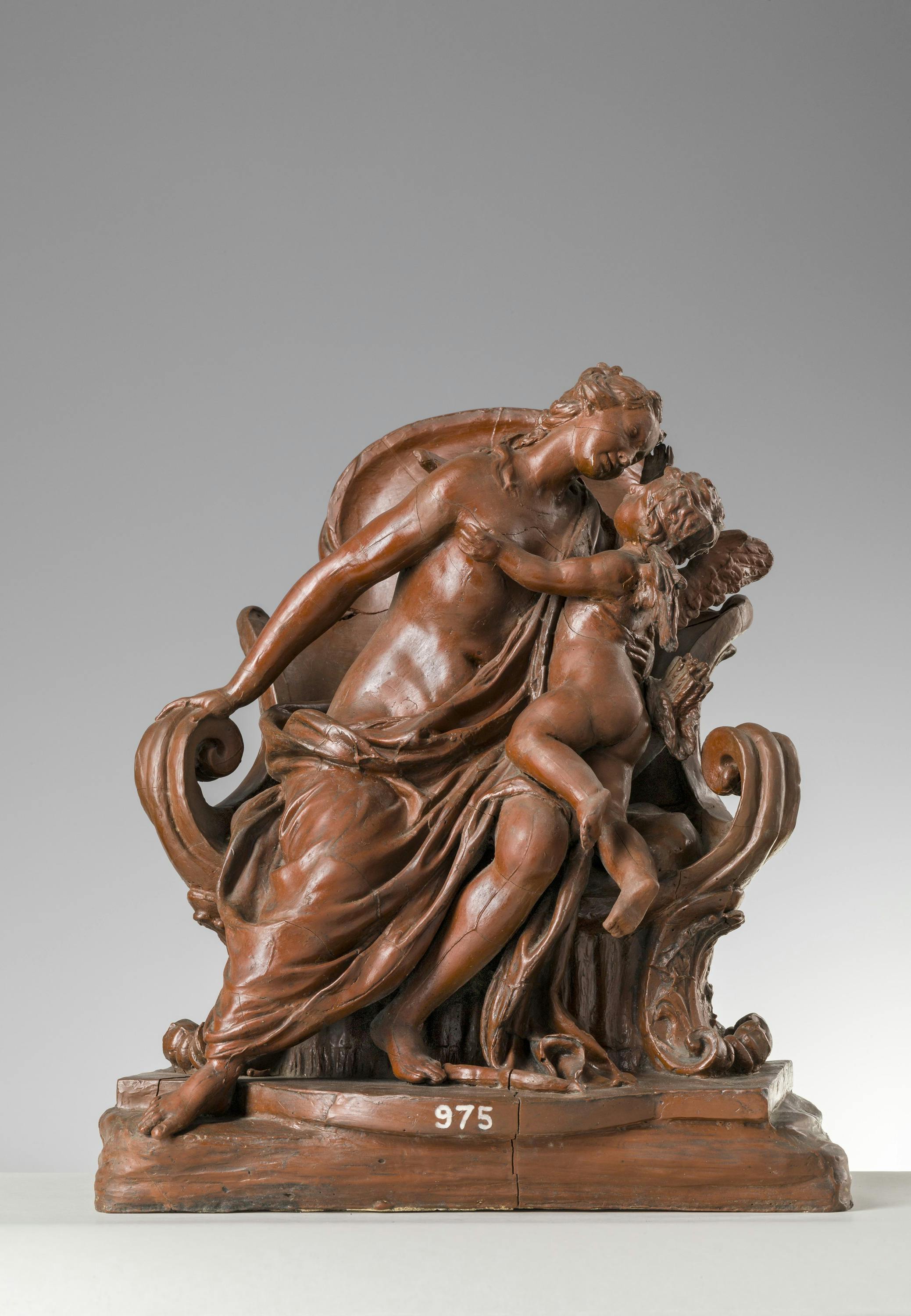
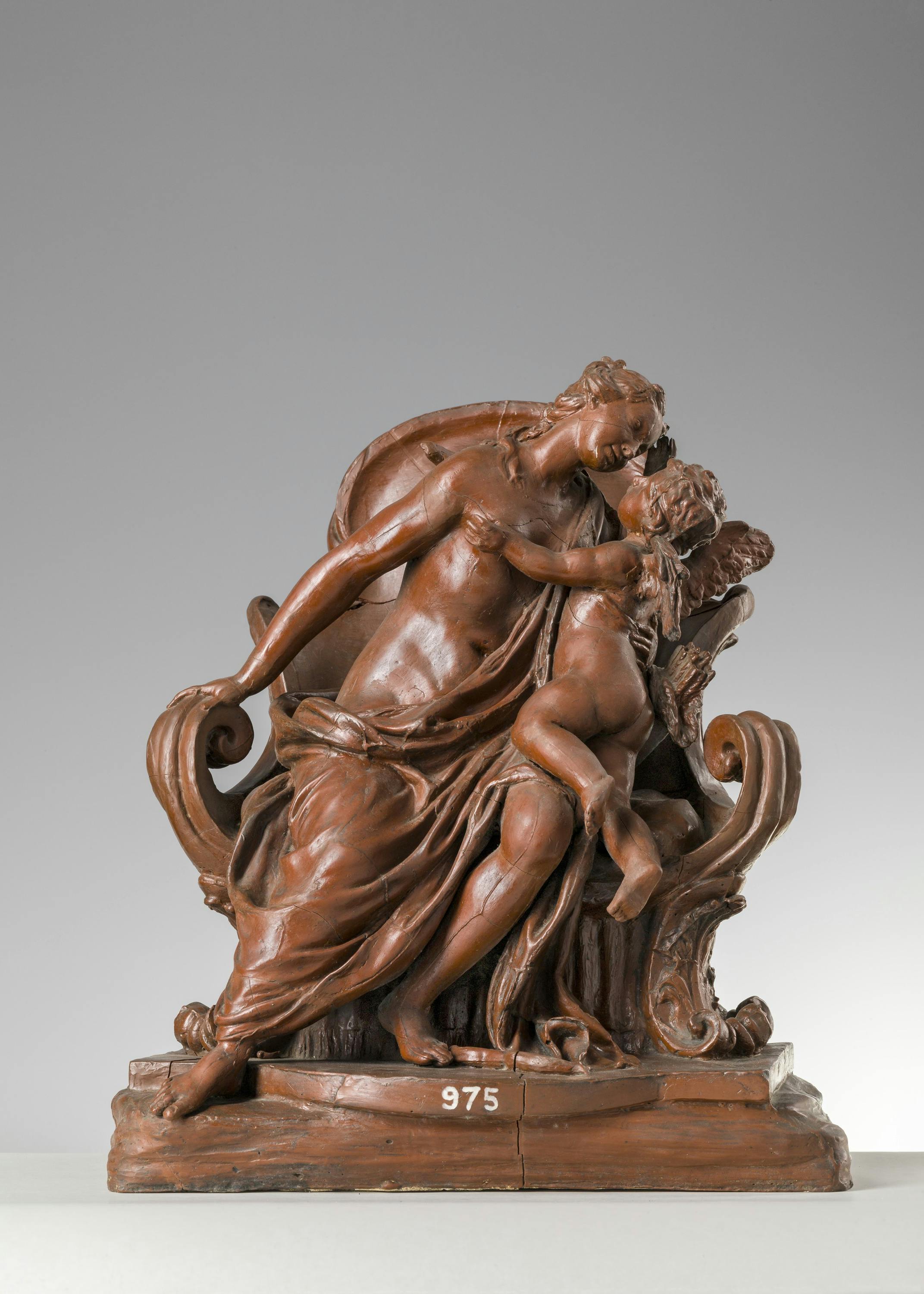
A terracotta version of this example is known, considered autograph by the sculptor, which belonged to the Federico Zeri collection and is currently preserved at the Accademia Carrara in Bergamo.
The relationship between Cavaceppi and Marquis Carlo Ginori is documented at least since 1756. It is therefore not surprising to find this example among the models of the manufactory, of which a porcelain translation preserved in the Ginori Museum (inv. 967) is known. Related to this model is also a late eighteenth-century terracotta reduction, produced in the manufactory in a modest version and intended for dessert table settings (dessert) (inv. 1680).
- 01
Among the groups of plaster models composed of reductions of ancient statuary preserved at the Ginori Museum, one series stands out due to the presence of inscriptions at the base indicating the name and location of the prototype from which they derive. This detail allows us to classify the models as a genre modernly defined as souvenirs, in accordance with the eighteenth-century antiquarian taste strongly influenced by Grand Tour travelers.
The model presented here, identifiable as Venus of Rome from the inscription at the base, is not a reduction from an ancient marble but a composition ’in the antique style’ attributable to the invention of the Roman sculptor and restorer, Bartolomeo Cavaceppi. The same composition appears behind his portrait executed by Anton von Maron and reproduced as an engraving on the frontispiece of the second volume of the Collection of Ancient Statues of 1769, where the activity of his workshop is illustrated.
A terracotta version of this example is known, considered autograph by the sculptor, which belonged to the Federico Zeri collection and is currently preserved at the Accademia Carrara in Bergamo.
The relationship between Cavaceppi and Marquis Carlo Ginori is documented at least since 1756. It is therefore not surprising to find this example among the models of the manufactory, of which a porcelain translation preserved in the Ginori Museum (inv. 967) is known. Related to this model is also a late eighteenth-century terracotta reduction, produced in the manufactory in a modest version and intended for dessert table settings (dessert) (inv. 1680).