Venus of Rome
By Bartolomeo Cavaceppi, with variations
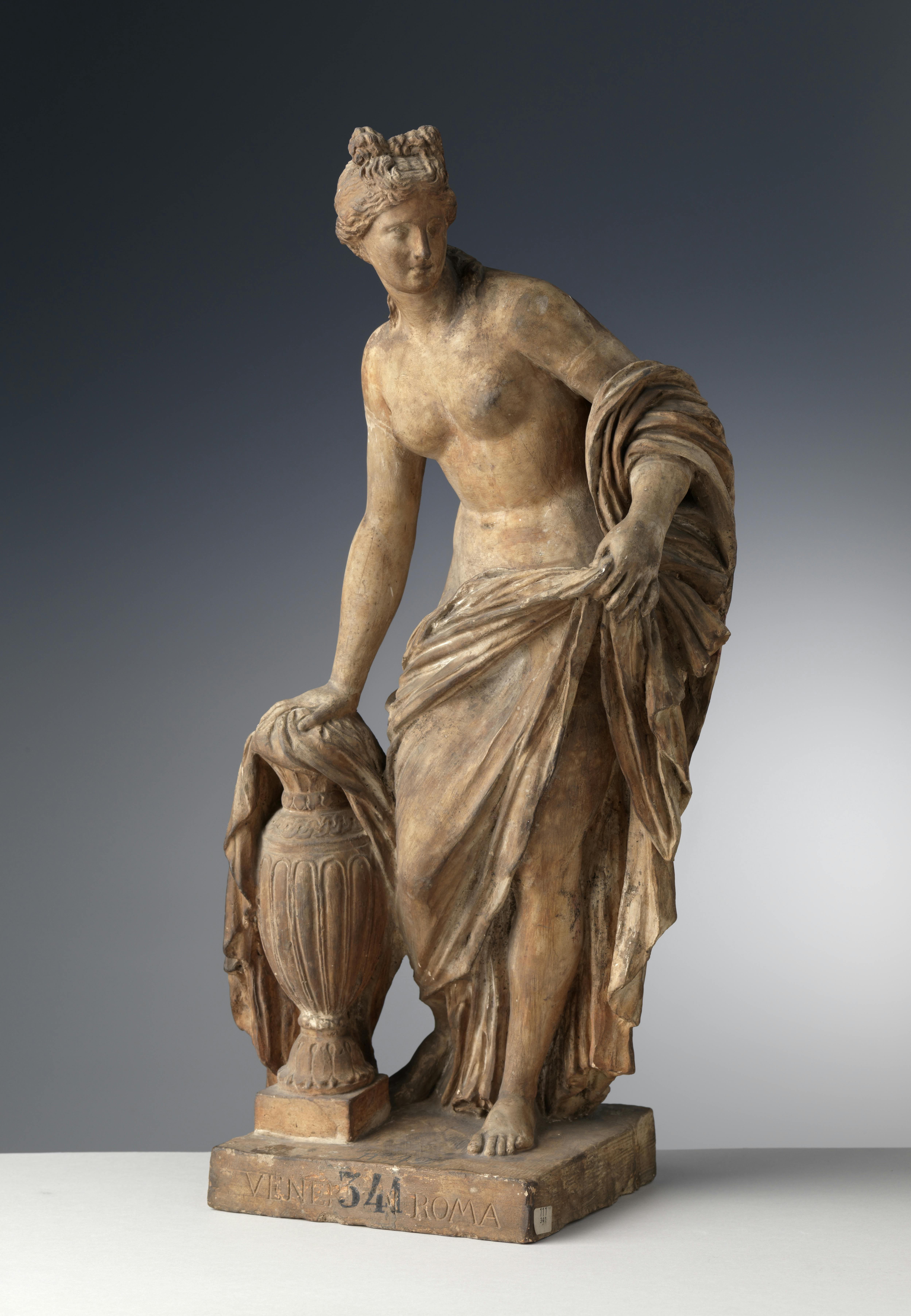
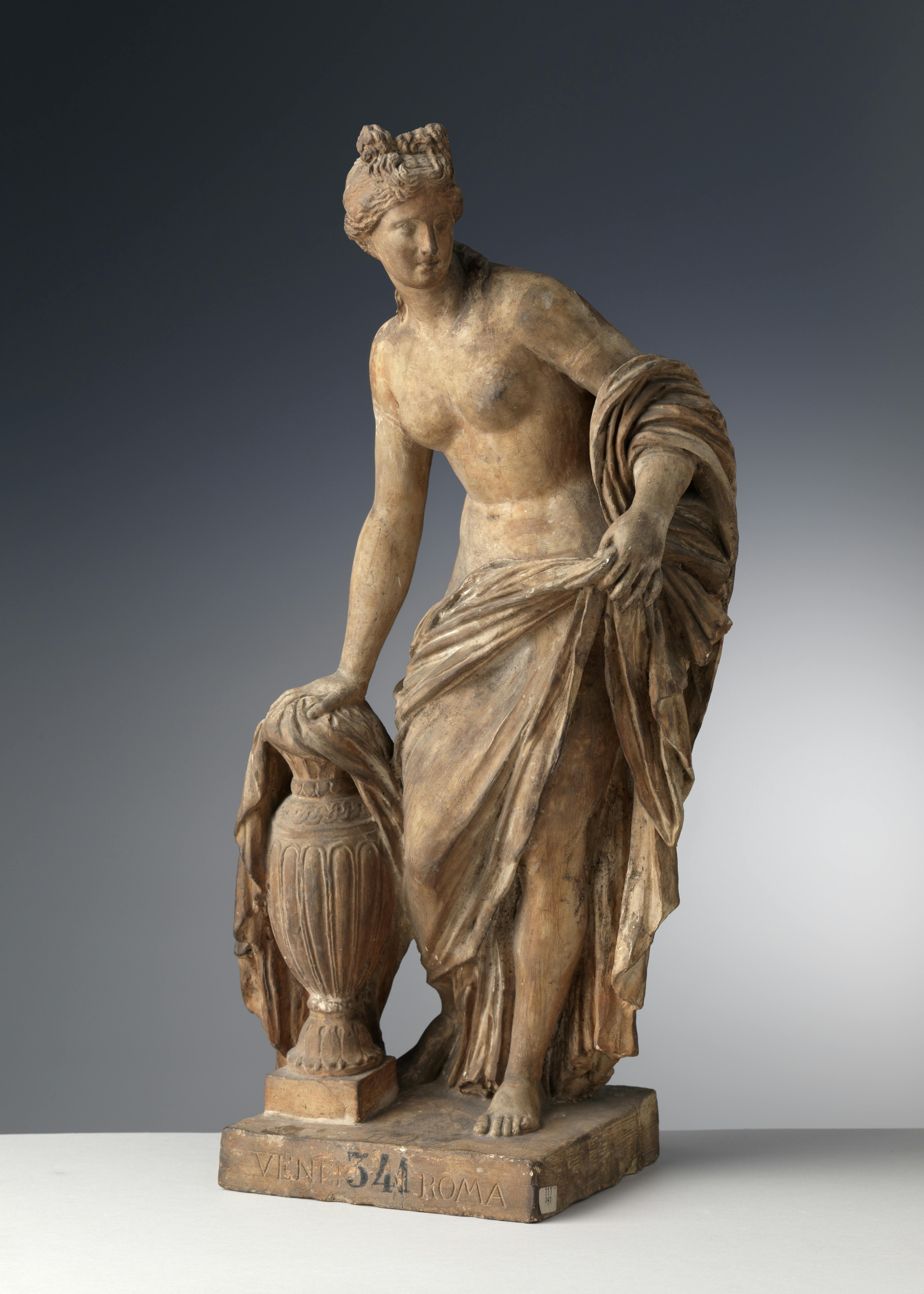
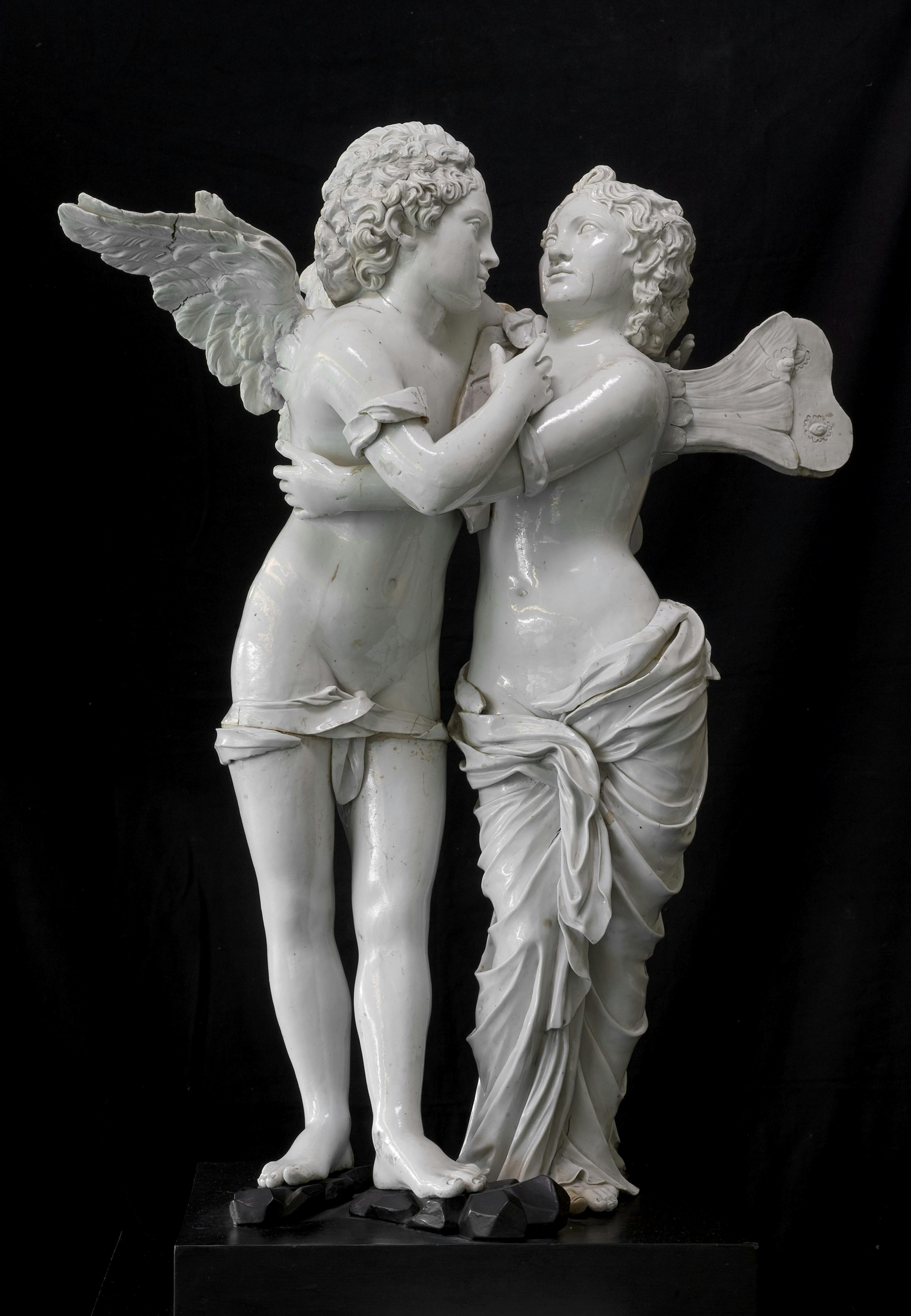
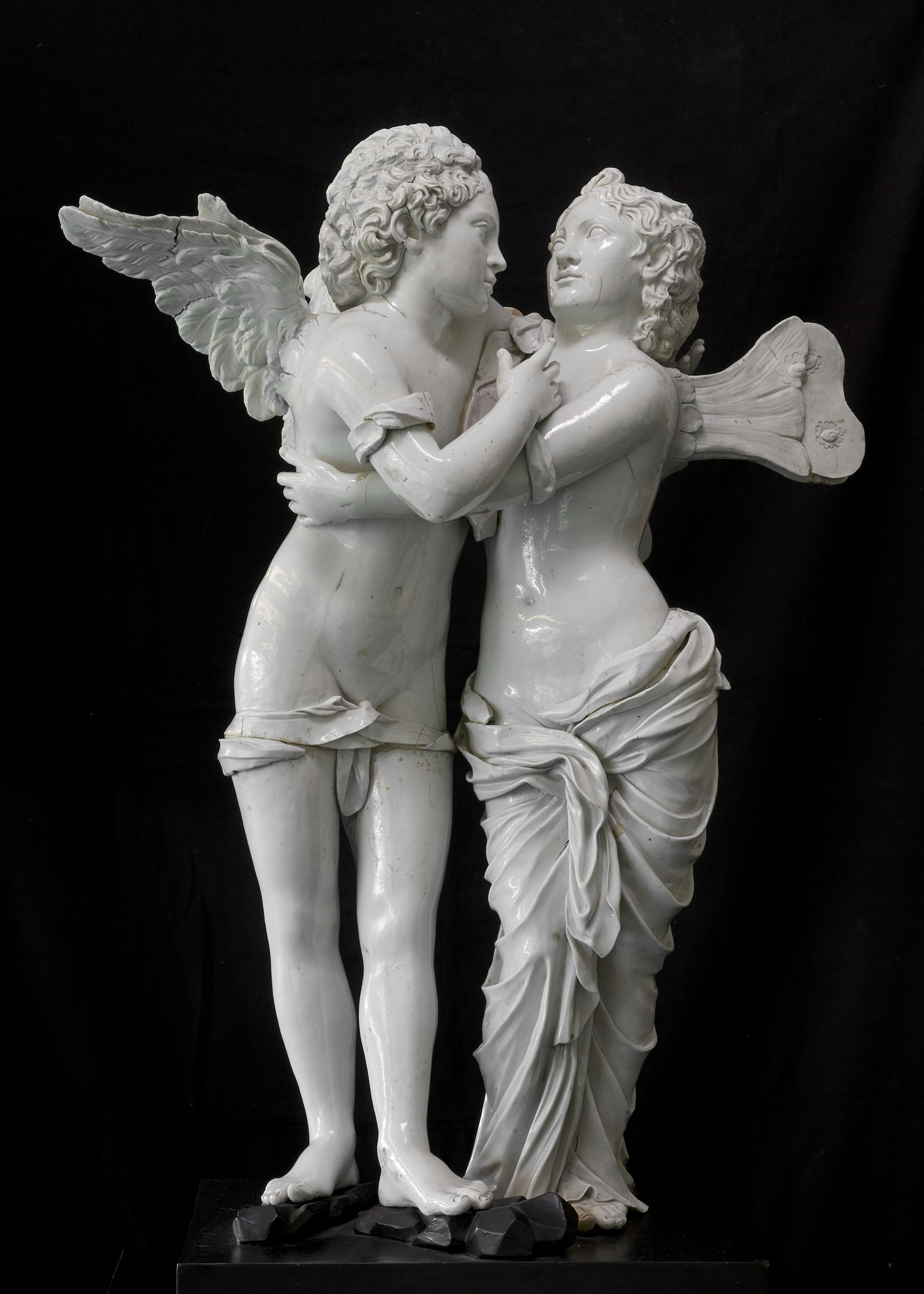
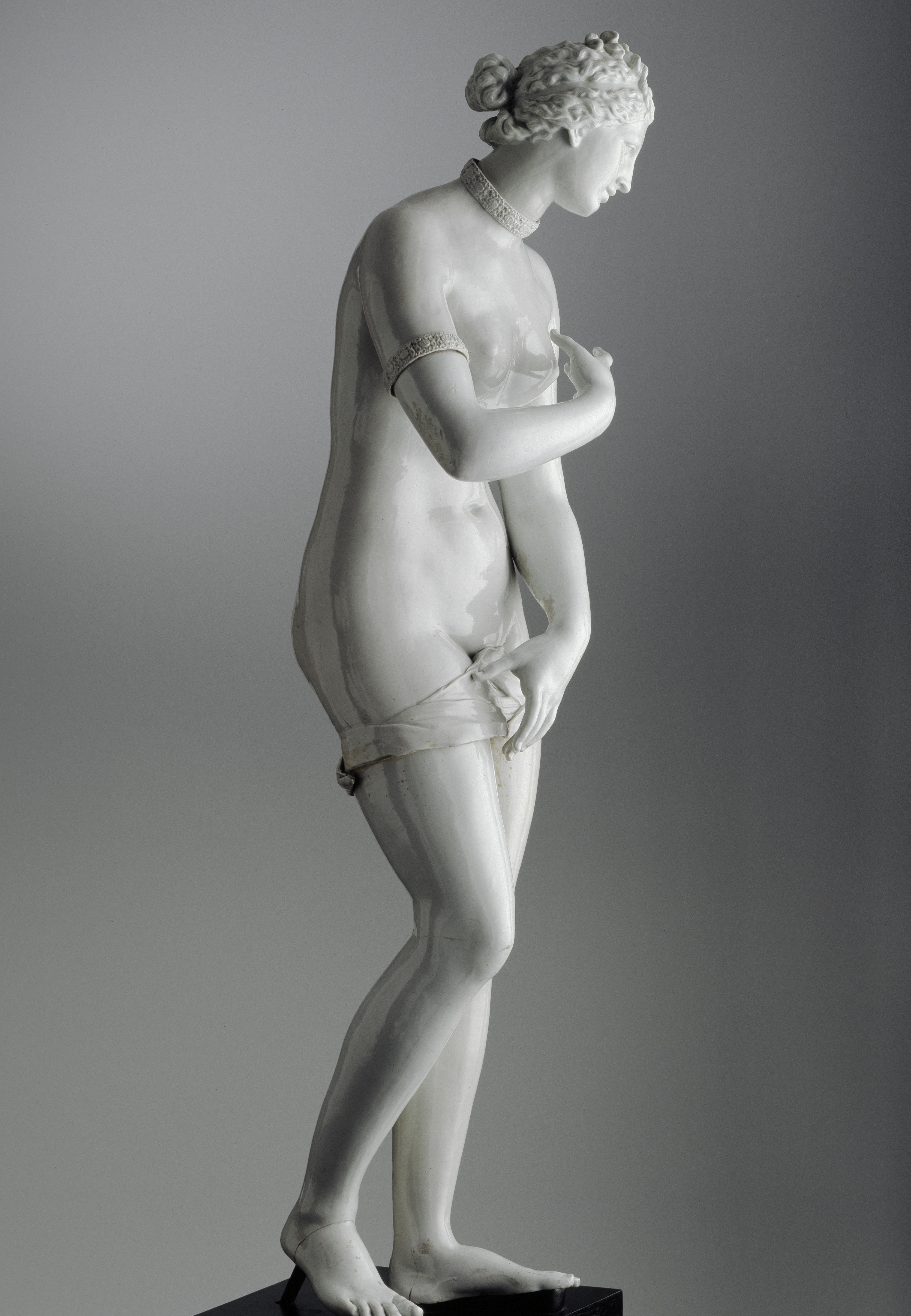
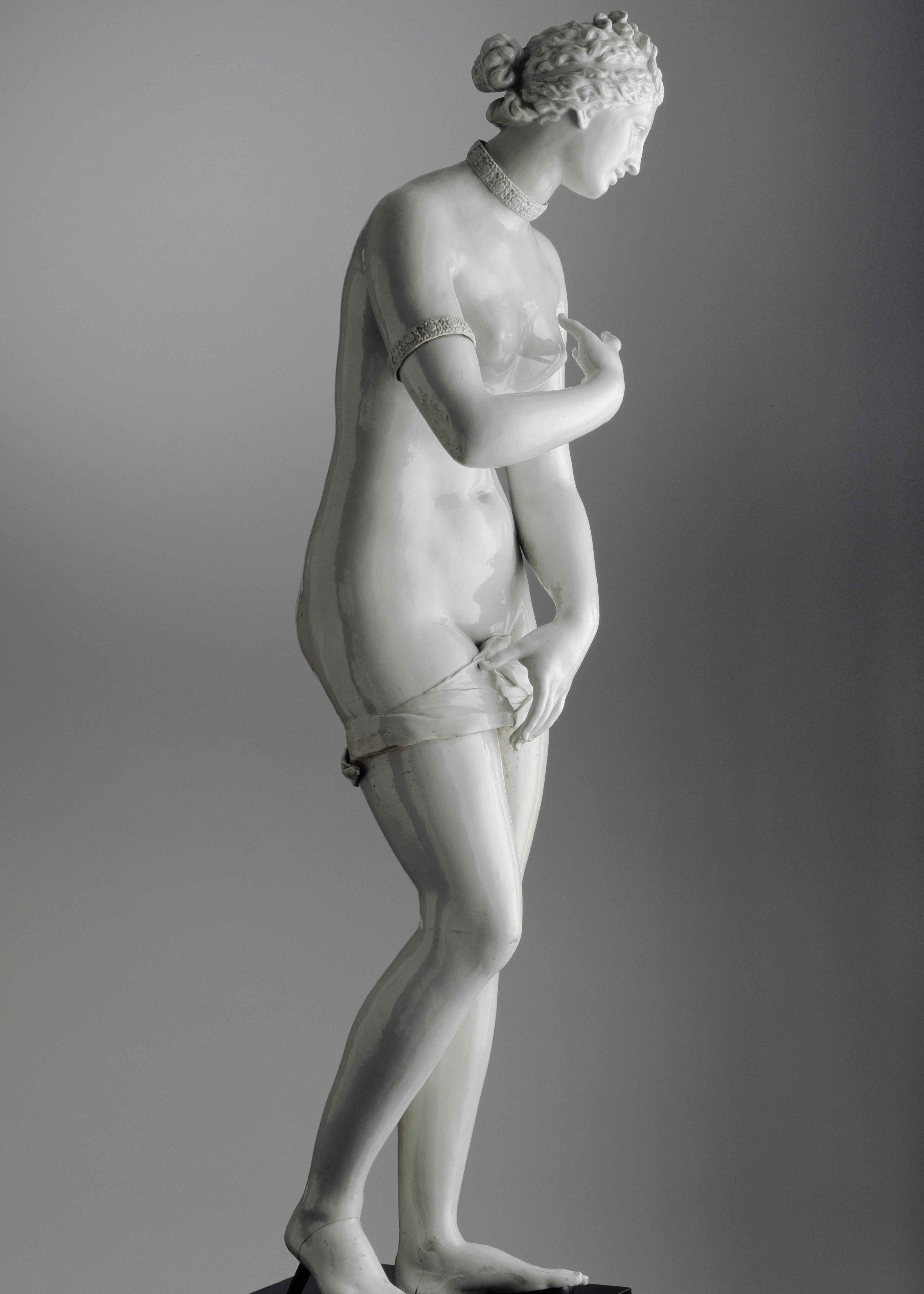
Identified as Venus of Rome from the inscription on the front side of the base, this porcelain sculpture cannot be traced back to any ancient example. It is likely a souvenir statuette in an antiquarian style, conceived by the Roman sculptor and restorer Bartolomeo Cavaceppi. This is revealed by the engraving on the frontispiece of the second volume of his Collection of Ancient Statues from 1768, which depicts the sculptor holding his tools with, behind him resting on a table, a statuette identifiable as ours.
Intended as an ancient-style sculpture to be offered to travelers of the Grand Tour, the work probably derives from an ancient marble restored and reinterpreted in subject by Bartolomeo Cavaceppi, who sold it to the Englishman Enrico Jennings. The relationship between Cavaceppi and Carlo Ginori dates back to 1756 and is connected to the latter’s acquisition of molds and plaster casts from ancient statuary present in Rome.
In the model collection of the Ginori Manufactory, a plaster cast (inv. 111) is preserved of the iconographic type of our statuette. The treatment of its surface with baked oil indicates its use in creating molds necessary for its translation into porcelain. Compared to this model, the porcelain version features a modest variant in the covering of the breasts with a slight drape falling from the left shoulder.
- 01
Da Bartolomeo Cavaceppi (con varianti), Venere di Roma
Identified as Venus of Rome from the inscription on the front side of the base, this porcelain sculpture cannot be traced back to any ancient example. It is likely a souvenir statuette in an antiquarian style, conceived by the Roman sculptor and restorer Bartolomeo Cavaceppi. This is revealed by the engraving on the frontispiece of the second volume of his Collection of Ancient Statues from 1768, which depicts the sculptor holding his tools with, behind him resting on a table, a statuette identifiable as ours.
Intended as an ancient-style sculpture to be offered to travelers of the Grand Tour, the work probably derives from an ancient marble restored and reinterpreted in subject by Bartolomeo Cavaceppi, who sold it to the Englishman Enrico Jennings. The relationship between Cavaceppi and Carlo Ginori dates back to 1756 and is connected to the latter’s acquisition of molds and plaster casts from ancient statuary present in Rome.
In the model collection of the Ginori Manufactory, a plaster cast (inv. 111) is preserved of the iconographic type of our statuette. The treatment of its surface with baked oil indicates its use in creating molds necessary for its translation into porcelain. Compared to this model, the porcelain version features a modest variant in the covering of the breasts with a slight drape falling from the left shoulder.