Venus and Adonis
By Massimiliano Soldani Benzi, with variants
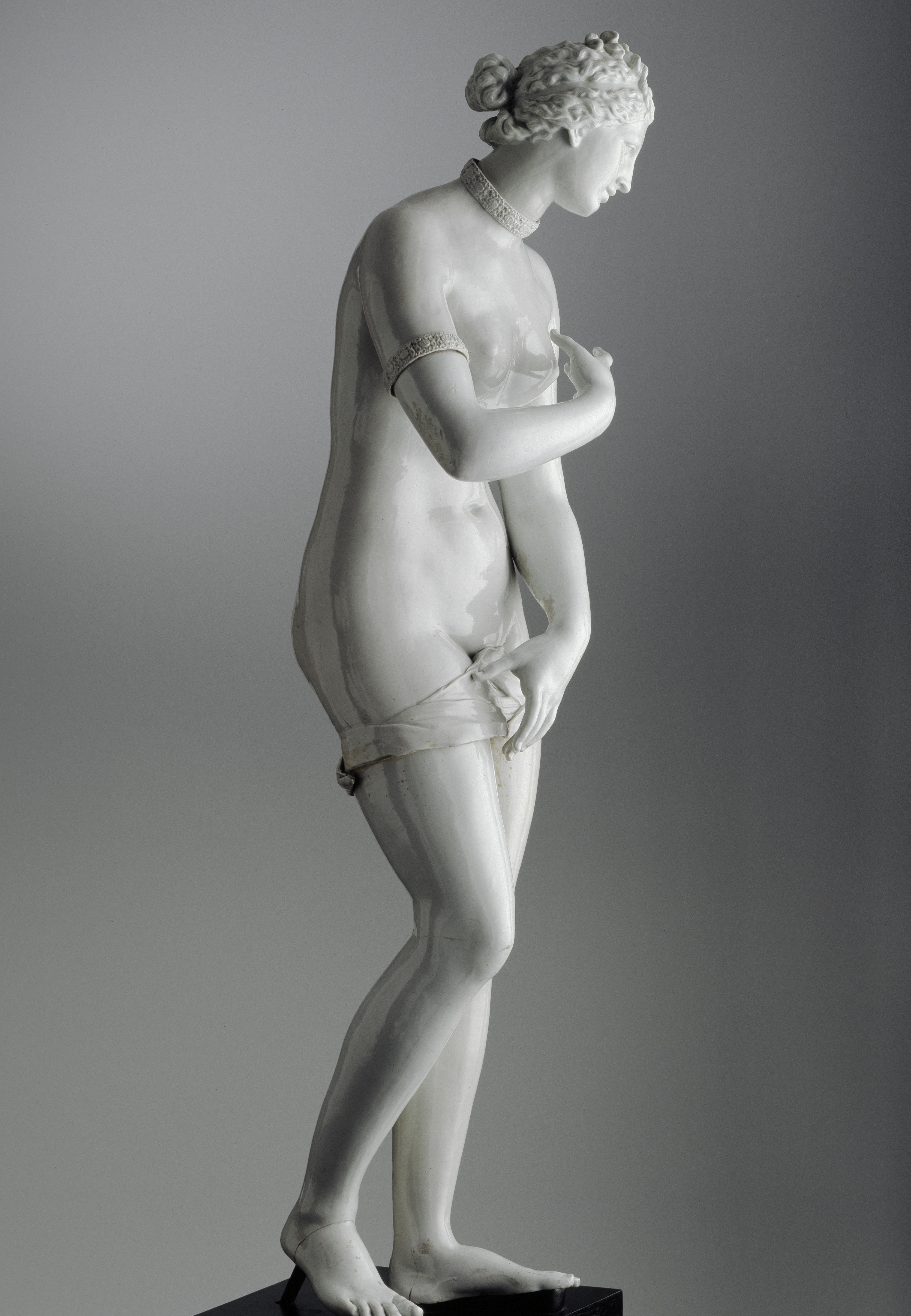
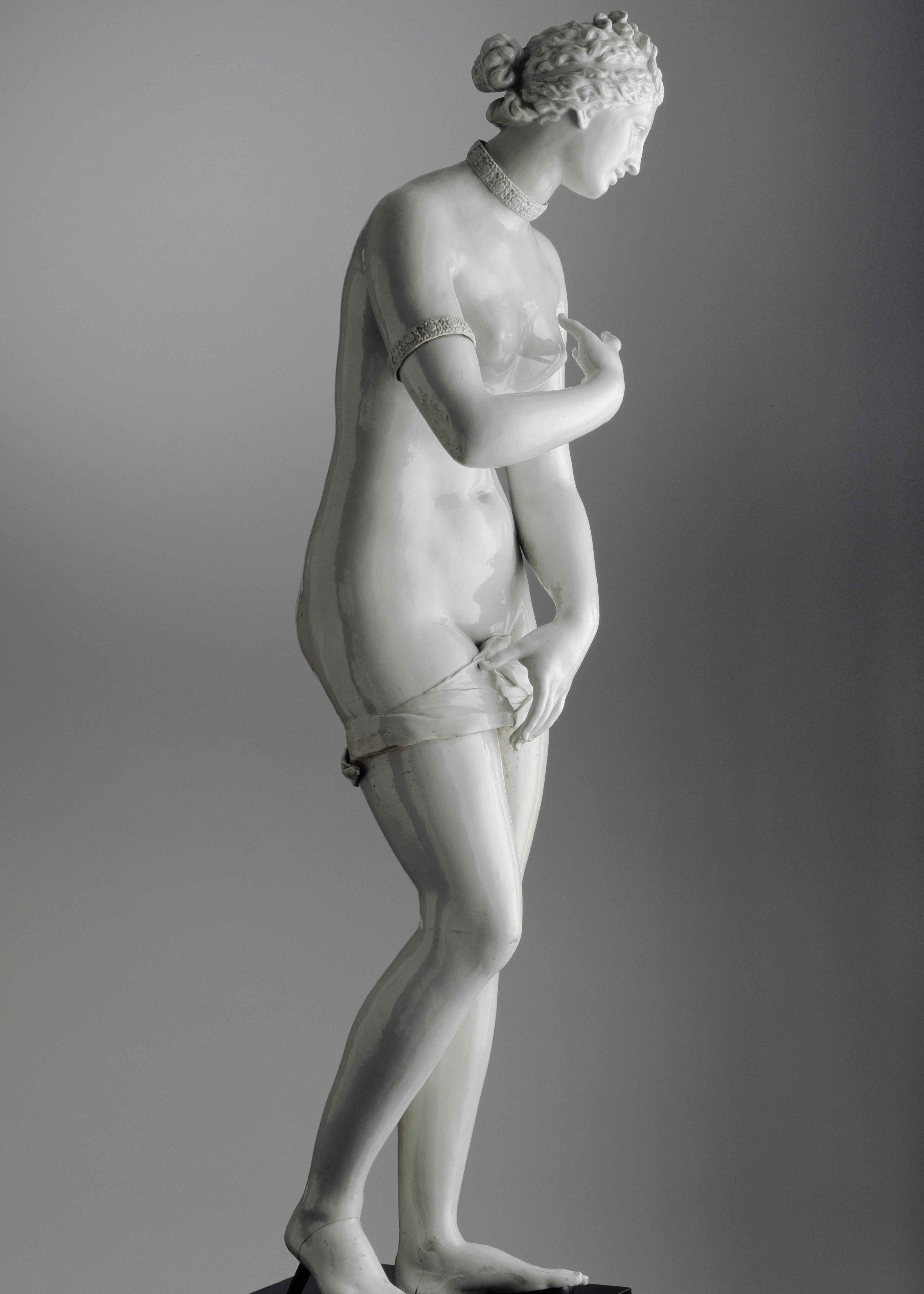
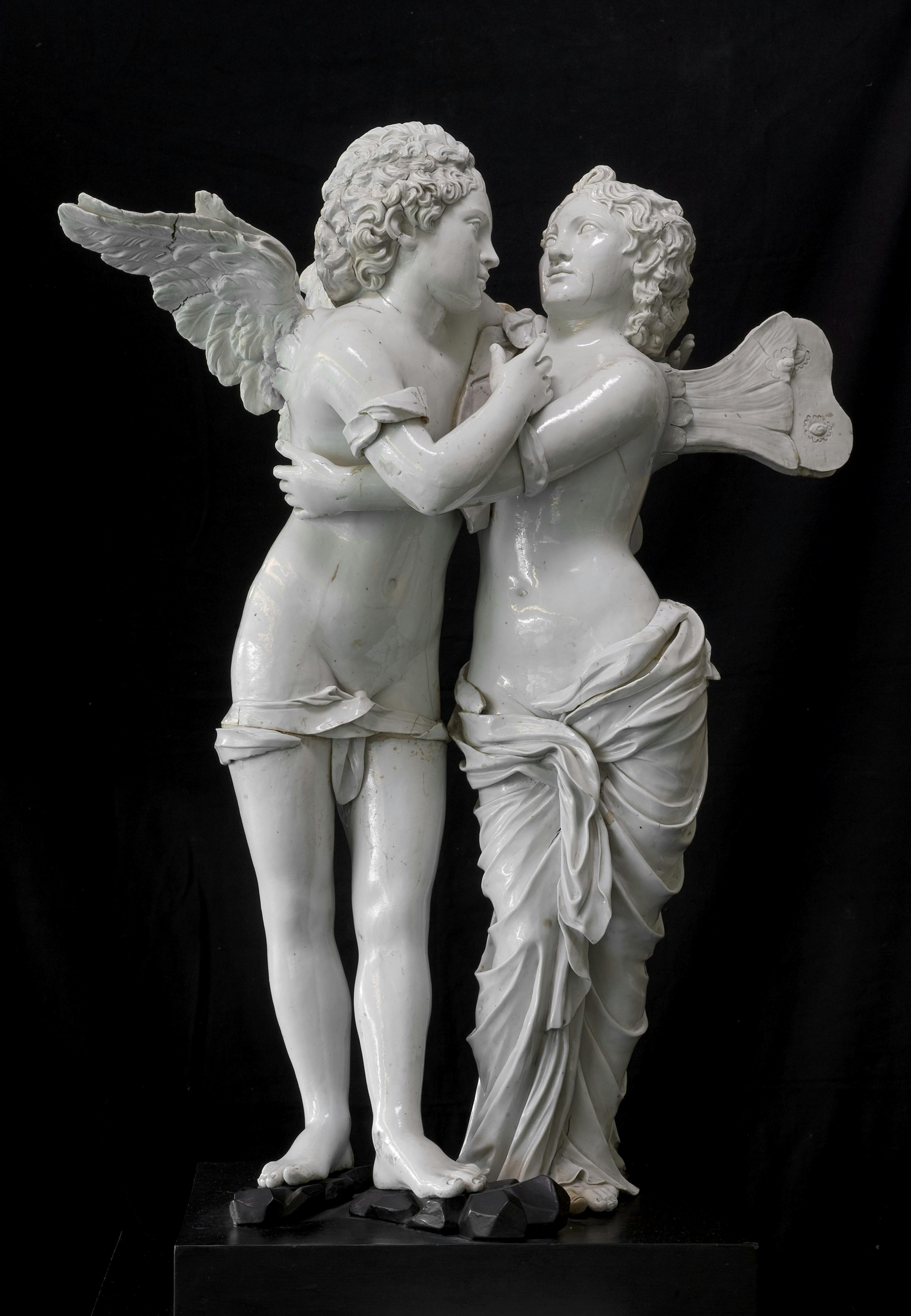
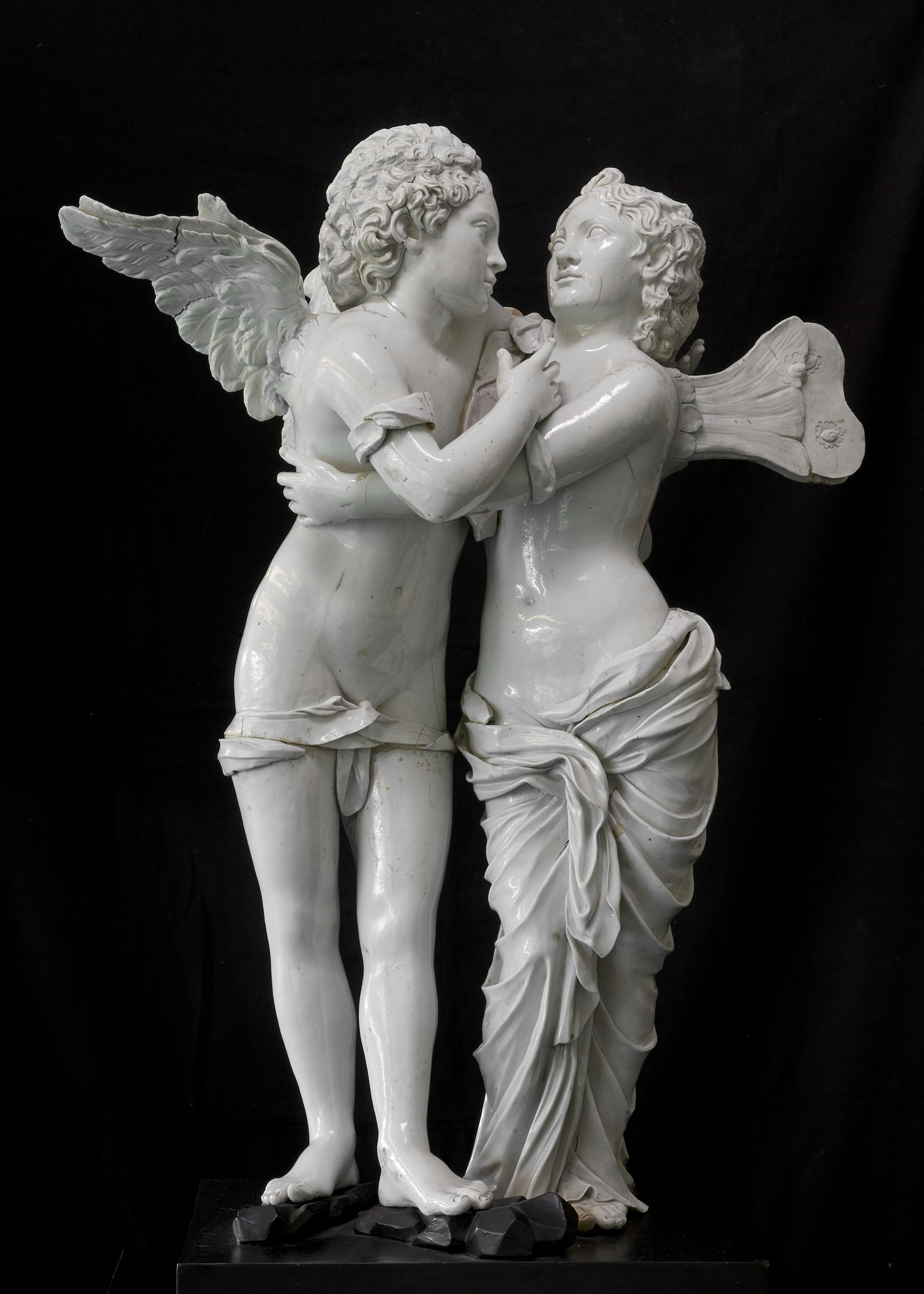
The porcelain group depicting Venus and Adonis likely reprises a composition by Massimiliano Soldani Benzi, to be identified in the smaller of the two versions mentioned in the eighteenth-century Inventory of Models of the Doccia Manufactory. It is known that in 1744 Marquis Carlo Ginori, founder in 1737 of the eponymous manufactory, purchased from Ferdinando, Soldani’s son, the plaster molds used in his father’s workshop for the creation of small bronzes. The composition presented here may have arrived at Doccia on that occasion.
The scene depicts a semi-nude Venus revealing her beloved Adonis mortally wounded by a boar. Lying on the ground on a rocky base with his left leg bleeding, the hunter is accompanied by a dog, which tries to ease his pain, and a weeping Cupid.
In addition to porcelain reproductions of large statues, the Doccia Manufactory produced numerous narrative groups, both mythological and religious, typical of late Baroque Florentine sculpture. Many examples are, in fact, mainly derived from compositions designed to be cast in bronze and intended for the decoration of tables and consoles.
- 01
Venere e Adone, da Massimiliano Soldani Benzi (con varianti)
The porcelain group depicting Venus and Adonis likely reprises a composition by Massimiliano Soldani Benzi, to be identified in the smaller of the two versions mentioned in the eighteenth-century Inventory of Models of the Doccia Manufactory. It is known that in 1744 Marquis Carlo Ginori, founder in 1737 of the eponymous manufactory, purchased from Ferdinando, Soldani’s son, the plaster molds used in his father’s workshop for the creation of small bronzes. The composition presented here may have arrived at Doccia on that occasion.
The scene depicts a semi-nude Venus revealing her beloved Adonis mortally wounded by a boar. Lying on the ground on a rocky base with his left leg bleeding, the hunter is accompanied by a dog, which tries to ease his pain, and a weeping Cupid.
In addition to porcelain reproductions of large statues, the Doccia Manufactory produced numerous narrative groups, both mythological and religious, typical of late Baroque Florentine sculpture. Many examples are, in fact, mainly derived from compositions designed to be cast in bronze and intended for the decoration of tables and consoles.