Laocoonte
by Filippo della Valle, based on the design by Baccio Bandinelli, with variations
The Laocoön group in plaster, preserved at the Museo Ginori, is a reduction of the monumental ancient marble held in the Vatican Museums, in the reinterpretation (Florence, Gallerie degli Uffizi) commissioned in 1520 by Pope Leo X to Baccio Bandinelli, as a tribute to Francesco I, King of France.
The Florentine version differs from the Vatican group in the pose of the Trojan priest’s right arm and in the knot of the serpent’s coils that entwine him because at the time the original arm had not yet been recovered.
In the Inventory of Models of the Manifattura di Doccia (1791-1806) there is a record of a Laocoön in wax with its form, indicated as the work of the late Baroque sculptor Giovan Battista Foggini, whose son Vincenzo was paid by the manufactory in 1748 for creating this cast.
Of this example there also exists an eighteenth-century porcelain translation preserved at the Poldi Pezzoli Museum in Milan.
- 01
Laocoonte da Filippo della Valle, su invenzione di Baccio Bandinelli, con varianti
- 02
Laocoonte by Filippo della Valle, after the design by Baccio Bandinelli, with variations
- 03
Laocoonte by Filippo della Valle, based on the invention of Baccio Bandinelli, with variations
- 04
Laocoön by Filippo della Valle, after the design of Baccio Bandinelli, with variations
- 05
Laocoön by Filippo della Valle, after the design of Baccio Bandinelli, with variations, detail

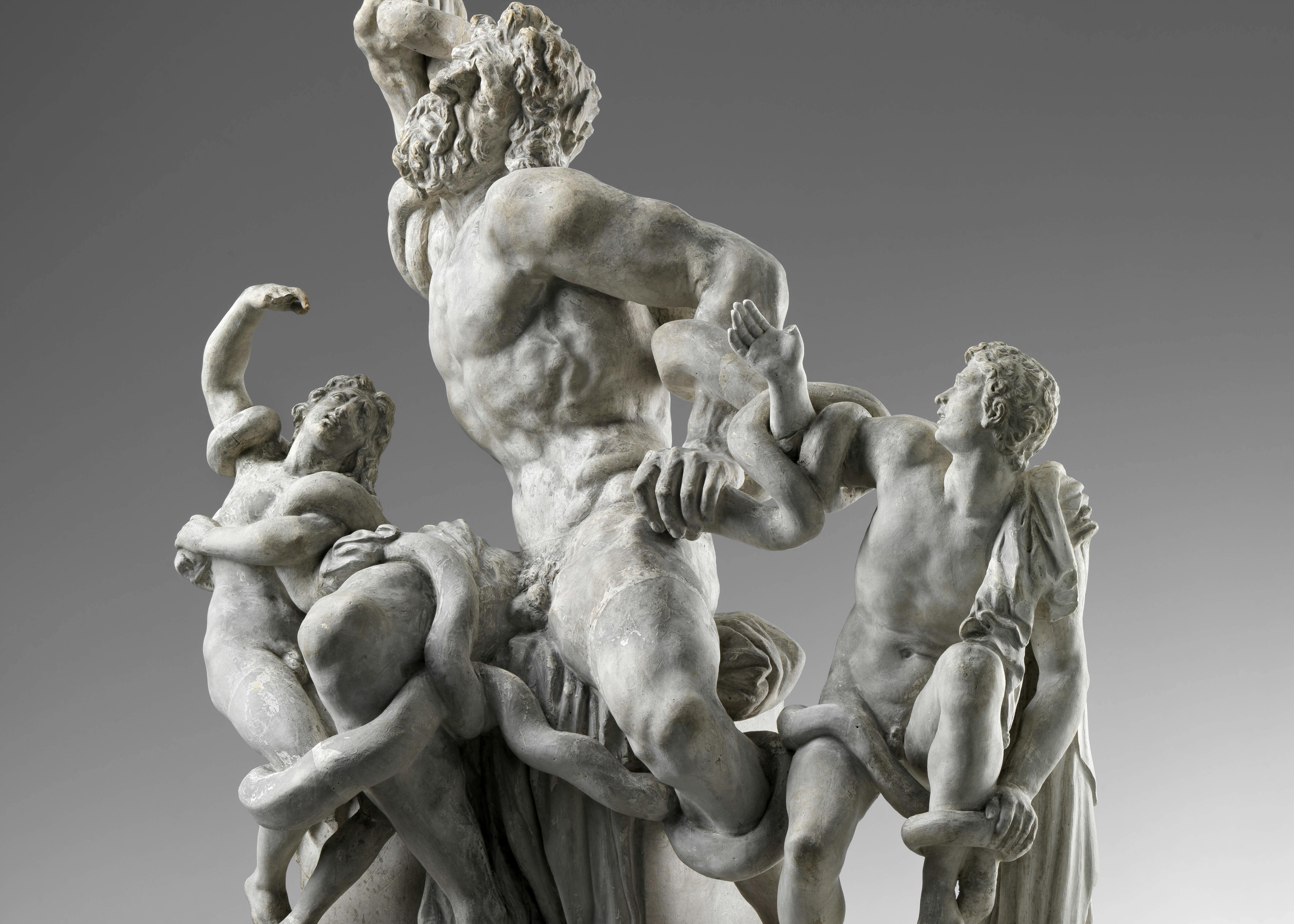
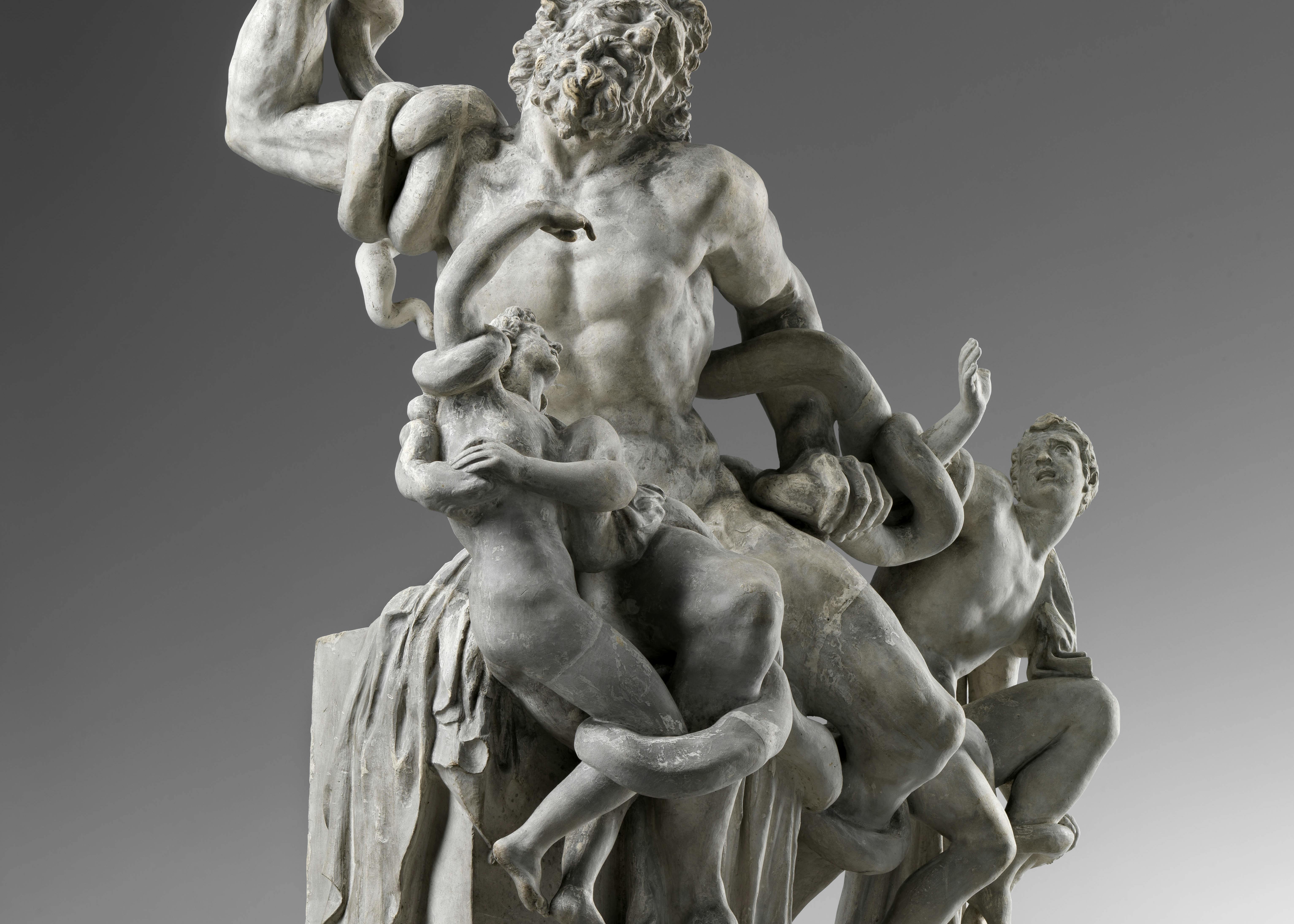
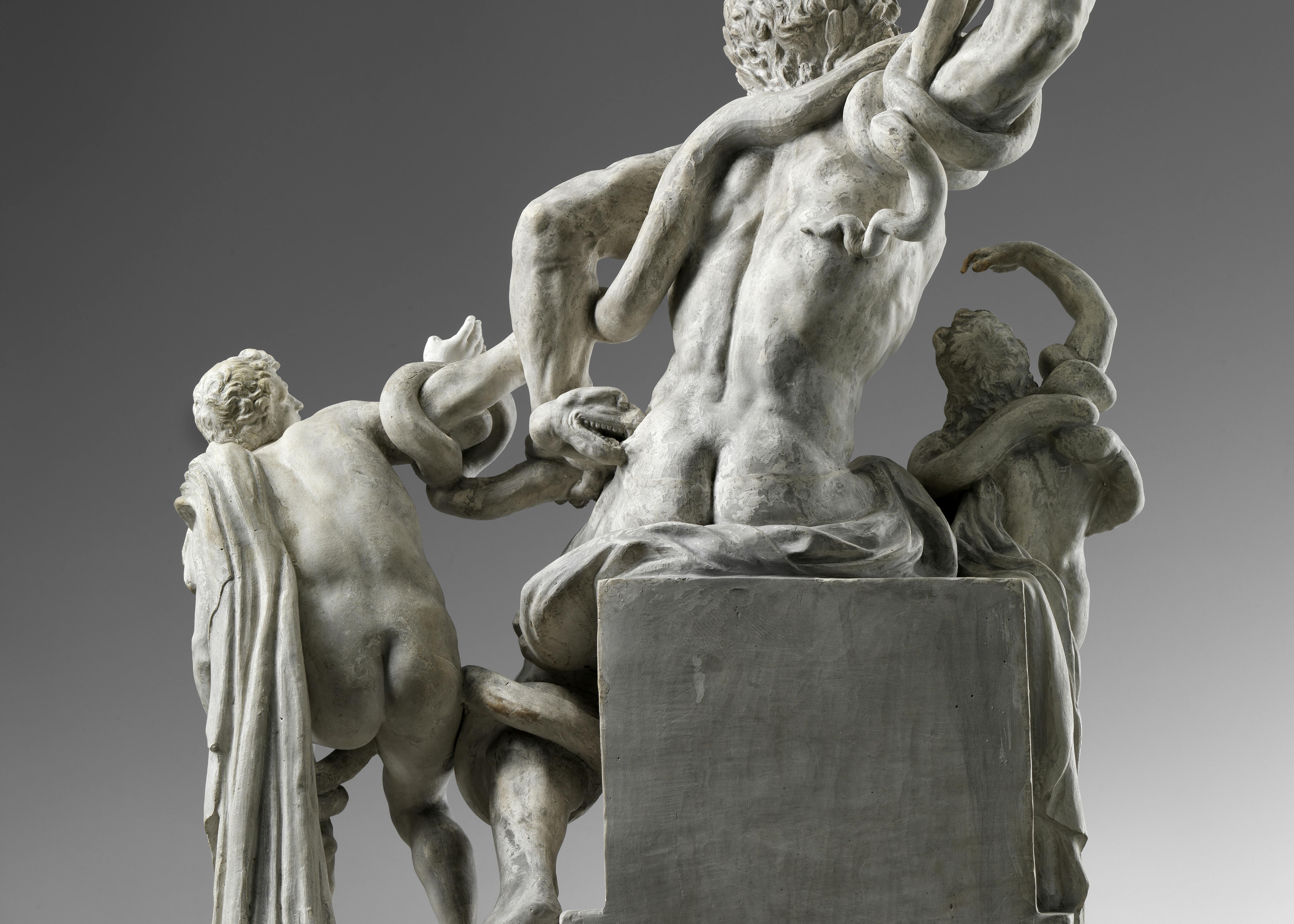
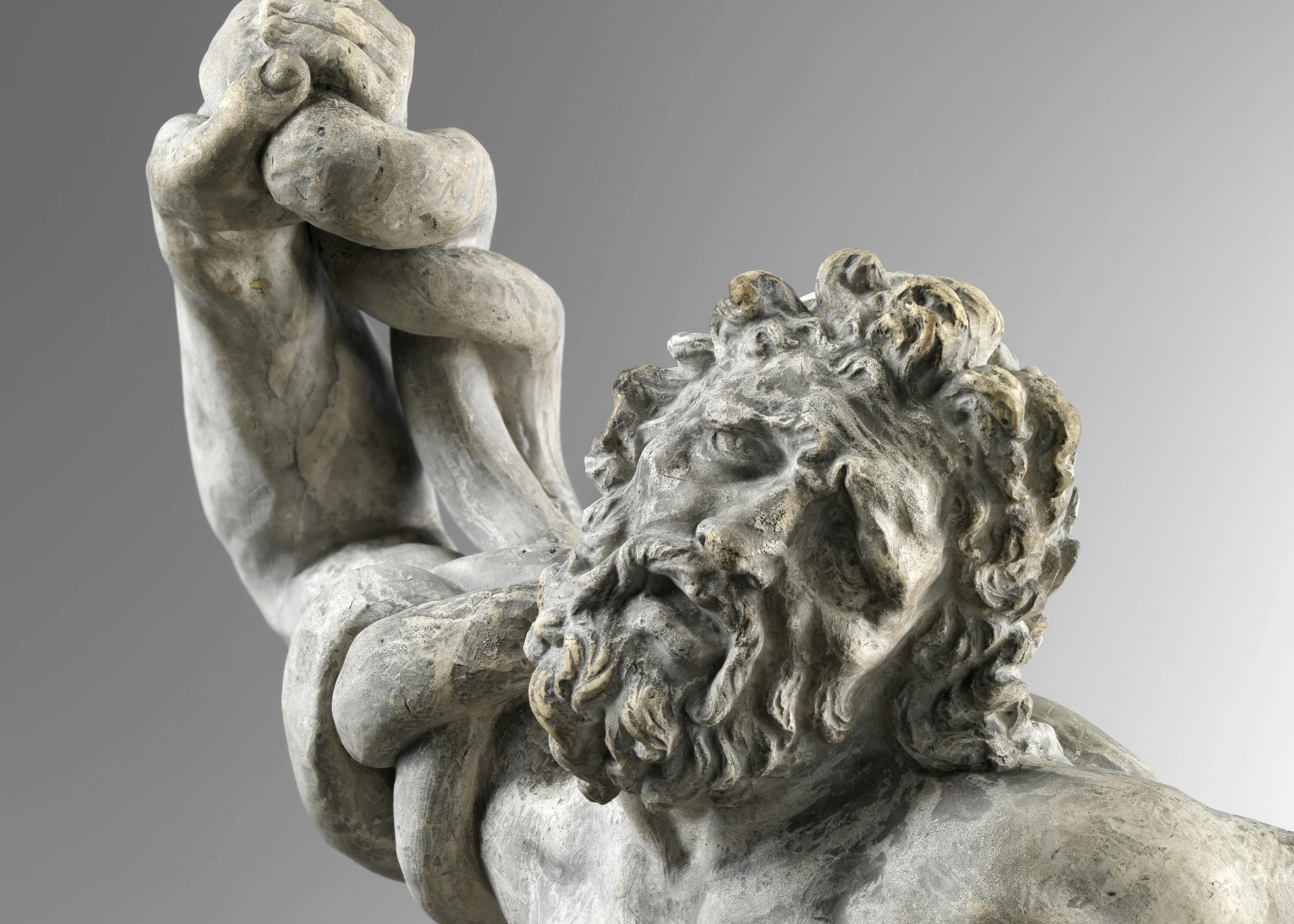
The Laocoön group in plaster, preserved at the Museo Ginori, is a reduction of the monumental ancient marble held in the Vatican Museums, in the reinterpretation (Florence, Gallerie degli Uffizi) commissioned in 1520 by Pope Leo X to Baccio Bandinelli, as a tribute to Francesco I, King of France.
The Florentine version differs from the Vatican group in the pose of the Trojan priest’s right arm and in the knot of the serpent’s coils that entwine him because at the time the original arm had not yet been recovered.
In the Inventory of Models of the Manifattura di Doccia (1791-1806) there is a record of a Laocoön in wax with its form, indicated as the work of the late Baroque sculptor Giovan Battista Foggini, whose son Vincenzo was paid by the manufactory in 1748 for creating this cast.
Of this example there also exists an eighteenth-century porcelain translation preserved at the Poldi Pezzoli Museum in Milan.