Sacrifice of Isaac
Giuseppe Piamontini and workshop (attributed)
Within the collection of models from the Manifattura di Doccia, there are documented inventive compositions by late Baroque Florentine artists both in the form of plaster and wax casts and through plaster molds or original terracotta pieces.
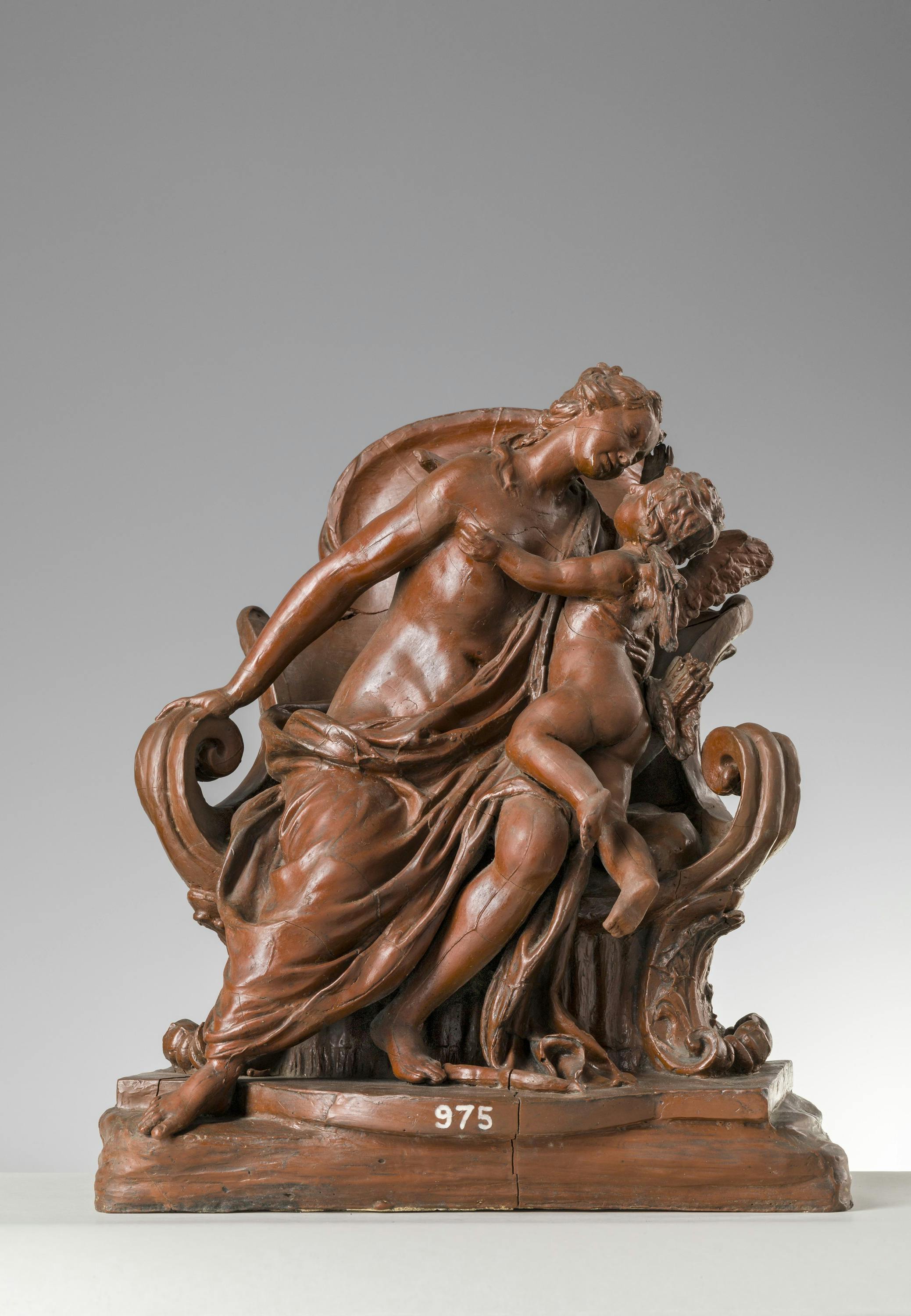
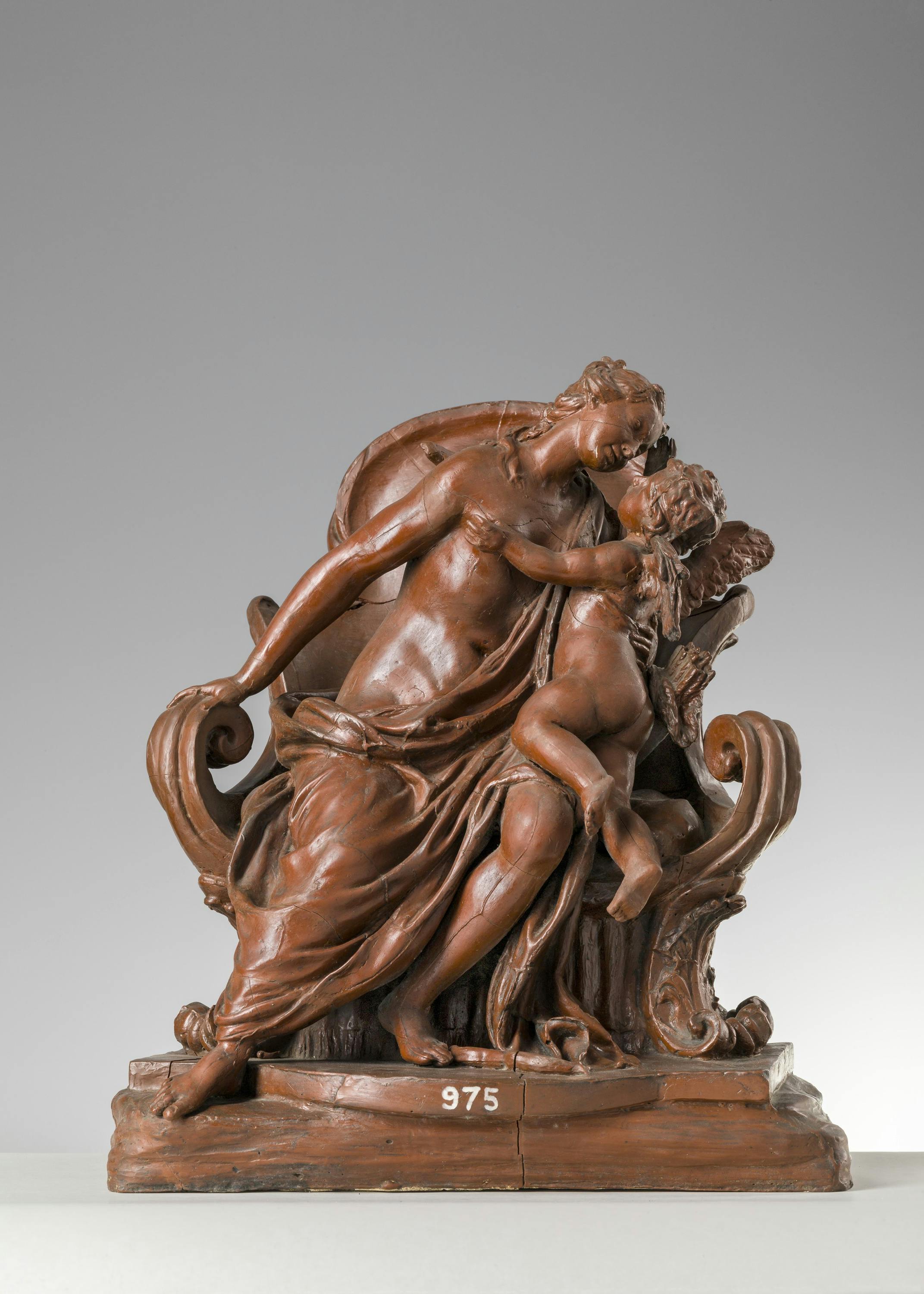
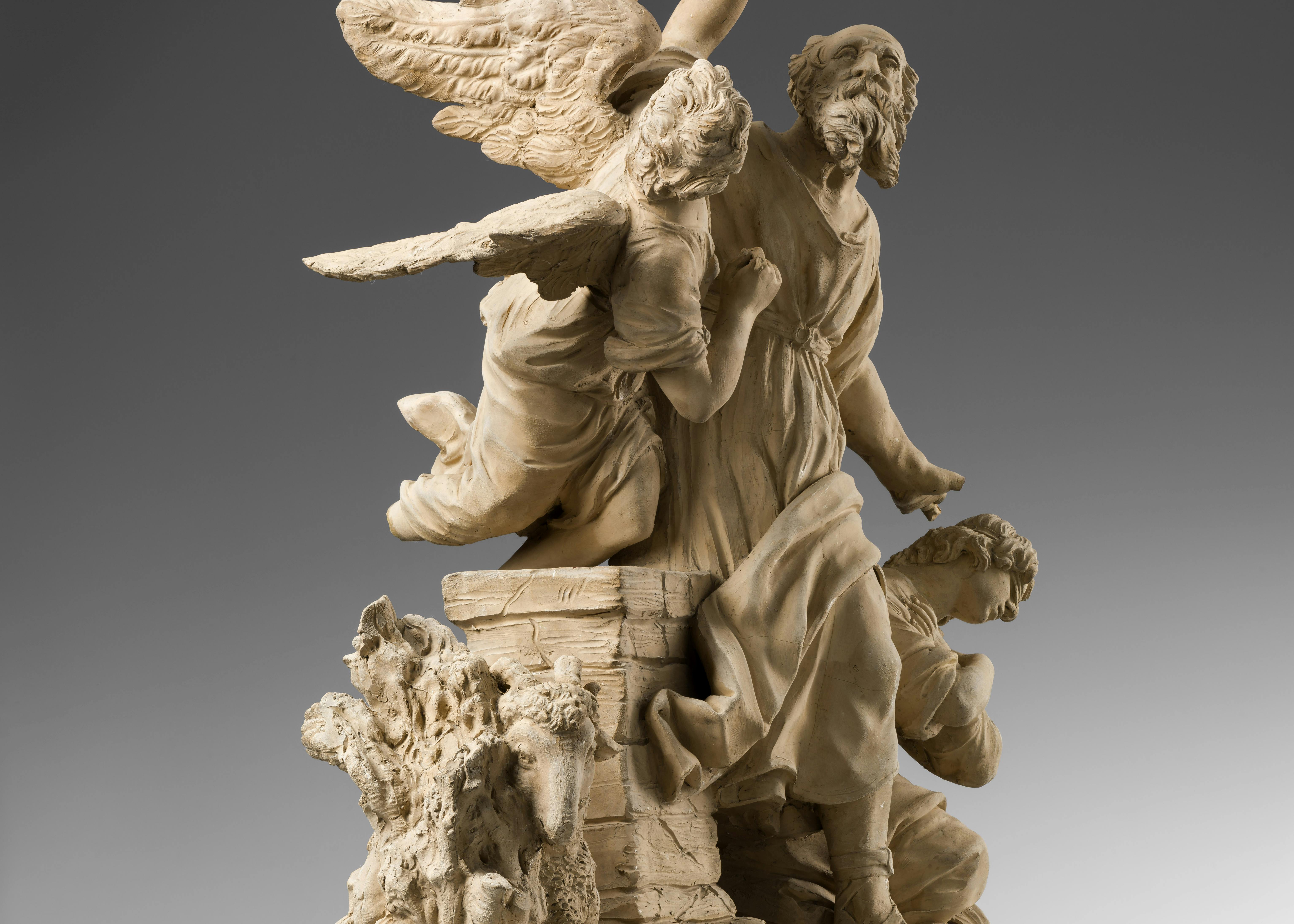
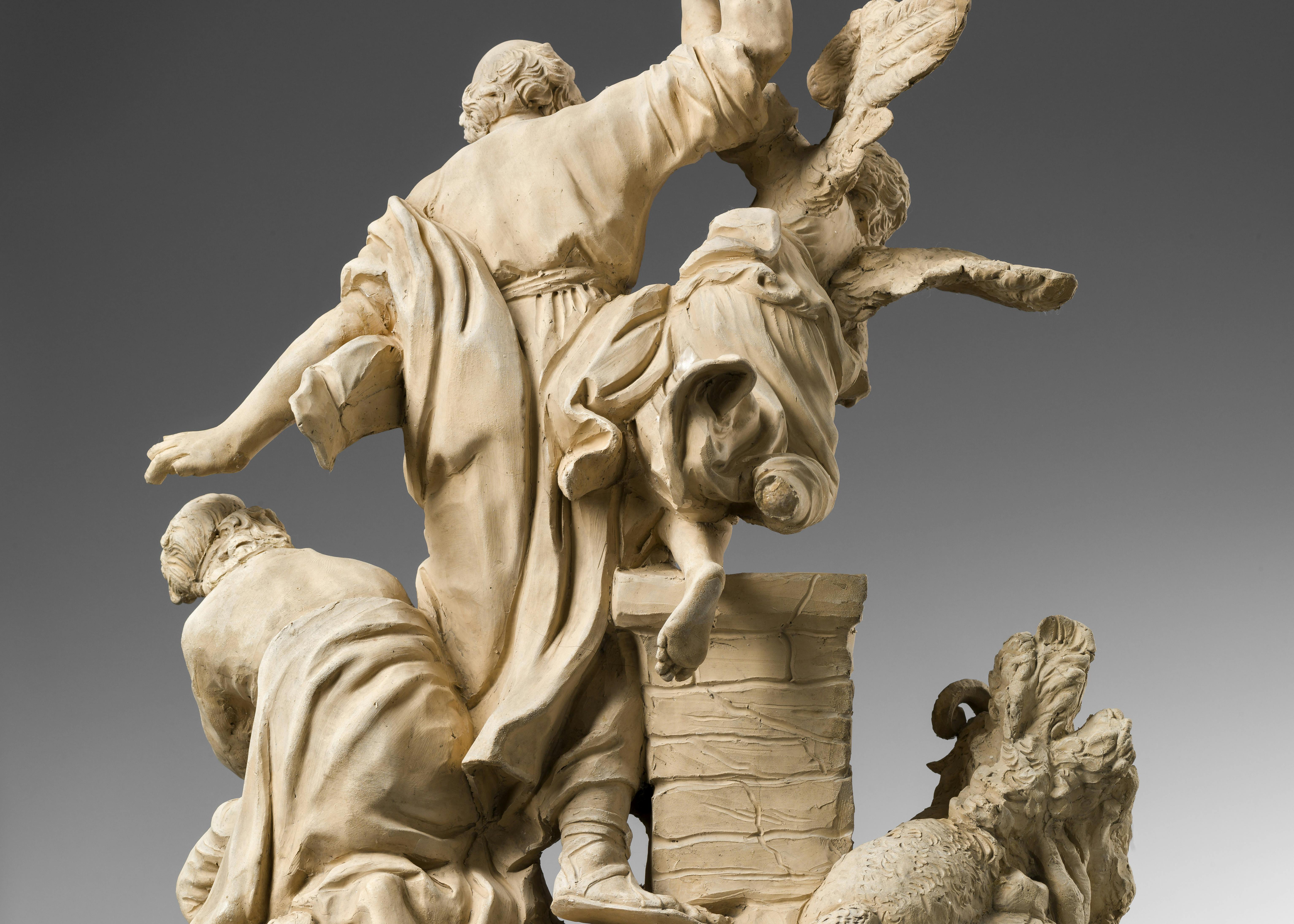
The Sacrifice of Isaac preserved at the Museo Ginori exhibits stylistic and compositional affinities with the small bronze cast made in 1722 by Giuseppe Piamontini for Anna Maria Luisa de’ Medici, Electress Palatine, from which it mainly differs in the orientation of Abraham’s and the angel’s faces and by the presence of a sacrificial altar supporting the latter. These variations, along with the high quality of the modeling, suggest that the terracotta is a modello for the study of the composition of the bronze group and therefore can be attributed to Piamontini’s workshop. It may have arrived at the manufactory following the 1750 sale of several of the sculptor’s models by his son Giovan Battista, who is also known to have collaborated with the factory as a sculptor. Indeed, the sales note lists a “sacrifice of Abraham,” which is likely identifiable with our piece.
Documented through a photographic reproduction from the 1960s of the twentieth century, this modello was translated into porcelain by the Manifattura Ginori, whose composition closely resembles that of the small bronze cast.
- 01
Giuseppe Piamontini e bottega (attribuito), Sacrificio d'Isacco
- 02
Sacrifice of Isaac, side panel
- 03
Sacrifice of Isaac, back

Within the collection of models from the Manifattura di Doccia, there are documented inventive compositions by late Baroque Florentine artists both in the form of plaster and wax casts and through plaster molds or original terracotta pieces.
The Sacrifice of Isaac preserved at the Museo Ginori exhibits stylistic and compositional affinities with the small bronze cast made in 1722 by Giuseppe Piamontini for Anna Maria Luisa de’ Medici, Electress Palatine, from which it mainly differs in the orientation of Abraham’s and the angel’s faces and by the presence of a sacrificial altar supporting the latter. These variations, along with the high quality of the modeling, suggest that the terracotta is a modello for the study of the composition of the bronze group and therefore can be attributed to Piamontini’s workshop. It may have arrived at the manufactory following the 1750 sale of several of the sculptor’s models by his son Giovan Battista, who is also known to have collaborated with the factory as a sculptor. Indeed, the sales note lists a “sacrifice of Abraham,” which is likely identifiable with our piece.
Documented through a photographic reproduction from the 1960s of the twentieth century, this modello was translated into porcelain by the Manifattura Ginori, whose composition closely resembles that of the small bronze cast.